Gathering Evidence for Your Taxi Accident Claim in Glasgow
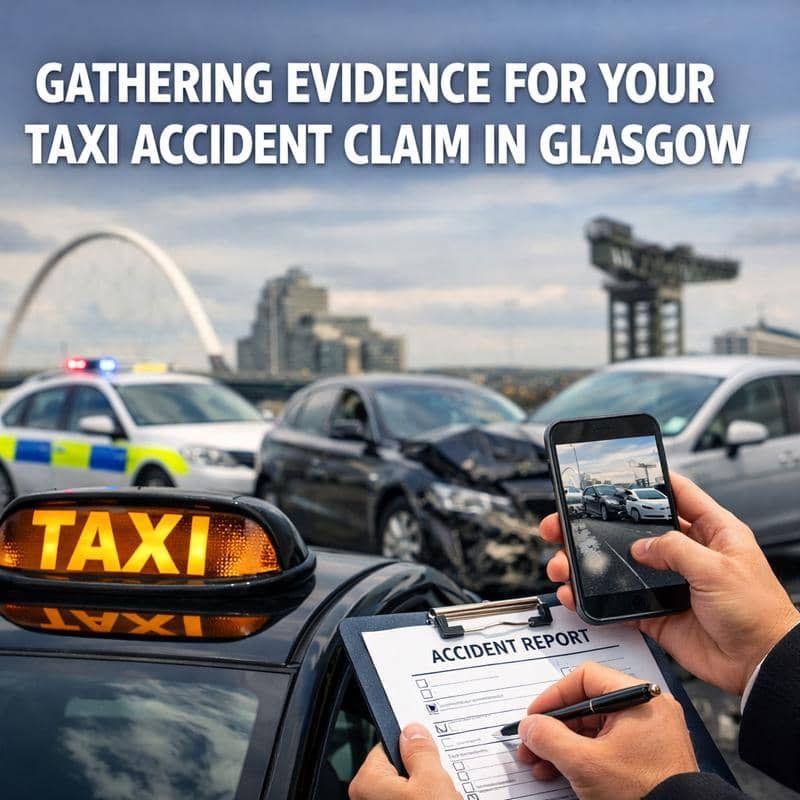
Being involved in a taxi accident in Glasgow can be a disorienting and stressful experience. Beyond the immediate shock and potential injuries, the aftermath often involves navigating complex insurance claims and legal processes. A successful outcome, particularly if you're a taxi driver whose livelihood depends on your vehicle, hinges almost entirely on the quality and completeness of the evidence you provide. Without robust documentation, even a clear-cut non-fault accident can become challenging to prove, potentially impacting your ability to recover costs for repairs, lost income, and personal injuries.
This comprehensive guide is designed to empower Glasgow taxi and private hire drivers, or anyone involved in a taxi incident, with the knowledge and steps necessary for effectively gathering evidence for your taxi accident claim in Glasgow. We'll delve into why evidence is paramount, the specific types you should prioritise, and practical strategies for collecting and preserving crucial information. From immediate on-scene actions to leveraging modern technology like dashcams, understanding these steps is vital to securing a fair resolution and getting you back on the road.
The Importance of Comprehensive Evidence for Your Claim
When a taxi accident occurs, the primary goal of any claim is to establish fault, determine the extent of damages, and recover losses. This entire process relies heavily on verifiable facts, not assumptions or recollections. Comprehensive evidence serves as the bedrock of your claim, transforming anecdotal accounts into undeniable proof. Without it, your case might be weakened, leading to delays, disputes, or even a reduced compensation payout.
For taxi drivers, the stakes are particularly high. Beyond vehicle damage, an accident can mean a significant loss of earnings, and without strong evidence, proving this financial impact becomes much harder. Ensuring you have meticulously documented the taxi accident from all angles protects your future income and allows specialists to negotiate effectively on your behalf. It also sends a clear message to insurers and opposing parties that your claim is well-founded and thoroughly prepared.
Securing Your Claim's Success
Every piece of evidence you collect contributes to building a compelling narrative for your claim. It helps legal and claims professionals understand precisely what happened, who was responsible, and the full extent of the damage and losses incurred. This meticulous approach significantly increases the likelihood of a swift and successful resolution, minimising stress and financial strain. Think of evidence as your claim's backbone, providing the strength and structure needed to stand firm against scrutiny.
Furthermore, strong evidence can often deter prolonged disputes. When the at-fault party's insurer sees undeniable proof, they are more likely to accept liability quickly, avoiding lengthy negotiations or court proceedings. This can be crucial for taxi drivers who need to get back to work without unnecessary delays. Non-Fault Taxi Accident Claims Glasgow: Get What You Deserve highlights just how critical this evidence is.
Protecting Your Rights and Compensation
Your legal rights after a taxi accident in Glasgow are directly tied to your ability to substantiate your claim. Evidence ensures that you receive the full and fair compensation you are entitled to, covering not just immediate costs like vehicle repairs, but also indirect losses such as lost income, medical expenses for injuries, and even potential long-term impacts. Without proper evidence, you risk accepting a settlement that doesn't adequately cover your losses, leaving you out of pocket.
From proving the sequence of events to demonstrating the severity of your injuries, each piece of evidence plays a vital role. It empowers your legal representatives to advocate for your best interests, ensuring that no aspect of your suffering or financial loss goes unaddressed. Understanding Understanding Your Legal Rights After a Taxi Accident in Glasgow is the first step, and gathering evidence is how you enforce them.
Types of Evidence Crucial for Your Claim
When documenting a taxi accident in Glasgow, a range of information can prove invaluable. It's not just about what happened, but who, what, where, and when. The more diverse and detailed your collection of evidence, the stronger your position will be when pursuing a claim. Think broadly about anything that can objectively illustrate the circumstances and consequences of the incident.
Immediate On-Scene Documentation
The moments immediately following an accident are critical for evidence collection. While shock and potential injuries might make it difficult, prioritising these actions can make a huge difference:
- Photographs and Videos: Use your smartphone to take extensive photos and videos of the accident scene. Capture the positions of all vehicles, damage to each vehicle (from multiple angles, close-up and wide shots), road conditions, traffic signs, skid marks, debris, and any relevant surroundings (e.g., street names, landmarks, weather). Don't forget to photograph any visible injuries to yourself or others.
- Driver and Witness Details: Obtain the name, contact number, insurance details, and vehicle registration number of all other drivers involved. If there are passengers or bystanders, politely ask for their contact information as potential witnesses.
- Police Report Details: If the police attend, note their division, officer names or badge numbers, and the incident reference number. This report can be a crucial independent account.
- Date, Time, and Location: Accurately record the precise date, time, and specific location of the accident. This includes the street name, nearest junction, and any distinguishing features.
- Vehicle Information: Make and model of all vehicles involved.
- Brief Description of Events: While fresh in your mind, jot down a brief, factual account of how the accident occurred.
For more immediate steps, refer to What To Do After a Taxi Accident in Glasgow: Immediate Steps.
Post-Accident Medical and Vehicle Records
The evidence gathering doesn't stop at the scene. What happens in the days and weeks after the accident is just as important, especially for proving injuries and financial losses:
- Medical Records: Seek immediate medical attention, even for seemingly minor injuries. Document all medical appointments, diagnoses, treatments, medications, and therapy sessions. Keep receipts for any medical expenses. These records are vital for personal injury claims.
- Vehicle Repair Estimates/Reports: Obtain detailed repair estimates from reputable garages. If your vehicle is deemed a write-off, get valuation reports. Keep all receipts for repairs or replacement parts.
- Lost Earnings Documentation: For taxi drivers, this is paramount. Gather evidence of your average weekly or monthly earnings before the accident (e.g., bank statements, previous fare records, tax returns). Keep a log of every day you are unable to work due to injury or vehicle damage. This will be crucial for calculating Lost Earnings After a Taxi Accident in Glasgow: Claiming Compensation.
- Correspondence: Keep meticulous records of all communication related to the accident – emails, letters, and notes from phone calls with insurance companies, legal representatives, and others.
How to Collect and Preserve Key Information
Collecting evidence is one thing; preserving it in an organised and accessible manner is another. A well-organised collection of evidence makes the claims process smoother and more efficient, reducing the chances of misplacement or loss of vital information. This systematic approach showcases your diligence and seriousness in pursuing your claim.
Step-by-Step Guide at the Accident Scene
Beyond identifying what to collect, it's about how you collect it, particularly in the immediate aftermath:
- Prioritise Safety: First and foremost, ensure the safety of yourself and your passengers. Move to a safe location if possible and only then begin collecting evidence.
- Use Your Smartphone Smartly: Your phone is your most powerful tool. Take multiple photos and videos. Ensure location services are enabled for geotagging. Record short video clips narrating what you see.
- Be Objective, Not Emotional: When speaking to other drivers or witnesses, remain calm and factual. Avoid admitting fault or engaging in arguments. Simply exchange information.
- Write It Down Immediately: As soon as it's safe, and memory is fresh, jot down everything you recall about the accident. Details can fade quickly. Include specific times, directions, speeds, and even conversations.
- Identify Potential Witnesses: Look for anyone who might have seen the accident, even if they're just walking past. Their independent account can be very powerful.
Organising Your Information Post-Accident
Once you've left the scene, the task shifts to careful documentation and organisation:
- Create a Dedicated Folder: Whether physical or digital, set up a specific folder for all accident-related documents. Label it clearly.
- Scan and Digitize: Convert all physical documents (medical reports, repair estimates, receipts) into digital files. This creates backups and makes sharing easier.
- Maintain a Chronological Log: Keep a diary or spreadsheet detailing every interaction, appointment, and event related to the accident. Include dates, times, people spoken to, and a brief summary of the conversation.
- Back Up Everything: Store digital copies on a cloud service or external hard drive to prevent loss.
By taking these steps, you'll have a comprehensive and well-structured collection of taxi accident evidence Glasgow claims handlers will appreciate. This proactive approach can significantly impact the speed and success of your claim process.
Leveraging Technology: Dashcams & Witness Statements
In today's world, technology plays an increasingly significant role in accident investigation. Dashcams have become an indispensable tool for many professional drivers, offering an objective, real-time account of events. Alongside technological aids, traditional witness statements remain incredibly valuable, providing human perspective and corroboration that can strengthen any claim.
The Power of Dashcam Footage
A dashcam is arguably one of the most effective pieces of evidence for a taxi accident claim. It provides an unbiased, visual record of the moments leading up to, during, and immediately after a collision. This footage can definitively prove who was at fault, capture critical road conditions, and even record audio that might contain important statements.
- Unquestionable Proof: Dashcam footage eliminates 'he said, she said' scenarios, offering concrete evidence of liability. This can significantly speed up the claims process and prevent disputes.
- Protection Against Fraud: Sadly, staged accidents are a reality. Dashcam footage provides a strong defence against fraudulent claims.
- Capturing Details: Beyond the main event, a dashcam can record speed, time, date, and even G-force data, all of which contribute to a detailed accident reconstruction.
- Immediate Availability: Unlike waiting for police reports, dashcam footage is often immediately accessible.
If you are a taxi driver in Glasgow, installing a reliable dashcam is a wise investment that could save you immense trouble and financial loss in the event of an accident. Ensure it records continuously and saves footage securely. Understanding how to use and preserve your dashcam taxi accident footage is vital.
Collecting Reliable Witness Accounts
While dashcams provide objective visuals, witness statements offer a human perspective that can corroborate your version of events and add crucial context. Independent witnesses are often viewed as highly credible by insurers and courts.
- Independent Verification: A witness's account, particularly if they are unrelated to any party involved, can provide invaluable third-party verification of the accident circumstances.
- Filling in Gaps: Witnesses might observe details you missed due to shock or your perspective. They could, for instance, confirm traffic light colours, speeds of vehicles, or specific manoeuvres.
- Gathering Information:
- Full Contact Details: Always ask for their full name, phone number, and email address.
- Brief Statement: If they're willing, ask them to briefly write down what they saw at the scene, and if they're comfortable, sign and date it.
- Ask Open-Ended Questions: Encourage them to describe what they saw in their own words, rather than leading them with questions.
Remember, a strong body of evidence, combining photographic, documentary, and testimonial forms, is your best defence and most powerful tool in navigating a taxi accident claim.
Frequently Asked Questions About Taxi Accident Evidence
How long do I have to gather evidence after a taxi accident in Glasgow?
While some evidence (like on-scene photos) must be collected immediately, you generally have a limited time, usually a few weeks, to report the accident to your insurer and start the formal claims process. For personal injury claims, the statutory limitation period in Scotland is typically three years from the date of the accident. However, the sooner you gather all evidence, the better, as memories fade and physical evidence can disappear.
Can I still make a claim if I don't have a dashcam?
Yes, absolutely. While a dashcam is highly beneficial, it is not a prerequisite for making a claim. You will need to rely more heavily on other forms of evidence such as photographs, witness statements, police reports, and your own detailed account of the incident. Expert legal and claims professionals can help you build a strong case even without video footage.
What if the other driver refuses to give their details?
If the other driver refuses to provide their details, do not engage in confrontation. Note down their vehicle's make, model, colour, and registration number. If possible, take photos of their vehicle. If the police attend, they will obtain these details. If they do not attend, report the incident to the police yourself as soon as possible, as it may be a legal requirement to do so, especially in hit-and-run situations.
Should I speak to the other driver's insurance company?
It's generally advisable to be cautious when speaking to the at-fault party's insurance company directly. Provide only factual information and avoid admitting any fault or speculating. It's often best to let your own insurance company or, even better, your dedicated claims management service like Taxi Claims, handle all communication with the other party's insurer. This ensures your interests are protected.
Get Expert Support for Your Glasgow Taxi Accident Claim
Navigating the aftermath of a taxi accident in Glasgow can feel overwhelming, especially when your livelihood is on the line. The process of meticulously gathering evidence for your taxi accident claim in Glasgow is critical for a successful resolution, protecting your rights, and securing the compensation you deserve. From immediate on-scene documentation to leveraging technology like dashcams and securing expert witness accounts, every piece of information plays a vital role.
At Taxi Claims, we understand the unique challenges faced by Glasgow's taxi and private hire drivers. Our dedicated team of specialists is here to guide you through every step of the claims process, ensuring all crucial evidence is collected and expertly presented. We work tirelessly to manage your claim, secure a like-for-like replacement vehicle, manage repairs, and recover lost income—all at zero cost to you, as our fees are recovered from the at-fault party’s insurer. Don't let an accident put your business on hold.
If you've been involved in a non-fault taxi accident in Glasgow, don't hesitate to reach out for immediate assistance. Let us help you get back on the road quickly and fairly.
Contact Taxi Claims today for immediate, expert support.
Call our 24/7 helpline: 0333 577 7736