Gig Economy Driver Rights in Scotland: Post-Accident Support You Deserve
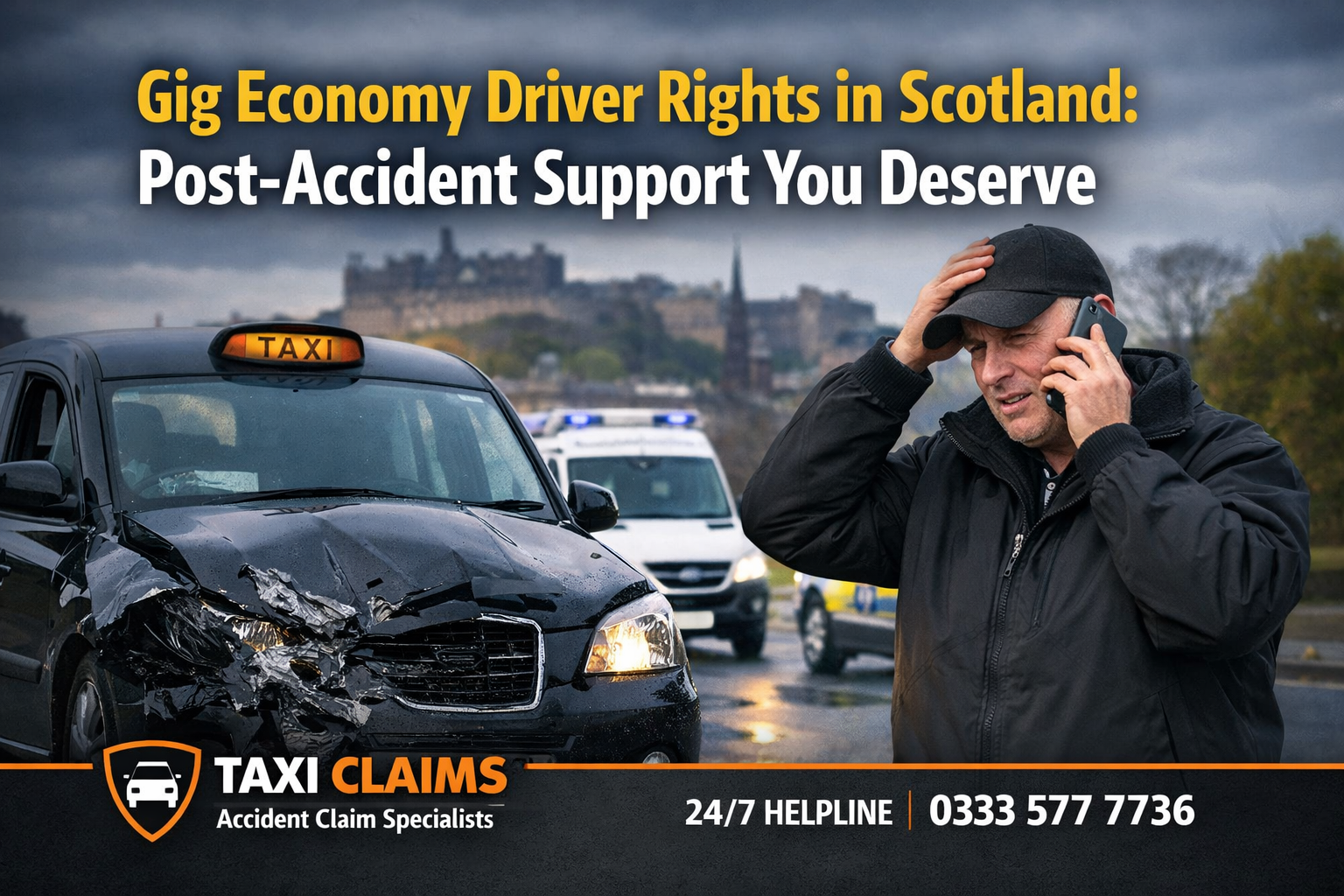
As a gig economy driver in Scotland, your livelihood depends on your vehicle and your ability to drive. When an accident occurs, especially one that wasn't your fault, the financial and logistical challenges can feel overwhelming. Unlike traditional employees, self-employed taxi and private hire drivers often navigate a complex landscape of insurance, lost earnings, and vehicle repairs alone. Understanding your gig economy driver rights in Scotland is not just important—it's essential for protecting your income and ensuring a swift return to work.
This comprehensive guide aims to demystify the post-accident process for Uber, private hire, and other gig economy drivers across Scotland. We'll explore your unique employment status and its implications, walk you through the steps for navigating accident claims, and outline the critical support services available to you. Our goal is to empower you with the knowledge and resources needed to claim the compensation and assistance you deserve, ensuring your business remains viable even after an unexpected incident.
Defining the Gig Economy Driver: Employment Status & Implications
The gig economy has transformed how many people work, offering flexibility but also introducing unique challenges, particularly when it comes to legal rights and accident claims. For drivers operating in Scotland, understanding your employment status is the first crucial step in asserting your gig economy driver rights after an accident. Are you an employee, a worker, or truly self-employed? The answer significantly impacts your access to benefits, sick pay, and accident compensation.
Who is a Gig Economy Driver in Scotland?
In Scotland, gig economy drivers typically include those working for platforms like Uber, Deliveroo, and other private hire companies, often operating as independent contractors. This usually means you're responsible for your own taxes, National Insurance, and vehicle maintenance. However, recent legal challenges in the UK have highlighted a 'worker' status for some, granting them limited employment rights like minimum wage and holiday pay, though this doesn't always extend to comprehensive accident support. Hackney carriage drivers, while also self-employed, often operate under slightly different licensing and insurance regulations.
The Impact of Self-Employment on Accident Claims
Your self-employed status means you generally won't have access to employer-provided sick pay or a company vehicle in the event of an accident. This places the burden of vehicle repair, replacement, and recovery of lost income squarely on your shoulders. Without proper support, an accident can quickly lead to significant financial hardship, jeopardising your ability to earn. This is why specialist accident management services are invaluable for gig economy drivers, offering tailored solutions that account for these unique circumstances. They ensure that even without a traditional employer, your rights are upheld and your financial stability is protected.
Navigating Accident Claims as a Self-Employed Driver in Scotland
When an accident strikes, the moments immediately following can be chaotic. However, clear and decisive action is critical for any gig economy driver in Scotland to protect their gig economy driver rights and strengthen their subsequent claim. Being prepared can make a significant difference in the outcome of your accident claim.
Immediate Steps After an Accident
First and foremost, ensure the safety of yourself and any passengers. If anyone is injured, call emergency services immediately. Even if injuries seem minor, it's vital to seek medical attention. You should then gather as much evidence as possible at the scene. This includes photographs of vehicle damage, the accident scene, road conditions, and any relevant signage. Exchange details with all parties involved: names, contact numbers, vehicle registration numbers, and insurance information. Do not admit fault or enter into arguments. For a more detailed guide on immediate actions, refer to our article, What to Do After a Taxi Accident in Scotland: Essential Steps.
Reporting the Incident: Crucial Details for Your Claim
As a gig economy driver, accurately reporting the incident is paramount. Notify your personal and commercial vehicle insurers as soon as possible, even if you believe the accident wasn't your fault. Provide a detailed account, including the time, date, location, weather conditions, and specifics of how the accident occurred. If you were working for a platform like Uber, also inform them, as they may have specific protocols. Document all communications. Your meticulous record-keeping will be invaluable when pursuing a non-fault taxi claim.
Seeking Professional Support
The complexity of commercial vehicle insurance and the nuances of non-fault claims make professional support essential. Engaging an expert claims management service, like Taxi Claims, ensures that your interests as a self-employed driver are fully represented. We can help you navigate the intricacies of your insurance policy, gather necessary evidence, and communicate with all involved parties, from other drivers' insurers to repair garages. This support is especially vital when dealing with complex issues such as recovering lost income or securing a replacement vehicle quickly.
Understanding Your Insurance Coverage & Compensation Entitlements
For gig economy drivers in Scotland, having the right insurance is non-negotiable. However, merely having a policy isn't enough; understanding its nuances and what you're entitled to after a non-fault accident is key to upholding your gig economy driver rights. Specialist taxi and private hire insurance differs significantly from standard personal car insurance, offering crucial protections for your business.
Specialist Taxi/PHV Insurance: What to Look For
Your commercial vehicle insurance policy should cover private hire or hackney carriage use, depending on your licence. It's vital to ensure your policy provides adequate cover for third-party liability, own vehicle damage, and crucially, business interruption. Some policies may also offer legal expenses cover, which can be invaluable for pursuing claims for lost earnings or personal injury. Always disclose your gig economy work to your insurer; failure to do so could invalidate your policy, leaving you vulnerable.
Compensation for Lost Earnings and Vehicle Damage
After a non-fault accident, your primary concern is often how you'll continue to earn and get your vehicle repaired. As a gig economy driver, your vehicle is your workplace, and downtime directly impacts your income. You are entitled to claim for the full cost of repairs to your vehicle. More importantly, you can claim for the income you lose while your vehicle is off the road. Our guide on Lost Earnings After a Taxi Accident: Compensation for Drivers provides in-depth information on how to accurately calculate and claim this vital compensation. Don't let an accident derail your financial stability; with expert help, you can recover your lost income.
Personal Injury Claims for Gig Economy Drivers
Beyond vehicle damage and lost income, you may also sustain personal injuries in an accident. Whether it's whiplash, soft tissue injuries, or more severe trauma, you have the right to seek compensation for your pain, suffering, and any long-term impact on your health and ability to work. This compensation can cover medical expenses, rehabilitation costs, and ongoing care. Navigating personal injury claims requires expert legal support to ensure you receive a fair settlement. Understanding your entitlements is crucial, and a specialist service can help you build a strong case. For a detailed look at non-fault claims, refer to our comprehensive guide: Non-Fault Taxi Accident Claims in Scotland: A Driver's Comprehensive Guide.
Protecting Your Livelihood: Replacement Vehicles and Legal Support
For a gig economy driver, time off the road means lost income. This makes securing a replacement vehicle and obtaining robust legal support paramount following a non-fault accident. Your gig economy driver rights extend beyond just compensation; they encompass the right to minimise disruption to your ability to work and earn.
The Importance of a Replacement Vehicle
A non-fault accident should not spell the end of your earnings. You are entitled to a like-for-like replacement vehicle while yours is being repaired or until your write-off claim is settled. This means a fully licensed and insured taxi or private hire vehicle that allows you to continue working uninterrupted. Specialist accident management companies have access to fleets of compliant replacement vehicles, ensuring you don't miss out on fares. To learn more about securing a replacement vehicle in Glasgow, read our dedicated article: Replacement Taxi Vehicle Service Glasgow: Stay on the Road After an Accident.
Expert Legal Guidance for Non-Fault Claims
Navigating the aftermath of an accident involves dealing with insurance companies, potentially other drivers' legal teams, and a maze of paperwork. This is where expert legal support becomes indispensable. A specialist team will handle all communication, pursue your claims for vehicle damage, lost earnings, and personal injury, and ensure your rights are protected every step of the way. They understand the specific challenges faced by gig economy drivers and can expertly manage your claim to achieve the best possible outcome.
Dealing with Insurance Companies
Insurance companies, even your own, may not always act in your best interest. Their goal is often to minimise payouts. An expert claims service acts as your advocate, challenging low offers, negotiating on your behalf, and ensuring you receive your full entitlement. They handle the complex legal and administrative aspects, allowing you to focus on your recovery and getting back to work. For in-depth advice on legal support for drivers, see Legal Support for Taxi Drivers After Accidents in Scotland.
Common Challenges and How to Overcome Them
Even with robust gig economy driver rights, the post-accident claims process can present unique hurdles. Being aware of these common challenges and knowing how to address them can significantly improve your experience and the outcome of your claim.
Disputing Fault and Liability
Determining fault is not always straightforward, especially in multi-vehicle collisions or those involving disputes over who was responsible. If the other party's insurer attempts to place blame on you, it can jeopardise your non-fault claim. This is where evidence gathered at the scene, such as witness statements, photographs, and dash cam footage, becomes critical. An expert claims management service can dispute liability on your behalf, presenting a strong case to ensure fault is correctly attributed.
Uninsured Drivers and the MIB
Unfortunately, some accidents involve uninsured drivers. While this can complicate matters, it doesn't leave you without recourse. The Motor Insurers' Bureau (MIB) steps in to compensate victims of uninsured and hit-and-run drivers. Making a claim through the MIB can be a complex process, but it ensures that you, as a non-fault gig economy driver, do not suffer financially due to another party's negligence.
Gathering Evidence: Dash Cams and Witness Statements
The importance of concrete evidence cannot be overstated. Dash cam footage is an increasingly vital tool for gig economy drivers, providing an impartial record of the incident. It can prove invaluable in establishing fault, especially when faced with conflicting accounts. Similarly, collecting contact details of any witnesses and obtaining their statements immediately after the accident can significantly strengthen your case. Ensure your dash cam is always operational and consider investing in a front and rear setup for maximum coverage. Our guide, Maximise Your Claim: Using Taxi Dash Cam Evidence in Scotland, offers further insights.
FAQs: Gig Economy Driver Rights After an Accident
Here are some frequently asked questions about gig economy driver rights and accident claims in Scotland:
- Q: What is the difference between a 'worker' and 'self-employed' status for accident claims?
A: 'Worker' status typically grants basic employment rights like minimum wage and holiday pay, but usually doesn't extend to employer-provided sick pay or vehicle replacement after an accident. Truly self-employed drivers must rely on their own insurance and accident management services for these needs. - Q: Do I need a specific type of insurance as a gig economy driver in Scotland?
A: Yes, you absolutely need specialist taxi or private hire insurance that covers your vehicle for commercial use. Standard personal car insurance will not be sufficient and could invalidate your policy. - Q: How do I claim for lost earnings if I'm self-employed?
A: You can claim for lost earnings by providing evidence of your average income before the accident, such as bank statements, invoices, or platform earnings reports. An expert claims service can help you compile this and present it to the at-fault insurer. - Q: What if the other driver doesn't have insurance?
A: If the other driver is uninsured, you can make a claim through the Motor Insurers' Bureau (MIB). This process is more complex, so professional assistance is highly recommended. - Q: Will making a non-fault claim affect my no-claims bonus?
A: In a true non-fault accident where the other party is identified and their insurer pays for your damages, your no-claims bonus should not be affected. However, always confirm this with your insurer.
Conclusion
As a gig economy driver in Scotland, being involved in a non-fault accident can be daunting, threatening both your vehicle and your income. However, understanding your gig economy driver rights and knowing where to turn for support can make all the difference. From securing a like-for-like replacement vehicle to claiming for lost earnings and personal injuries, comprehensive assistance is available to ensure your livelihood remains protected.
Don't navigate the complex claims process alone. Specialist accident management services are designed specifically for drivers like you, offering tailored support to get you back on the road quickly and fairly compensated. Protect your hard-earned income and secure your future.
If you've been involved in a non-fault accident in Scotland, take proactive steps today. Contact our expert team for immediate, dedicated support. Call us on 0333 577 7736 or reach out via WhatsApp for a swift response.