Hackney Carriage vs. Private Hire Claims: Understanding Your Rights in Scotland
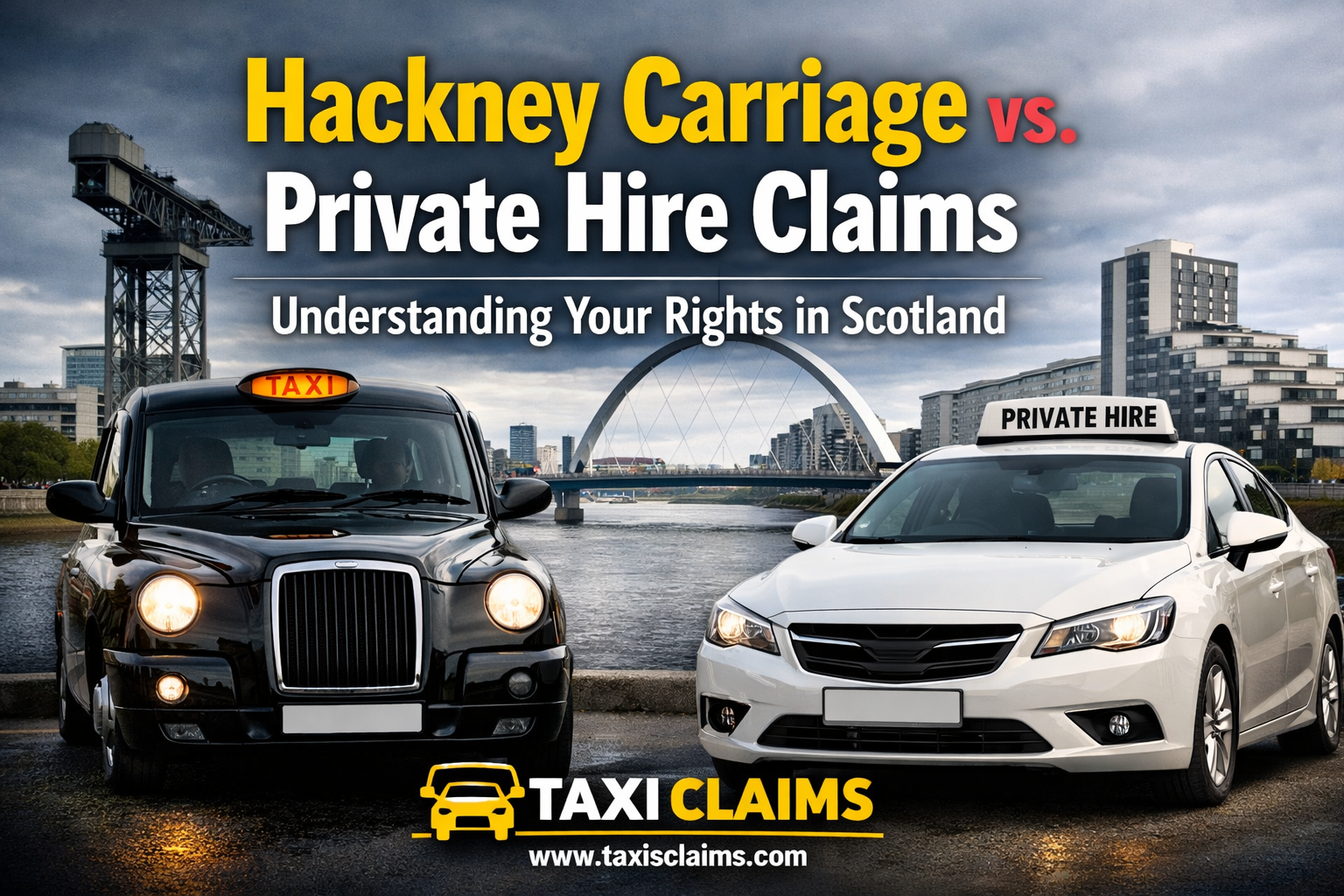
As a taxi driver in Scotland, your vehicle isn't just a mode of transport; it's your livelihood. When an accident occurs, especially one that wasn't your fault, the financial and professional implications can be devastating. Whether you operate a traditional Hackney Carriage (black cab) or a Private Hire Vehicle (PHV), understanding the distinct nuances of accident claims is crucial for protecting your income and ensuring a swift return to work. The regulations, vehicle specifics, and even the claims process can differ significantly between these two types of licensed taxis in Scotland.
Dealing with the aftermath of an accident, from vehicle damage to potential personal injury and lost earnings, can be complex and stressful. These challenges are often compounded by the need to navigate insurance companies and legal frameworks specific to commercial vehicles. This comprehensive guide will illuminate the key differences between Hackney Carriage and Private Hire claims in Scotland, outlining your fundamental taxi driver rights and the compensation you're entitled to. By understanding these distinctions, you can approach your claim with confidence, secure in the knowledge that your livelihood is protected.
Key Differences: Hackney Carriage vs. Private Hire Status Post-Accident
In Scotland, both Hackney Carriages and Private Hire Vehicles play vital roles in public transport, yet their operational frameworks, and consequently their accident claims processes, have fundamental differences. These distinctions stem from their licensing, how they operate, and the specific regulations governing them.
Defining Hackney Carriages
A Hackney Carriage, often recognised as a "black cab" or "Glasgow cab," is licensed to be hailed on the street, wait at taxi ranks, and be pre-booked. They are typically purpose-built vehicles, designed to be wheelchair-accessible, and are subject to stringent local authority licensing requirements regarding their condition, meter calibration, and driver knowledge. Their unique status often means that the vehicle itself holds significant value, including its "plate" or license, which can impact the nature of a claim.
Defining Private Hire Vehicles (PHVs)
Private Hire Vehicles, on the other hand, must be pre-booked through an operator and cannot be hailed directly from the street or rank. They usually appear as regular cars but carry distinct PHV licensing plates. While still subject to local council licensing, the requirements might vary slightly compared to Hackney Carriages. Drivers operate under an operator's licence, and their vehicles, though diverse in make and model, must meet specific safety and maintenance standards.
Impact on Initial Accident Response
The immediate aftermath of an accident requires careful attention regardless of your vehicle type. However, for Hackney Carriage drivers, documentation might need to consider the unique features of their vehicle, such as the taxi meter reading, any wheelchair access equipment, and the specific council plate details. For PHV drivers, gathering details related to their booking platform (e.g., Uber, local private hire company) and passenger information is often paramount.
In both cases, it's crucial to follow immediate post-accident procedures. This includes ensuring safety, exchanging details with all parties involved, and collecting evidence such as photos, witness contacts, and dash cam footage. For a detailed guide on what to do, refer to our article on Taxi Accident in Glasgow: Your Immediate Step-by-Step Guide for Drivers.
Navigating Accident Claims: Specifics for Each Vehicle Type
While the core principles of a non-fault accident claim remain consistent – seeking compensation from the at-fault party's insurer – the practicalities can vary significantly for Hackney Carriage and Private Hire drivers in Scotland. These differences often hinge on the operational models and the nature of the vehicles themselves.
Hackney Carriage Accident Claims Process
For Hackney Carriage drivers, claims often involve not only vehicle repair or replacement but also compensation for the loss of income from the moment the vehicle is off the road. Given that many Hackney Carriages are owned by the drivers or small operators, the direct impact on their ability to earn is immediate. The value of a Hackney Carriage plate can also be a consideration in total loss claims, although this is more complex and less common in standard accident claims. Expert services specialise in arranging like-for-like replacement Hackney Carriages to minimise downtime. This ensures you continue to earn while your vehicle is repaired, or a settlement is reached.
Key steps typically involve:
- Reporting the incident: Informing your insurer and local council licensing body promptly.
- Vehicle assessment: An independent assessment of damage and repair costs.
- Replacement vehicle: Arranging a suitable Hackney Carriage replacement.
- Lost earnings calculation: Detailed evidence of income loss, often based on previous earnings.
- Personal injury assessment: If applicable, a medical examination and claim for injuries.
Private Hire Vehicle (PHV) Accident Claims Process
Private Hire drivers, while also facing vehicle damage and lost earnings, might encounter different claim dynamics. Many PHV drivers work for larger operators or platforms like Uber, which can sometimes introduce additional layers to the claims process. The vehicle's make and model are often more diverse, and while a replacement PHV is still crucial, the availability and specific requirements might differ from a Hackney Carriage. Our specialists understand these nuances and can quickly arrange a suitable replacement PHV, ensuring continuity for your business.
For PHV drivers, particular considerations include:
- Operator notification: Informing your private hire operator, especially if they have specific reporting requirements.
- Vehicle-specific repairs: Arranging repairs with garages familiar with PHV standards.
- Proof of lost earnings: Providing evidence of bookings, mileage, and earnings to substantiate lost income claims. For more on this, see Lost Earnings After a Taxi Accident: How to Claim Your Income in Glasgow.
- Liaison with platform/operator: If working with a platform like Uber, ensuring all necessary documentation is provided to both your insurer and the platform.
Regardless of whether you drive a Hackney Carriage or a Private Hire Vehicle, the goal is always to restore your vehicle to its pre-accident condition, recover all financial losses, and compensate for any injuries sustained. Expert claims management services are adept at navigating these specific requirements for both types of drivers, ensuring your claim is handled efficiently and effectively.
Legal Rights & Compensation: What Glasgow Drivers Need to Know
When you're involved in a non-fault taxi accident in Scotland, both Hackney Carriage and Private Hire drivers have clear legal rights to compensation. Understanding these entitlements is key to ensuring you receive everything you are owed, allowing you to focus on your recovery and getting back to work.
Your Entitlement to Compensation
If the accident was not your fault, you are legally entitled to be put back in the position you were in before the collision, as much as possible. This includes several crucial elements:
- Vehicle Repairs or Total Loss Value: Your vehicle should be repaired to a high standard by approved garages, or if deemed a write-off, you should receive its market value. Importantly, this often includes compensation for any modifications specific to your taxi, ensuring your vehicle remains compliant with licensing standards.
- Replacement Vehicle: The ability to continue earning is paramount. You have a right to a like-for-like replacement vehicle to minimise your downtime. For Hackney Carriage drivers, this means a suitable black cab; for Private Hire drivers, a compliant PHV. Our service specialises in providing this, getting you back on the road swiftly. More details can be found in our guide to Replacement Taxi Vehicle Glasgow: Staying on the Road After an Accident.
- Lost Earnings: This is often the most significant financial impact for taxi drivers. You can claim for all provable income lost during the period your vehicle was off the road or during your recovery from injury. This includes your daily fares, tips, and any contract work.
- Personal Injury Compensation: If you've suffered any physical or psychological injuries, you are entitled to compensation. This covers pain, suffering, loss of amenity, medical expenses, and future care needs. Whiplash and other soft tissue injuries are common but can have a significant impact on a driver's ability to work.
- Other Out-of-Pocket Expenses: This can include excess payments (which can often be recovered in non-fault claims), prescription costs, travel expenses for medical appointments, and other direct costs incurred due to the accident.
The Importance of Specialist Legal Support
Navigating the complexities of accident claims, particularly those involving commercial vehicles, requires specialist knowledge. Insurance companies often have dedicated teams, and having an expert on your side can make a significant difference to the outcome of your claim.
A specialist accident claims management service will:
- Assess your full entitlement: Ensuring no potential area of compensation is overlooked.
- Handle all communication: Dealing with insurers, third parties, and legal teams on your behalf.
- Arrange essential services: Organising vehicle repairs, replacement vehicles, and medical assessments.
- Protect your no-claims bonus: In non-fault cases, a specialist can help ensure your own insurance premium isn't adversely affected. Our article on Non-Fault Taxi Accident Claims in Scotland: A Driver's Comprehensive Guide offers further insight into protecting your insurance record.
Understanding your specific taxi driver rights in Scotland is not just about getting back what you've lost, but also about securing your professional future. Don't leave your claim to chance; expert support ensures your claim is robust and successful.
Protecting Your Livelihood: Insurance, Documentation, and Expert Support
For every taxi driver in Scotland, your vehicle is your business. Protecting that business after an accident, whether you operate a Hackney Carriage or a Private Hire Vehicle, requires meticulous documentation, a clear understanding of your insurance, and often, the right expert support. These elements are critical to ensuring a smooth claim process and minimising financial disruption.
Comprehensive Documentation is Your Best Defence
The immediate actions you take at the accident scene can significantly influence the success of your claim. Regardless of whether you drive a Hackney or a PHV, comprehensive documentation is vital. This includes:
- Photographic Evidence: Capture images of all vehicles involved, road conditions, skid marks, traffic signs, and any injuries.
- Witness Details: Collect names, addresses, and phone numbers of any independent witnesses.
- Dash Cam Footage: The presence of a dash cam is increasingly invaluable. This objective evidence can be crucial in proving non-fault and expediting your claim. For tips on how to use this effectively, consult Maximise Your Claim: Using Taxi Dash Cam Evidence in Scotland.
- Exchange of Details: Ensure you get the other driver's insurance information, vehicle registration, and contact details.
Every piece of information helps build a stronger case, protecting you from disputes over liability.
Navigating Insurance and Excess
While you pay for commercial insurance to protect your business, dealing with insurance companies post-accident can be daunting. Understanding your policy, particularly regarding excess, is important. In a non-fault accident, your excess should be recoverable from the at-fault party's insurer. However, you might have to pay it upfront to get repairs started. Specialist accident management services can often help navigate this, potentially deferring your excess payment or ensuring its swift recovery.
Furthermore, a non-fault claim handled correctly should not impact your no-claims bonus. However, incorrect reporting or poor claims management could inadvertently affect your future premiums. This is another area where expert intervention safeguards your financial future.
The Role of Expert Claims Management
Given the complexities and the high stakes involved in taxi accident claims, engaging a specialist accident management service is highly recommended. These services understand the specific regulatory environment for Hackney Carriages and Private Hire Vehicles in Scotland. They handle the entire process, from arranging immediate vehicle recovery and providing a like-for-like replacement, to managing repairs and pursuing all avenues of compensation on your behalf.
By entrusting your claim to experts, you benefit from:
- Reduced Stress: They manage all communication and paperwork.
- Minimised Downtime: Rapid arrangement of replacement vehicles means you can keep earning.
- Maximal Compensation: Experts ensure you claim for everything you're entitled to, including vehicle damage, lost earnings, and personal injury.
- Protection of Rights: They act as your advocate, ensuring your legal rights as a taxi driver are upheld throughout the process.
Protecting your livelihood after an accident means being prepared, documenting everything, and knowing when to seek professional help. Don't let an accident jeopardise your business; take proactive steps to secure your future.
FAQs: Your Taxi Accident Claims in Scotland Answered
Q1: What is the main difference between a Hackney Carriage and Private Hire claim?
A: The main differences lie in the vehicle type (purpose-built vs. standard car), licensing requirements, and operational models. While both claim for vehicle damage, lost earnings, and injury, the specifics of replacement vehicles and income calculation may vary due to these distinctions. For instance, Hackney Carriages have unique plate values and specific vehicle types like black cabs, while Private Hire Vehicles are tied to pre-booked services and operators.
Q2: Will a non-fault accident affect my insurance premium or no-claims bonus?
A: If the accident is genuinely proven to be non-fault, it should not negatively impact your no-claims bonus. Your premium might still see a slight increase at renewal, as insurers sometimes view any accident as an increased risk, but this should be minimal compared to a fault claim. A specialist claims service can help protect your no-claims discount and ensure the at-fault party's insurer covers all costs.
Q3: How do I prove lost earnings as a taxi driver?
A: To prove lost earnings, you'll need to provide evidence of your income prior to the accident. This typically includes bank statements showing fares, tax returns, booking records from your operator or app (e.g., Uber), and any other documentation that demonstrates your average weekly or monthly income. A specialist claims manager can help you compile this evidence effectively.
Q4: How quickly can I get a replacement taxi vehicle?
A: Specialist accident management services like Taxi Claims aim to get you a like-for-like replacement vehicle as quickly as possible, often within 24-48 hours, subject to availability and location. The goal is to minimise your downtime and ensure your livelihood isn't unduly affected while your own vehicle is being repaired or a settlement is processed.
Q5: What if the other driver is uninsured?
A: If the other driver is uninsured and at fault, you may still be able to claim compensation through the Motor Insurers' Bureau (MIB). The MIB is a non-profit organisation that provides compensation to victims of uninsured and untraced drivers. This process can be complex, so expert guidance is highly recommended.
Conclusion
Navigating the aftermath of a taxi accident in Scotland, whether you drive a Hackney Carriage or a Private Hire Vehicle, requires a clear understanding of your rights and the distinct claims processes. The nuances between these two categories can significantly impact how your claim progresses, from securing a suitable replacement vehicle to accurately calculating lost earnings and protecting your insurance record. For every taxi driver, your vehicle is more than transport; it’s your profession, and its absence means lost income and profound disruption.
At Taxi Claims, we specialise in supporting Glasgow and Scottish taxi drivers through these challenging times. Our expert team is acutely aware of the differences between Hackney Carriage and Private Hire claims, ensuring that every detail, from vehicle specifics to regulatory requirements, is meticulously handled. We provide comprehensive claims management, securing prompt repairs, arranging like-for-like replacement vehicles, processing lost earnings claims, and supporting personal injury cases. Don't let an accident jeopardise your livelihood.
If you've been involved in a non-fault accident, ensure your rights are protected and your recovery is seamless. Contact Taxi Claims today on 0333 577 7736 or reach out via WhatsApp for expert, FCA-regulated assistance. Let us help you get back on the road and earning, quickly and efficiently.