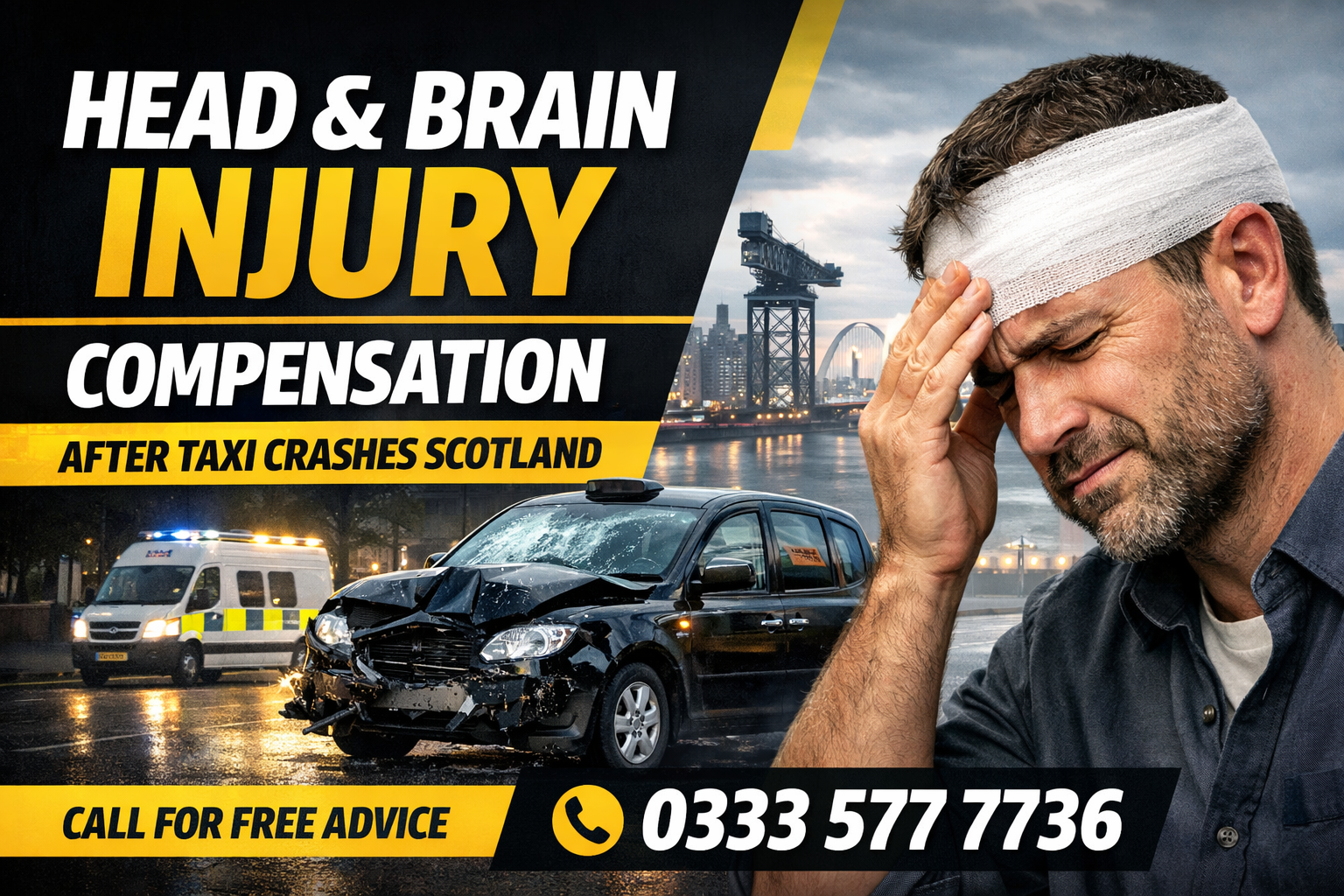
Head & Brain Injury Compensation After Taxi Crashes Scotland
Head & Brain Injury Compensation After Taxi Crashes Scotland
Experiencing a taxi accident can be a traumatic event, but when it results in a head or brain injury, the consequences can be life-altering. Whether you were a taxi driver or a passenger, sustaining a head injury in a road accident can lead to significant physical, emotional, and financial challenges. In Scotland, understanding your rights and the process for securing taxi accident brain injury compensation is crucial for your recovery and future well-being.
At Taxi Claims, we specialise in providing comprehensive support for those affected by taxi accidents across Scotland. We understand the unique complexities of a head injury road accident claim, particularly when it involves a brain injury, and we are committed to helping you navigate the legal landscape to secure the maximum compensation you deserve. Our no-win-no-fee service ensures that you can focus on your recovery without added financial stress.
This guide will walk you through the various types of head and brain injuries, their potential long-term impacts, and how to effectively pursue a claim for compensation in Scotland. From the immediate aftermath of a crash to long-term rehabilitation and legal battles, we are here to offer expert guidance and support every step of the way. If you’ve suffered a head or brain injury in a taxi accident, don't hesitate to reach out to our team of dedicated legal professionals.
Types of Head & Brain Injuries from Taxi Accidents
Head and brain injuries resulting from taxi accidents can range dramatically in severity, from concussions to devastating traumatic brain injuries. The nature of the impact, speed of the vehicles, and even how your head strikes an object can all contribute to the type and extent of the injury. It's essential to understand these classifications, as they directly impact your diagnosis, treatment, and ultimately, your compensation claim.
Concussion and Mild Traumatic Brain Injury (MTBI)
Often underestimated, a concussion is a type of mild traumatic brain injury (MTBI) caused by a sudden impact or violent shaking of the head. While sometimes referred to as "getting your bell rung," concussions are serious medical events. Symptoms can include headaches, dizziness, confusion, memory problems, and sensitivity to light or sound. Even seemingly minor incidents can lead to a [concussion claim Scotland taxi], as their effects can linger for weeks, months, or even longer, impacting a driver's ability to work or a passenger's daily life. Proper diagnosis and follow-up care are vital, as repeat concussions can have cumulative and severe consequences.
Moderate to Severe Traumatic Brain Injury (TBI)
Moderate to severe traumatic brain injuries (TBIs) are far more serious and carry a higher risk of long-term disability. These injuries involve more significant brain damage, often accompanied by skull fractures, bleeding within the brain, or bruising of brain tissue (contusions). A TBI can lead to extended periods of unconsciousness, coma, or altered mental states. The initial medical response is critical, often requiring intensive care and specialist intervention. The long-term effects can be profound, impacting every aspect of a person's life and necessitating extensive and ongoing care.
Other Head Injuries
Beyond concussions and TBIs, taxi accidents can cause other significant head injuries. These might include:
- Skull Fractures: Breaks in the bones of the skull, which can be simple or complex, and may lead to direct brain injury if bone fragments penetrate the brain.
- Intracranial Haemorrhage: Bleeding within the skull, such as epidural, subdural, or subarachnoid haematomas. These are medical emergencies requiring immediate treatment to reduce pressure on the brain.
- Contusions: Bruising of the brain tissue itself, often occurring at the site of impact or on the opposite side of the brain (contrecoup injury) due to the brain moving within the skull.
- Diffuse Axonal Injury (DAI): A shearing injury that occurs when the brain rapidly shifts inside the skull, tearing nerve fibres (axons). DAI is often associated with severe TBI and can result in widespread brain damage and long-term functional impairment.
Regardless of the type of head injury, seeking immediate medical attention after a taxi accident in Scotland is paramount. A clear medical record is not only vital for your recovery but also forms the cornerstone of any subsequent [head injury road accident claim].
Long-Term Impact & Rehabilitation Needs After a Brain Injury
The impact of a brain injury sustained in a taxi accident can extend far beyond the initial recovery period. These injuries often present a complex array of challenges that can profoundly affect an individual's physical abilities, cognitive functions, and emotional well-being. Understanding these long-term consequences and the comprehensive rehabilitation required is crucial when assessing the full extent of your [taxi accident brain injury compensation] claim.
Physical Challenges
Many brain injury survivors experience persistent physical symptoms. These can include:
- Chronic Pain: Headaches, neck pain, and muscle spasms are common and can significantly impact daily life.
- Motor Deficits: Weakness, paralysis, problems with balance, coordination, and fine motor skills can hinder mobility and independence.
- Sensory Impairments: Vision problems (e.g., double vision, light sensitivity), hearing loss, changes in taste or smell, and altered touch sensation are frequently reported.
- Fatigue: Extreme and debilitating fatigue, often disproportionate to physical exertion, is a common and challenging symptom.
- Seizures: Brain injuries can increase the risk of developing epilepsy or seizure disorders.
These physical challenges often require ongoing physiotherapy, occupational therapy, and potentially adaptive equipment or home modifications.
Cognitive Impairments
Brain injuries can significantly impair cognitive functions, affecting an individual's ability to think, remember, and process information. Common cognitive deficits include:
- Memory Problems: Difficulty forming new memories, recalling past events, or remembering important information.
- Attention and Concentration Issues: Struggling to focus, being easily distracted, or having a reduced attention span.
- Executive Dysfunction: Problems with planning, problem-solving, decision-making, and impulse control, which can severely impact work and independent living.
- Slowed Processing Speed: Taking longer to understand and respond to information.
- Language Difficulties: Aphasia (problems with speaking or understanding language), or dysarthria (slurred speech).
Cognitive rehabilitation, speech therapy, and psychological support are often integral to addressing these impairments.
Emotional and Behavioural Changes
The brain also controls our emotions and behaviour. Injuries can lead to significant and often distressing changes, including:
- Mood Swings: Unpredictable shifts in mood, from irritability to sadness or euphoria.
- Anxiety and Depression: High rates of clinical depression and anxiety disorders are common after brain injury.
- Personality Changes: Alterations in personality traits, making it difficult for individuals and their loved ones to adapt.
- Impulsivity and Disinhibition: Difficulty controlling impulses or behaving appropriately in social situations.
- Reduced Empathy or Social Skills: Challenges in understanding and responding to social cues.
These emotional and behavioural issues necessitate robust psychological and psychiatric support, often involving therapy and medication.
Rehabilitation Pathways
Effective rehabilitation is multifaceted and tailored to the individual's needs. It often involves a team of specialists, including neurologists, neuropsychologists, physiotherapists, occupational therapists, speech and language therapists, and support workers. Rehabilitation aims to maximise recovery, adapt to new limitations, and improve quality of life. The long-term costs of such care, including potential care packages, assistive technology, and adapted housing, must be thoroughly assessed and included in any [serious head injury solicitor Scotland] claim. This comprehensive approach ensures that all aspects of the injury's impact are considered when pursuing compensation.
Maximising Your Head Injury Compensation in Scotland
When pursuing a [head injury road accident claim] in Scotland, the goal is to secure compensation that accurately reflects the full extent of your losses – not just immediate medical bills, but also future care, lost income, and the profound impact on your quality of life. Maximising your compensation requires meticulous evidence gathering, expert medical assessment, and skilled legal representation.
What Can You Claim For?
Compensation for head and brain injuries in Scotland typically covers several key areas:
- General Damages: This component covers the pain, suffering, and loss of amenity directly caused by your injury. This includes physical pain, emotional distress, and the impact on your ability to enjoy life, hobbies, and social activities. The severity and long-term prognosis of the brain injury significantly influence this figure.
- Special Damages (Past and Future Financial Losses): This is where detailed financial assessment becomes crucial. It includes:
- Medical Expenses: Costs for immediate treatment, surgeries, medication, ongoing therapies (physiotherapy, occupational therapy, speech therapy, psychological counselling), and specialist consultations.
- Rehabilitation Costs: The expense of long-term rehabilitation programmes, cognitive therapy, and specialist care.
- Loss of Earnings: Past wages lost due to inability to work, and crucially, projected future loss of earnings, considering any reduced earning capacity or inability to return to your previous profession (a critical factor for taxi drivers). For more details, see our guide on Lost Earnings After a Taxi Accident: Compensation for Drivers.
- Care Costs: Compensation for care provided by family members (even if unpaid) or professional carers, both now and in the future.
- Adaptations: Costs for adapting your home or vehicle to accommodate new disabilities.
- Travel Expenses: Costs incurred for travel to medical appointments or rehabilitation.
- Damage to Property: Repairs or replacement of your taxi or personal belongings damaged in the accident.
The Importance of Medical Evidence
Robust medical evidence is the bedrock of any successful brain injury claim. From the moment of the accident, every medical record, scan (CT, MRI), diagnosis, and prognosis report is vital. It is essential to:
- Seek Immediate Medical Attention: Even if symptoms seem mild initially, a doctor's visit immediately after the accident establishes a clear link between the crash and your injury.
- Undergo Thorough Assessments: Ensure you receive comprehensive neurological and neuropsychological assessments to accurately diagnose and document the extent of your brain injury.
- Maintain Detailed Records: Keep copies of all medical reports, prescriptions, therapy schedules, and receipts for related expenses.
- Consult Specialists: Your solicitor will likely arrange for independent medical experts to provide reports on your current condition and long-term prognosis, forming a key part of your claim for [taxi accident brain injury compensation].
Calculating Your Compensation
Calculating compensation for brain injuries is highly complex. Unlike a broken bone with a relatively fixed recovery period, brain injuries have unpredictable and long-lasting effects. Factors considered include:
- The specific type and severity of the injury.
- The impact on your ability to work and earn a living.
- The need for ongoing medical care, rehabilitation, and personal care.
- The psychological and emotional impact on your life and family.
- Your age and pre-accident health.
A skilled [serious head injury solicitor Scotland] will work with medical experts, actuaries, and other specialists to build a comprehensive case, ensuring all present and future losses are accounted for. This holistic approach is essential to securing a settlement that truly meets your long-term needs.
Expert Legal Support for Complex Brain Injury Claims
Navigating the aftermath of a taxi accident that causes a head or brain injury requires more than just medical care; it demands expert legal guidance. These claims are inherently complex, often involving significant future care needs, loss of earning capacity, and profound personal impact. Engaging a specialist solicitor is not just advisable, it's often essential for securing the comprehensive compensation you deserve.
Why You Need Specialist Solicitors
Dealing with a brain injury claim after a taxi accident differs significantly from more straightforward personal injury cases. Here’s why specialist legal support is crucial:
- Understanding Brain Injury: Expert solicitors have a deep understanding of neurological injuries, their various classifications, and the often subtle, long-term effects that may not be immediately apparent. They know what medical evidence is required and can access the right medical experts.
- Complex Valuation: Valuing a brain injury claim is intricate. It goes beyond simple financial losses to encompass future care needs, therapies, assistive technology, home adaptations, and projected loss of earnings over a lifetime. Specialist solicitors work with a network of experts, including neuropsychologists, occupational therapists, and financial planners, to accurately calculate these costs.
- Challenging Opposing Parties: Insurance companies often challenge brain injury claims vigorously. A [serious head injury solicitor Scotland] will have the experience and tenacity to negotiate effectively, challenging low offers and ensuring your voice is heard.
- Navigating Scottish Law: Personal injury law, especially concerning road traffic accidents, has specific nuances in Scotland. A Scottish-based specialist ensures compliance with local legal requirements and maximises your chances of success.
- Access to Rehabilitation: Beyond compensation, expert solicitors can often help clients access immediate private rehabilitation services, which can be critical for early recovery and better long-term outcomes, even before a claim is settled.
The Claims Process
While every case is unique, the general claims process for a [head injury road accident claim] in Scotland typically involves:
- Initial Consultation: A free, no-obligation discussion where your solicitor assesses the viability of your claim.
- Investigation and Evidence Gathering: Your solicitor will collect all necessary evidence, including police reports, witness statements, accident reconstruction reports, and crucially, all medical records related to your head injury.
- Medical Assessments: Independent medical experts, often neurologists and neuropsychologists, will examine you and provide detailed reports on your injury, prognosis, and future needs.
- Valuation of the Claim: Based on all gathered evidence, your solicitor will calculate the full value of your claim, covering general and special damages.
- Negotiation: Your solicitor will present the claim to the at-fault party's insurance company and engage in negotiations to reach a fair settlement.
- Court Proceedings (If Necessary): While most claims settle out of court, your solicitor will be prepared to take your case to court if a fair settlement cannot be agreed upon.
Throughout this process, a good solicitor provides regular updates, explains complex legal terms, and offers empathetic support.
No Win, No Fee Explained
Taxi Claims operates on a "no-win, no-fee" basis for personal injury claims, including brain injury cases. This agreement means:
- You do not pay any upfront legal fees.
- If your claim is unsuccessful, you generally pay nothing for our legal services.
- If your claim is successful, our fees are taken as a pre-agreed percentage of the compensation awarded. This is discussed transparently from the outset.
This arrangement significantly reduces the financial risk for you, allowing you to pursue justice without the burden of legal costs. It provides peace of mind, knowing that your legal team is fully invested in achieving the best possible outcome for your [non-fault taxi accident injury claim scotland].
FAQs: Head & Brain Injury Compensation After Taxi Crashes Scotland
Navigating a head or brain injury claim can bring many questions. Here are some of the most common queries our clients have in Scotland:
How long do I have to make a head injury claim after a taxi accident in Scotland?
In Scotland, you generally have three years from the date of the accident or from the date you became aware of the injury (if it wasn't immediately apparent) to initiate a claim for compensation. However, it is always best to contact a solicitor as soon as possible, as evidence can be lost over time, and early intervention can aid in securing vital rehabilitation. For children, the three-year limit begins from their 16th birthday.
What if the taxi driver was at fault for my head injury?
If you were a passenger and the taxi driver was found to be at fault, you can still make a claim against their insurance. Similarly, if you were a taxi driver and another party was at fault, you would claim against their insurance. If you were a taxi driver and the accident was your fault, claiming compensation for your own injuries becomes more complex, often relying on your own insurance policies or specific personal accident cover. It's vital to seek expert legal advice to understand your options.
Can I claim for psychological injuries alongside a head injury?
Yes. It is very common for individuals who suffer a physical head or brain injury to also experience psychological trauma, such as PTSD, anxiety, or depression. These are legitimate components of a personal injury claim and should be assessed and included as part of your overall [taxi accident brain injury compensation]. Expert medical and psychological evaluations are essential to document these injuries.
What is a "no-win, no-fee" agreement for brain injury claims?
A "no-win, no-fee" agreement (also known as a Conditional Fee Agreement) means that you will not pay your solicitor's legal fees if your claim is unsuccessful. If your claim is successful, your solicitor will take a pre-agreed percentage of your compensation as their fee, plus any disbursements (costs like medical report fees). This arrangement ensures you can pursue justice without upfront financial risk.
Secure Your Future After a Head or Brain Injury
A head or brain injury after a taxi accident in Scotland can drastically alter your life, but it doesn't have to define your future. By understanding your rights and securing expert legal representation, you can pursue the compensation needed to support your recovery, rehabilitation, and long-term well-being. From managing immediate medical costs to ensuring you have access to future care and recouping lost earnings, a successful claim can provide the financial security necessary for rebuilding your life.
At Taxi Claims, our specialist team in Glasgow and across Scotland are dedicated to providing compassionate and effective legal support. We have a proven track record of handling complex [head injury road accident claim] cases, working tirelessly to achieve the best possible outcomes for our clients. Don't face this challenging time alone. Let us be your trusted legal partner, advocating for your rights and fighting for the maximum [taxi accident brain injury compensation] you deserve.
Contact Taxi Claims today on 0333 577 7736 for a free, no-obligation consultation. We’re here to help you get back on track.