Hit and Run Taxi Driver Scotland: Your Rights to Compensation
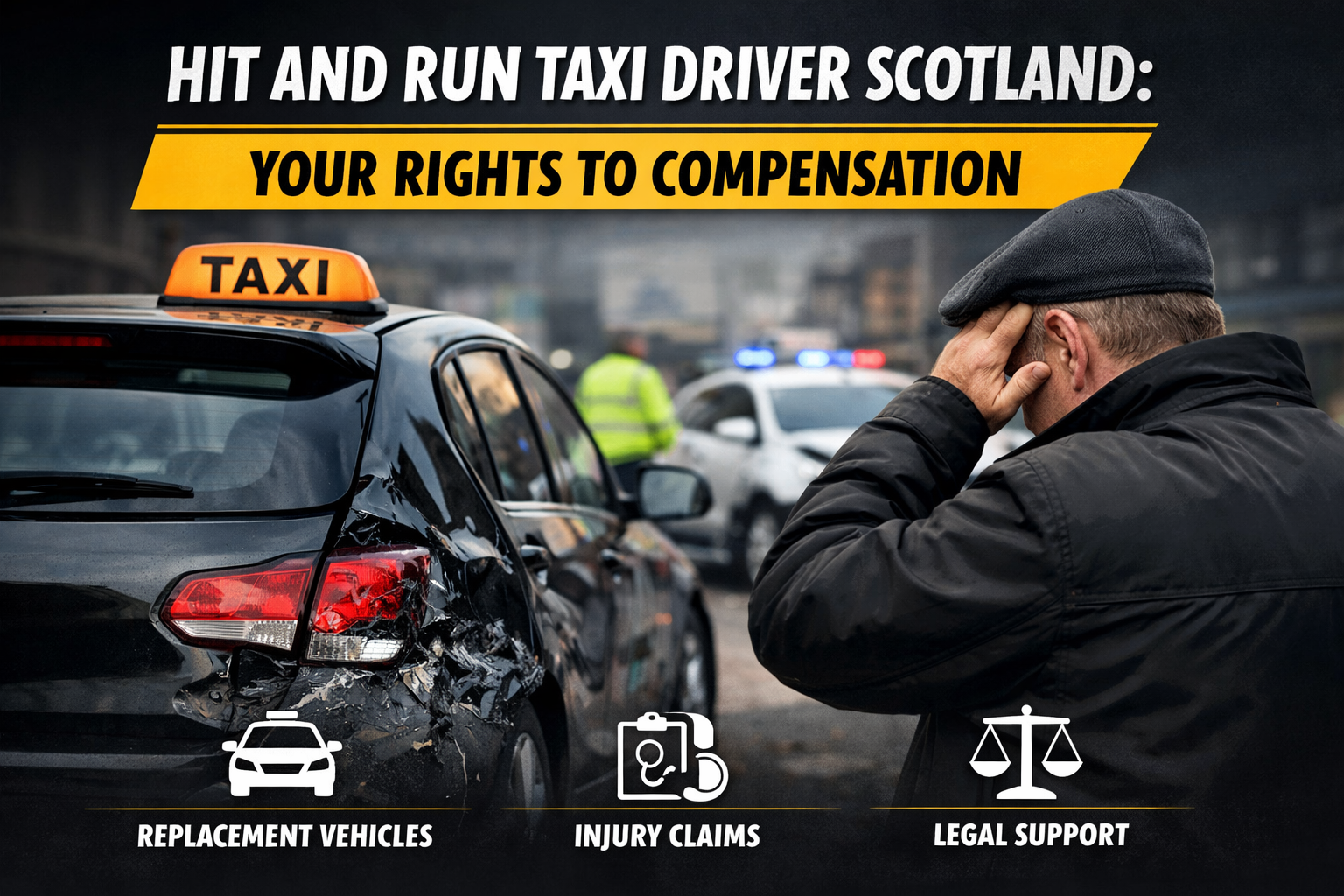
Being involved in a road accident is always stressful, but it can be particularly devastating for a taxi driver when the at-fault party flees the scene. A hit and run taxi driver Scotland scenario leaves you not only with vehicle damage and potential personal injuries but also with the added burden of an unidentified driver taxi accident Scotland. This can lead to significant financial loss through repairs and lost earnings, threatening your livelihood. However, it's crucial to understand that even in these challenging circumstances, you have rights and avenues for compensation.
Many taxi drivers believe that if the other driver can't be identified, there's no hope for a claim. This is a common misconception. In Scotland, a vital organisation known as the Motor Insurers' Bureau (MIB) steps in to help victims of uninsured or untraced drivers. This comprehensive guide will walk you through the essential steps to take after a hit and run incident, explain the MIB's critical role, and detail how you can pursue a claim for your vehicle damage, lost income, and any personal injuries sustained, ensuring you can get back on the road and back to earning. We'll also highlight why expert legal support is invaluable in navigating these complex claims.
Dealing with a Hit and Run Taxi Accident in Scotland
A hit and run accident can be a shocking and disorienting experience. Your immediate actions at the scene are critical to preserving evidence and safeguarding your rights, especially when there are no driver details Scotland. While it's natural to be overwhelmed, taking specific steps can significantly strengthen any subsequent claim. Remember, your safety and the safety of any passengers are paramount.
Immediate Actions at the Scene
Firstly, ensure everyone is safe. Move your taxi to a safe location if possible, and check on any passengers. Even if you feel fine, it's wise to seek medical attention promptly, as some injuries may not be immediately apparent. Once safety is secured, begin to gather as much information as you can about the incident and the vehicle involved.
- Do Not Pursue the Other Driver: While your instinct might be to follow, this is dangerous and could compromise your claim. Focus on the scene.
- Note Down Details: Jot down everything you can recall about the fleeing vehicle: make, model, colour, and especially any partial registration number. Even small details like unusual markings, dents, or bumper stickers can be helpful.
- Look for Witnesses: Speak to anyone who may have seen the incident. Obtain their names, contact numbers, and a brief statement of what they witnessed.
- Gather Evidence: Take photographs and videos of your damaged vehicle, the accident scene, road conditions, and any relevant signs or landmarks. Dashcam footage is invaluable in these situations. If you have a dash cam, make sure the footage is secured immediately. Maximise Your Claim: Using Taxi Dash Cam Evidence in Scotland can offer more insights here.
- Check for CCTV: Note down any nearby businesses or properties that might have CCTV cameras. This footage could provide crucial evidence of the hit and run.
Reporting the Incident
Reporting the hit and run to the police is a non-negotiable step. Without a police report, the MIB will not consider your claim.
- Contact the Police Immediately: Dial 101 (or 999 if there are serious injuries or the offender is still nearby). Inform them it's a hit and run.
- Obtain a Police Incident Number: This number is essential for both your insurance company and the MIB.
- Report to Your Insurer: Notify your own taxi insurance company about the accident as soon as possible. Even if you intend to claim through the MIB, your insurer needs to be aware.
For a broader guide on immediate steps after any taxi accident in Glasgow, refer to Taxi Accident in Glasgow: Your Immediate Step-by-Step Guide for Drivers.
The Role of the MIB (Motor Insurers' Bureau) in Scotland
When you're dealing with a hit and run taxi driver Scotland, the Motor Insurers' Bureau (MIB) becomes your primary route for compensation. The MIB is a non-profit organisation funded by UK motor insurers, specifically established to compensate victims of uninsured and untraced drivers. This means that even if the at-fault driver cannot be found, you still have a pathway to recover losses.
Who is the MIB and What Do They Cover?
The MIB operates two agreements: the Uninsured Drivers Agreement and the Untraced Drivers Agreement. In a hit and run scenario, the latter is the one that applies. The Untraced Drivers Agreement covers:
- Personal Injury: Compensation for any injuries you or your passengers sustained, including medical expenses, pain and suffering, and loss of amenity.
- Damage to Property (Vehicle Damage): Reimbursement for repairs to your taxi or the vehicle's market value if it's a write-off. However, there is typically an excess deducted from property damage claims (currently £400, but subject to change) and property damage claims are usually only considered if there is also an element of personal injury, or if the value of the damage is significant enough to warrant it.
- Financial Losses: This includes out-of-pocket expenses directly resulting from the accident, such as prescription costs, travel to medical appointments, and crucially for taxi drivers, loss of earnings.
It's vital to note that the MIB scheme is a "fund of last resort." This means you must have exhausted all other avenues for compensation, such as claiming through your own insurance, before the MIB will consider your case.
Eligibility for an MIB Claim
To be eligible for an MIB claim as a hit and run taxi driver Scotland, several criteria must be met:
- The accident must have occurred on a road or public place in the UK.
- The identity of the at-fault driver and/or vehicle must be genuinely unknown. You must demonstrate that reasonable efforts were made to trace them.
- The accident must have been reported to the police within 14 days (or 5 days if only property damage is involved), or as soon as reasonably practicable. An incident number is crucial.
- You must not have been at fault for the accident. The MIB will assess liability, and if you are found to be partially or wholly at fault, your compensation may be reduced or denied.
- You must apply to the MIB within three years of the accident date for personal injury, although it's always best to act as soon as possible.
Understanding the nuances of the MIB is complex. For a deeper dive into MIB claims for taxi drivers, see Motor Insurers' Bureau (MIB) Claims for Taxi Drivers in Scotland: The Definitive Guide.
Steps to Take After a Hit and Run Taxi Incident to Claim with the MIB
Initiating a claim after a hit and run taxi driver Scotland incident requires a systematic approach. The MIB has specific requirements, and presenting a well-documented case is essential for success. This process can be intricate, which is why professional legal guidance is often recommended.
Gathering Evidence
The success of your MIB claim hinges on the quality and quantity of evidence you provide. Since there's no identifiable third party, the burden of proof largely falls on you.
- Police Report: As mentioned, obtain the police incident number and ideally a copy of the full report. This officially documents the hit and run.
- Witness Statements: Any independent witnesses are invaluable. Their accounts can corroborate your version of events and provide details of the fleeing vehicle that you might have missed.
- Dashcam/CCTV Footage: This is often the most compelling evidence. If you have dashcam footage, secure it immediately. If nearby CCTV was identified, request a copy through your solicitor or the police.
- Photographs: Comprehensive photos of your vehicle damage, the scene, road markings, and any debris can support your claim.
- Medical Records: If you sustained injuries, keep detailed records of all medical consultations, diagnoses, treatments, and prescriptions. This forms the basis of your personal injury claim.
- Financial Records: Document all expenses incurred due to the accident: taxi repair quotes, invoices for repairs, receipts for replacement travel, and especially detailed records of your lost earnings.
Notifying Authorities and Insurers
While you've already reported to the police, there's a formal process for engaging with the MIB and your own insurer.
- Formal MIB Notification: Once the police report is filed and initial evidence gathered, you or your solicitor will formally notify the MIB of your intention to make a claim under the Untraced Drivers Agreement.
- Your Own Insurance: Inform your taxi insurance provider of your plans to claim through the MIB. They may also need to be involved, particularly if your policy offers cover for such incidents (e.g., comprehensive cover for vehicle damage, which you might claim first). It's crucial to understand the implications of claiming on your own policy vs. the MIB, especially concerning your excess and future premiums.
Submitting Your MIB Application
The MIB application form is detailed and requires thorough completion. It asks for a comprehensive account of the accident, details of your injuries, financial losses, and all supporting evidence.
- Accuracy is Key: Provide accurate and consistent information. Any discrepancies could raise doubts about the validity of your claim.
- Attach All Evidence: Submit all the evidence you have collected – police report, witness details, photos, medical records, lost earnings calculations, and repair estimates.
- Seek Professional Help: This stage is where expert legal support becomes almost indispensable. Solicitors specialising in taxi accident claims will ensure your application is robust, complete, and presented in a way that maximises your chances of success.
Securing Compensation When the Driver is Unknown
One of the biggest concerns for a hit and run taxi driver Scotland is how to recover their financial losses, particularly when their income depends entirely on their vehicle. The MIB's Untraced Drivers Agreement provides a crucial safety net for these situations, covering various aspects of your losses.
Recovering Vehicle Damage and Repairs
The MIB can cover the costs associated with repairing your taxi or compensating you for its market value if it's deemed a write-off. However, there are typically conditions:
- Excess Application: A fixed excess (currently £400) is usually deducted from property damage awards under the MIB Untraced Drivers Agreement. This is generally higher than standard insurance excesses.
- Evidence of Damage: Clear photographic evidence, detailed repair estimates from approved garages, and potentially an independent engineer's report will be required.
- Personal Injury Link: In many cases, the MIB is more inclined to compensate for property damage if there is also an associated personal injury claim, especially if the property damage alone is not substantial.
Claiming for Lost Earnings
For a taxi driver, an accident means being off the road, which directly translates to lost income. The MIB recognises this and allows for the recovery of lost earnings.
- Proof of Income: You'll need to provide robust evidence of your pre-accident earnings. This could include tax returns, bank statements showing income, daily takings records, and receipts for fuel/maintenance.
- Period of Loss: The MIB will assess the period you were unable to work due to injury or vehicle repairs. This will require medical certificates and repair timelines.
- Mitigation of Loss: You are expected to mitigate your losses, meaning you should take reasonable steps to minimise the financial impact, such as seeking alternative work or trying to get your vehicle repaired promptly.
For detailed advice on claiming lost income, refer to Lost Earnings After a Taxi Accident: How to Recover Your Income in Scotland. Additionally, securing a replacement taxi vehicle can minimise downtime and lost earnings. Read more at Replacement Taxi Vehicle Service Glasgow: Stay on the Road After an Accident.
Personal Injury Compensation
If you sustained injuries in the hit and run, you are entitled to claim compensation for your pain, suffering, and impact on your quality of life, alongside specific financial losses.
- Medical Assessment: An independent medical examination will be arranged to assess the nature and severity of your injuries, prognosis, and any long-term effects. This report forms a critical part of your claim.
- General Damages: This covers non-financial losses such as pain, suffering, and loss of amenity (inability to enjoy hobbies or perform daily tasks).
- Special Damages: This includes quantifiable financial losses like past and future lost earnings, medical expenses (prescription costs, physiotherapy), care costs, and travel expenses related to your injuries.
- Psychological Impact: A hit and run can also cause significant psychological distress, including anxiety or PTSD. If you experience this, it can also form part of your personal injury claim. PTSD & Anxiety Claims After Taxi Accidents Scotland: Mental Health Support provides further information.
Why Expert Legal Support is Crucial for Hit and Run Claims in Scotland
While the MIB provides a vital service, navigating their claims process, especially after a hit and run taxi driver Scotland incident, is rarely straightforward. The complexities involved make professional legal support not just helpful, but often essential for securing the compensation you deserve.
Navigating MIB Complexities
The MIB has its own set of rules, procedures, and evidentiary requirements, which differ significantly from standard insurance claims. An experienced personal injury solicitor in Scotland will:
- Understand MIB Protocols: They are familiar with the specific criteria, time limits, and evidence needed to make a successful MIB claim.
- Handle Correspondence: Your solicitor will manage all communication with the MIB, ensuring all queries are answered thoroughly and promptly, preventing delays or potential rejections due to procedural errors.
- Challenge Decisions: If the MIB initially rejects your claim or offers insufficient compensation, a solicitor can help you challenge their decision, presenting further arguments or evidence.
Maximising Your Claim Value
Without an identified at-fault party, calculating and proving the full extent of your losses can be challenging. A specialist solicitor will ensure every aspect of your claim is considered and accurately valued.
- Accurate Loss Assessment: They will help you meticulously document and calculate all your losses, including vehicle damage, lost earnings, future loss of earning capacity, medical expenses, and the full extent of your personal injuries.
- Gathering Evidence: Your solicitor will assist in gathering all necessary evidence, including medical reports, specialist engineer reports for vehicle damage, and detailed financial records to substantiate your claim for lost income.
- Negotiation Expertise: Solicitors are skilled negotiators who can advocate on your behalf to achieve the maximum possible compensation from the MIB.
No Win, No Fee Options
Many reputable Scottish personal injury solicitors operate on a 'No Win, No Fee' basis, particularly for taxi accident claims. This provides crucial peace of mind during an already stressful time.
- Reduced Financial Risk: This agreement means you typically won't pay any legal fees upfront, and if your case is unsuccessful, you generally won't owe your solicitor anything.
- Access to Justice: It ensures that even if you're facing financial hardship due to the accident, you can still access expert legal representation.
Engaging a solicitor for your claiming MIB hit and run taxi case offers reassurance and significantly increases your chances of a fair outcome. For more reasons why legal representation is crucial, see Taxi Accident Claims: Why You Need a Solicitor in Scotland.
Frequently Asked Questions About Hit and Run Taxi Accident Claims in Scotland
Q1: What if I only have a partial registration number for the hit and run vehicle?
Even a partial registration number can be useful. Provide all the details you have to the police and your solicitor. They can use this information, combined with other evidence like CCTV or witness accounts, to try and trace the vehicle or at least strengthen your MIB claim.
Q2: How long does a hit and run taxi claim through the MIB typically take?
MIB claims, especially those involving untraced drivers, can be complex and often take longer than standard insurance claims. The timeframe varies depending on the severity of injuries, the complexity of evidence, and the MIB's investigation. It can range from several months to a couple of years.
Q3: Can my passengers also claim compensation if they were injured in a hit and run?
Yes, absolutely. Any passenger injured in a hit and run taxi accident in Scotland also has the right to claim compensation through the MIB's Untraced Drivers Agreement. Their claims would be assessed independently based on their injuries and losses.
Q4: Will claiming through the MIB affect my taxi insurance premiums?
While claiming through the MIB means you are not claiming directly from a named third-party insurer, and it's not considered a "fault" claim against your own policy in the traditional sense, any accident can potentially impact future premiums. It's best to discuss this specifically with your own insurance provider.
Q5: What if I initially thought the driver stopped but they then fled?
Report the full circumstances to the police immediately. The key is that the other driver's details are genuinely unknown. Even if they initially stopped, their subsequent departure makes it a hit and run. Ensure all communication with the police accurately reflects this.
Conclusion
A hit and run accident can be a terrifying and financially damaging event for any taxi driver in Scotland, leaving you with the frustration of an unidentified driver taxi accident Scotland. However, it's vital to remember that you are not without recourse. The Motor Insurers' Bureau (MIB) exists precisely to provide a pathway to justice and compensation for victims of untraced drivers, ensuring that you can still claim for vehicle damage, lost earnings, and personal injuries.
Taking immediate, decisive action – securing the scene, gathering evidence, and reporting the incident to the police – lays the crucial groundwork for a successful claim. While the MIB process can be complex, engaging an expert legal team is your best strategy. They will navigate the intricacies of MIB rules, meticulously build your case, and tirelessly advocate for your maximum entitlement, allowing you to focus on your recovery and getting your livelihood back on track.
Don't let the actions of a reckless driver jeopardise your future. If you've been the victim of a hit and run as a taxi driver in Scotland, understand your rights and seek the professional help you need to secure the compensation you deserve. Start your journey to recovery today.