Multi-Vehicle Taxi Accident Claim Scotland: Complex Injuries & Liability
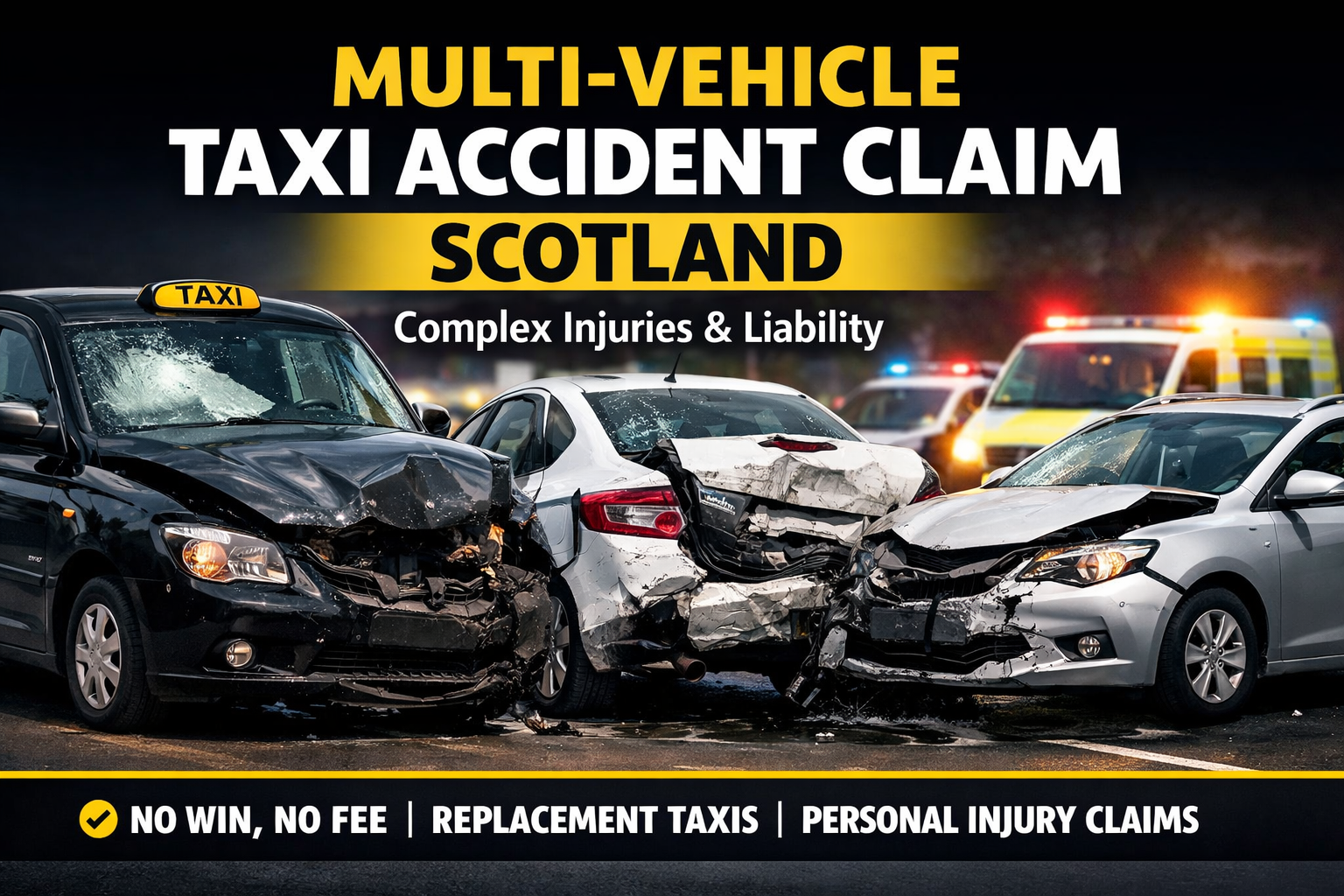
For taxi drivers and passengers in Scotland, being involved in any road traffic accident is a distressing experience. However, a multi-vehicle taxi accident claim in Scotland presents an entirely new level of complexity. These incidents, often referred to as "pile-ups," involve three or more vehicles, making the process of determining fault, allocating liability, and securing fair compensation significantly more challenging. Whether you're a hackney carriage driver, a private hire operator, or a passenger, understanding your rights and the intricate legal landscape is crucial to protect your livelihood and well-being.
Unlike a two-car collision, a pile-up taxi accident in Scotland can quickly descend into a blame game, with each insurer attempting to shift responsibility. This article serves as your comprehensive guide, delving into the unique aspects of a multi-vehicle taxi accident claim, from dissecting complex liability to navigating the various avenues for compensation. We'll explore why expert legal representation is not just beneficial, but often essential, to ensure you receive the maximum possible settlement for your vehicle damage, lost earnings, and any personal injuries sustained.
Understanding Multi-Vehicle Taxi Accidents in Scotland
Multi-vehicle taxi accidents, often occurring on busy motorways, dual carriageways, or in challenging weather conditions, are inherently more complex than standard two-vehicle collisions. The sheer number of vehicles involved, combined with varying speeds, braking distances, and impact points, creates a tangled web of events that requires meticulous investigation. For taxi drivers, who depend on their vehicle for their income, and passengers, whose safety is paramount, the aftermath of such an incident can be particularly daunting.
Defining a Multi-Vehicle Accident
In legal terms, a multi-vehicle accident typically involves three or more vehicles. The dynamics are usually characterised by a chain reaction, where an initial collision triggers subsequent impacts. This "domino effect" can make it incredibly difficult to pinpoint who caused what damage and which injuries were a direct result of which impact. This ambiguity is precisely why these claims are classified as having complex liability taxi crash scenarios.
Unique Challenges for Taxi Drivers
For hackney carriage and private hire drivers, a multi-vehicle accident isn't just a personal ordeal; it's a threat to their business. Beyond physical injuries, drivers face significant financial losses due to vehicle repair costs, increased insurance premiums, and, crucially, lost earnings while their vehicle is off the road. The immediate aftermath requires careful documentation, and understanding what to do after a taxi accident in Scotland can significantly impact the success of your claim. Fleet operators also face the challenge of managing multiple damaged vehicles and ensuring continuity of service.
Determining Liability in Complex Taxi Pile-Ups
One of the most critical and often contentious aspects of a pile up taxi accident Scotland is determining who is at fault. In multi-vehicle incidents, it's rare for one party to be entirely blameless, and liability can be shared among several drivers. Scottish law, like the rest of the UK, applies principles of negligence to assign fault, but the presence of multiple parties complicates this considerably.
The "Domino Effect" of Collisions
Imagine a scenario where Vehicle A collides with Vehicle B, pushing B into C, and C then hits your taxi, Vehicle D. While Vehicle A initiated the chain, are Vehicles B and C entirely free from blame? Perhaps B was following too closely, or C could have taken evasive action. Insurers will delve into the precise sequence of events, braking distances, reaction times, and road conditions to establish a timeline of impacts and assess individual driver contributions. This intricate process often requires accident reconstruction specialists. For more detailed insights into how fault is established, you can refer to our guide on Taxi Accident Fault Determination UK: Who's Liable in a Collision? Drivers' Guide.
Contributory Negligence in Scotland
Scottish law recognises the concept of "contributory negligence," where if an injured party contributed to their own injuries or the accident, their compensation may be reduced. In a multi-vehicle crash, a taxi driver might be found partially at fault for various reasons, such as incorrect following distance, failing to anticipate a hazard, or even having worn tyres. Your legal representative will work to minimise any finding of contributory negligence against you, or if you believe you have been unfairly blamed, our article on Disputing Fault Claims for Taxis in Scotland: Your Driver's Guide provides valuable information.
Role of Witness Statements and Evidence
Crucial to establishing liability in a complex taxi crash is comprehensive evidence. This includes police reports, CCTV footage, dashcam recordings (increasingly common in taxis), photographs of the scene and damage, and crucially, witness statements. Independent witnesses can often provide unbiased accounts of the accident sequence, which are invaluable in untangling conflicting narratives.
Maximising Compensation in Multi-Vehicle Claims
Securing full and fair compensation after a multiple vehicle injury claim Scotland can be a complex journey, especially when multiple insurers are involved. Your claim will typically cover various aspects, including damage to your vehicle, loss of income, and personal injuries. Without expert guidance, you risk accepting a settlement that doesn't adequately cover your losses.
Vehicle Damage & Replacement
Your taxi is your livelihood, and vehicle damage means lost income. In a non-fault multi-vehicle accident, you are entitled to have your vehicle repaired to its pre-accident condition, or compensated for its market value if it's a write-off. Moreover, you are entitled to a like-for-like replacement taxi vehicle to keep you on the road while yours is being repaired or a replacement is sourced. Our Replacement Taxi Vehicle Service Glasgow: Stay on the Road After an Accident explains how this service ensures minimal disruption to your earning potential.
Lost Earnings Recovery
For taxi drivers, the period your vehicle is off the road, or you are unable to work due to injury, directly translates to lost income. Calculating this accurately, especially for self-employed drivers with fluctuating income, requires careful attention. Your claim should account for all lost fares, tips, and potential future earnings if your capacity to work is diminished long-term. For a detailed breakdown of how to recover this vital compensation, see our guide on Lost Earnings After a Taxi Accident: How to Recover Your Income in Scotland.
Personal Injury Compensation
Beyond vehicle damage and lost earnings, a multi-vehicle accident can result in a range of injuries, from whiplash and soft tissue damage to more severe fractures or psychological trauma. Compensation for personal injury aims to cover pain and suffering, medical expenses (including rehabilitation and future care costs), and any impact on your quality of life. The severity and long-term effects of your injuries will significantly influence the value of this part of your claim.
Expert Legal Representation for Complex Taxi Accidents
Given the inherent complexities of a multi-vehicle taxi accident claim Scotland, attempting to navigate the process alone can be overwhelming and detrimental to your outcome. Engaging a specialist personal injury solicitor is not just advisable, but often critical to achieving a fair settlement.
Navigating Insurance Companies
Each insurance company involved in a multi-vehicle accident will protect its own interests, and potentially those of their policyholder. This often involves disputing liability, minimising damage assessments, or challenging the extent of your injuries and lost earnings. A specialist solicitor understands these tactics and will act as your advocate, communicating directly with all insurers to protect your rights and negotiate effectively on your behalf. They handle all paperwork, deadlines, and legal arguments, removing this burden from you.
The Advantage of a Specialist Solicitor
A solicitor experienced in taxi accident claims, particularly multi-vehicle incidents, brings invaluable expertise. They understand the specific regulations affecting taxi drivers in Scotland, the nuances of commercial vehicle insurance, and the best strategies for proving liability and quantifying damages in complex scenarios. They can commission independent accident reconstruction reports, medical assessments, and earnings projections to build a robust case for your maximum compensation. To understand why this expertise is essential, read Taxi Accident Claims: Why You Need a Solicitor in Scotland.
No Win, No Fee Options
Many reputable law firms, including Taxi Claims, offer a "No Win, No Fee" agreement (also known as a Conditional Fee Agreement). This means you won't have to pay upfront legal costs, and if your claim is unsuccessful, you generally won't owe any legal fees. This arrangement significantly reduces the financial risk for claimants, allowing you to pursue justice without added stress.
FAQs: Multi-Vehicle Taxi Accident Claims Scotland
Q1: How long do I have to make a multi-vehicle taxi accident claim in Scotland?
A: Generally, you have three years from the date of the accident to make a personal injury claim in Scotland. However, for a multi-vehicle taxi accident claim, it's crucial to act much faster to gather evidence and prevent potential disputes over liability from becoming more complicated. Contacting a solicitor immediately is highly recommended.
Q2: What if I was partially at fault in a pile-up taxi accident?
A: Even if you are found to be partially at fault, you may still be entitled to compensation under Scottish law, due to the principle of "contributory negligence." Your compensation amount would be reduced proportionally to your degree of fault. A specialist solicitor can argue to minimise your liability.
Q3: Can I claim for lost earnings if my taxi is damaged in a multi-vehicle accident?
A: Yes, if your taxi is off the road due to a non-fault multi-vehicle accident, you can claim for lost earnings. This includes loss of fares and tips. Keep detailed records of your income to support your claim.
Q4: What kind of evidence is most important in a complex liability taxi crash?
A: Key evidence includes police reports, photographs/videos of the accident scene and vehicle damage, dashcam footage, independent witness statements, and medical reports for any personal injuries. The more comprehensive your evidence, the stronger your multi-vehicle taxi accident claim will be.
Conclusion
A multi-vehicle taxi accident claim in Scotland is undoubtedly one of the most challenging types of road traffic accident claims to navigate. The intertwined issues of complex liability, multiple insurers, and various damages – from vehicle repair and lost earnings to significant personal injuries – demand a strategic and expert approach. For taxi drivers and passengers alike, attempting to handle such a claim without specialist legal support can lead to undue stress, prolonged disputes, and potentially a significantly reduced compensation settlement.
At Taxi Claims, we specialise in these intricate cases, providing expert legal support and comprehensive claims management to ensure your rights are protected and your losses are fully recovered. We understand the unique pressures faced by Scotland's taxi community and are dedicated to getting you back on the road and back to health with minimal hassle. Don't face the aftermath of a pile-up alone; secure the expert guidance you need today. Contact us for a free, no-obligation consultation to discuss your specific multi-vehicle taxi accident claim and let us help you achieve the justice and compensation you deserve.