Comprehensive Guide to Taxi Accident Compensation in Scotland: What You're Owed
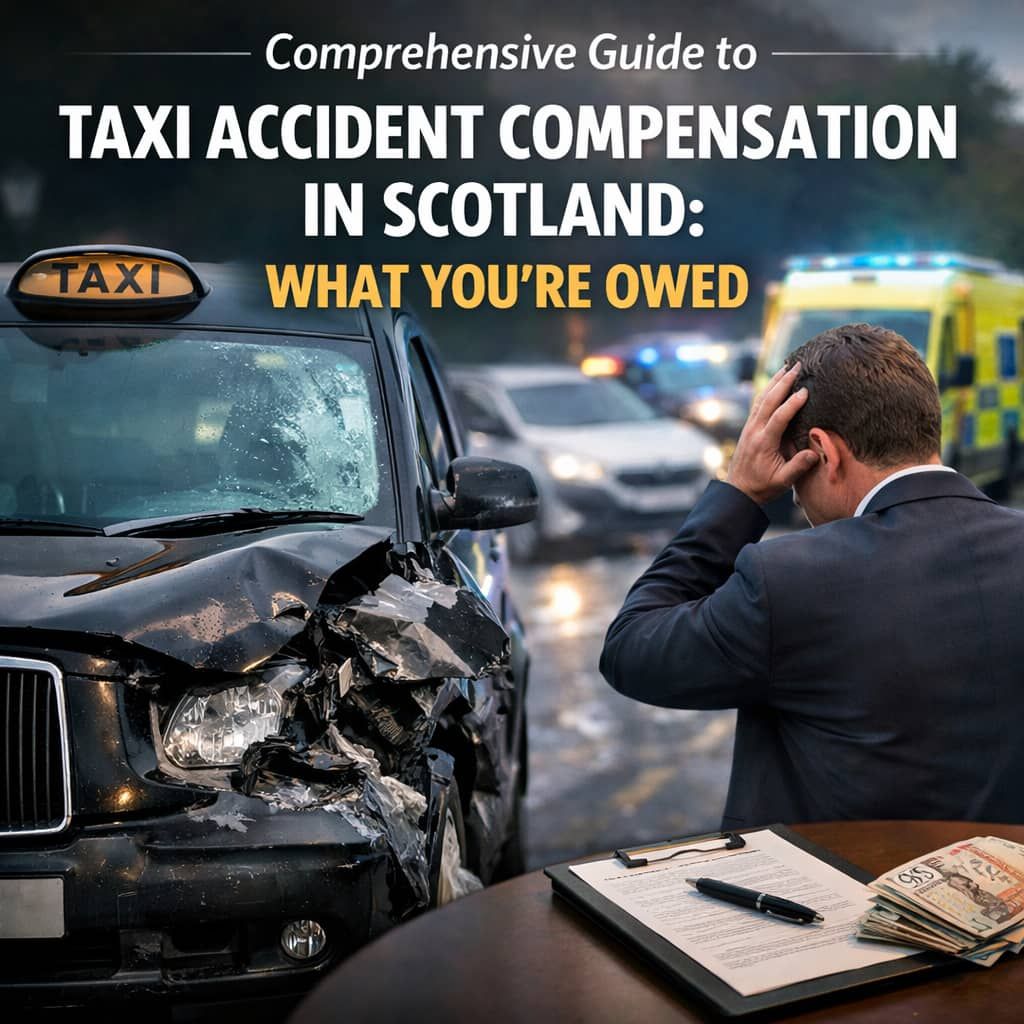
Being involved in a taxi accident is more than just an inconvenience; it can be a devastating event for any professional driver. Beyond the immediate shock and potential physical injuries, you face the very real threat of lost income, significant repair costs, and the stress of navigating complex insurance and legal procedures. For taxi and private hire drivers in Glasgow and across Scotland, every hour off the road means lost earnings, impacting your livelihood and financial stability. Understanding your rights and what you're genuinely owed in taxi accident compensation Scotland is crucial for getting back on your feet quickly and fairly.
This comprehensive guide is designed specifically for you, the dedicated taxi and private hire driver. We’ll cut through the jargon and provide clear, actionable insights into the compensation you’re entitled to after a non-fault accident in Scotland. From covering your personal injuries and vehicle damage to reclaiming every penny of your lost income, we’ll explain the process, how compensation is calculated, and strategies to ensure you receive a fair payout. Don't let an accident derail your career – empower yourself with the knowledge to claim what's rightfully yours.
What You're Owed: Understanding Taxi Accident Compensation in Scotland
When you're involved in a non-fault taxi accident in Scotland, the at-fault party's insurer is legally responsible for compensating you for all losses incurred. This isn't just about fixing your vehicle; it's about making sure you are put back in the position you would have been in had the accident not occurred. This principle underpins every aspect of taxi accident compensation Scotland.
Personal Injury Compensation
Your physical and psychological well-being is paramount. If you've suffered any injury, no matter how minor it may seem initially, you are entitled to compensation for your pain, suffering, and loss of amenity. This is often referred to as "general damages." It covers a wide spectrum, from whiplash and soft tissue injuries to more severe fractures or psychological trauma like anxiety and PTSD. It also covers the impact of these injuries on your daily life and ability to perform your job.
In addition to general damages, you can claim "special damages" related to your injuries. These are quantifiable financial losses directly resulting from the injury, such as:
- Medical expenses: Prescription costs, physiotherapy, specialist consultations, counselling.
- Travel expenses: To and from medical appointments.
- Care and assistance: If you've needed help with daily tasks due to your injuries, even from family members.
- Loss of earning capacity: If your injuries mean you cannot return to work in the same capacity or for as many hours.
Vehicle Damage & Repair Costs
Your taxi is your business. Damage to it means a direct impact on your ability to earn. Compensation here covers the full cost of repairing your vehicle to its pre-accident condition, or its market value if it's a write-off. This includes:
- Repair costs: Using approved bodyshops that specialise in taxi repairs, ensuring your vehicle meets all regulatory and licensing standards.
- Vehicle assessment fees: The cost of getting an independent assessment of the damage.
- Storage fees: If your vehicle had to be stored somewhere before repairs.
- Recovery costs: If your taxi needed to be towed from the accident scene.
Crucially, while your vehicle is off the road for repairs, you’re losing income. This brings us to a vital component of any taxi claim Glasgow – the provision of a like-for-like replacement vehicle. Replacement Taxi Vehicle Glasgow: Staying on the Road After an Accident explains how crucial this is to minimising your financial disruption. A specialist accident management service can arrange a licensed replacement taxi, often within 24 hours, ensuring you stay on the road and continue earning while yours is repaired.
Recovering Lost Earnings and Other Financial Losses
This is often the most significant financial impact for taxi drivers. Every day your vehicle is out of action, or every day you're too injured to drive, is income lost. You have a right to claim for these lost earnings. This includes:
- Actual lost income: Documented income you would have earned during the period you couldn't work.
- Future lost earnings: If your injuries or vehicle issues will impact your income for an extended period.
- Loss of No Claims Discount (NCD): If your own insurer pays out and affects your NCD, you can claim the future increase in premiums.
- Policy excess: Any excess you had to pay on your own insurance policy can be recovered.
For a deeper dive into this critical area, refer to our detailed guide: Lost Earnings After a Taxi Accident: How to Claim Your Income in Glasgow. Accurate record-keeping of your earnings prior to the accident is vital for substantiating these claims.
How Your Taxi Accident Compensation is Calculated
Calculating the precise value of taxi accident compensation Scotland is a complex process, balancing various legal guidelines, medical evidence, and financial documentation. The goal is always to achieve a fair settlement that fully compensates you for all your losses.
Assessing Personal Injury: The Judicial College Guidelines
For personal injury claims, legal professionals in Scotland often refer to the Judicial College Guidelines for the Assessment of General Damages in Personal Injury Cases. These guidelines provide a framework for valuing different types of injuries based on their severity, duration, and long-term impact. Factors considered include:
- Medical prognosis: Expert medical reports from GPs, specialists, and consultants.
- Impact on daily life: How injuries affect hobbies, family life, and ability to perform daily tasks.
- Psychological impact: Any anxiety, depression, or PTSD resulting from the accident.
- Recovery time: The anticipated period of recovery and any permanent impairments.
A thorough medical examination and a detailed report are essential to accurately assess the extent of your injuries and their implications for your claim.
Quantifying Vehicle Damage and Ancillary Costs
The valuation of vehicle damage typically involves independent motor assessors. They will inspect your taxi, determine the extent of the damage, and provide a detailed repair estimate or declare it a total loss (write-off).
- Repair costs: Estimates are obtained from approved bodyshops to ensure competitive and accurate pricing.
- Pre-accident value: If your vehicle is a write-off, its market value immediately before the accident will be assessed.
- Diminution in value: In some cases, even after repairs, a vehicle may be worth less due to its accident history. This "diminution" can also be claimed.
- Other costs: All receipts for towing, storage, and assessment fees should be kept.
It's vital that any repair work for a licensed taxi in Glasgow or elsewhere in Scotland is carried out to the highest standards, compliant with local council regulations.
Calculating Lost Income and Future Losses
Proving lost earnings requires clear financial documentation. This can include:
- Bank statements: Showing regular income before and after the accident.
- Tax returns: Self-assessment forms provide an official record of earnings.
- Booking logs/app data: Evidence from your taxi or private hire app or manual booking logs can demonstrate your typical workload and income.
- Accountant's reports: A letter or report from your accountant can help substantiate your claim.
For future lost earnings or earning capacity, an expert assessment might be needed, especially for long-term injuries. The aim is to project your income trajectory had the accident not occurred versus your likely income post-accident. Specialist services often have forensic accountants who can help quantify these complex elements.
Maximising Your Payout: Strategies for Negotiating Taxi Claims
Securing the compensation you deserve isn't always straightforward. Insurance companies are businesses, and while they have a duty to pay out valid claims, their primary objective is to settle for the lowest possible amount. Effective negotiation is key to ensuring you receive a fair and comprehensive payout for your taxi claims Glasgow.
The Role of a Specialist Accident Management Service
One of the most effective strategies is to engage a specialist accident management service like Taxi Claims. These services possess in-depth knowledge of the taxi and private hire industry, understanding the unique challenges and regulations faced by drivers. They act on your behalf, handling all communication with insurers, arranging repairs, securing replacement vehicles, and managing your claim from start to finish.
- Expert negotiation: They have experience dealing with insurance companies and know how to counter low offers.
- Industry specific knowledge: They understand the nuances of Glasgow City Council licensing, vehicle repair standards for taxis, and the financial impact of lost earnings for drivers.
- Stress reduction: They remove the burden and stress of managing a complex claim, allowing you to focus on your recovery and getting back to work.
Remember, in non-fault accidents, their services are often at no direct cost to you, as all fees are recovered from the at-fault insurer.
Gathering Comprehensive Evidence
A strong claim is built on solid evidence. The more documentation you can provide, the stronger your negotiating position.
- Accident report: Your initial report to the police (if applicable) and your own insurer.
- Witness statements: Contact details and statements from anyone who saw the accident.
- Photos/videos: Of the accident scene, vehicle damage, road conditions, and any visible injuries.
- Medical records: Detailed reports from all healthcare professionals involved in your treatment.
- Financial records: As mentioned, bank statements, tax returns, booking data, and receipts for all expenses.
- Dashcam footage: Increasingly vital, dashcam footage can be irrefutable evidence of fault.
Our guide, Taxi Driver Rights After an Accident in the UK & Scotland: A Full Overview, further details the evidence you should gather and your legal standing.
When to Accept and When to Push Back
It’s common for initial offers from insurance companies to be lower than your claim's true value. A specialist will help you evaluate any offer against the full extent of your losses.
- Don't rush: Never feel pressured to accept an early offer, especially if you're still recovering or the full extent of your losses isn't clear.
- Consult experts: Your solicitor or accident management company will advise you on whether an offer is fair, based on their expertise and similar case precedents.
- Be prepared for counter-offers: Negotiation is often a back-and-forth process. Having all your evidence ready will support your position.
"No Win, No Fee": Your Financial Safety Net for Scottish Taxi Claims
For many taxi drivers, the thought of legal fees and upfront costs can be a significant barrier to pursuing a rightful compensation claim. This is where "No Win, No Fee" agreements, formally known as Conditional Fee Agreements (CFAs) in Scotland, offer a crucial financial safety net. This model ensures that access to justice is available to everyone, regardless of their financial situation.
How Conditional Fee Agreements Work in Scotland
Under a "No Win, No Fee" agreement, you will not pay any upfront legal costs or solicitor fees. The arrangement is simple:
- No win, no fee: If your claim is unsuccessful, you pay nothing for your solicitor's time. This eliminates financial risk and provides peace of mind.
- Success fee: If your claim is successful, your solicitor will take a pre-agreed percentage of your compensation as a "success fee." This fee is capped by law in Scotland, typically at a maximum of 20% plus VAT of your personal injury compensation, although it can vary for other types of claims. This ensures that the majority of your compensation goes directly to you.
- A "hybrid" model: Sometimes, it might involve an "after the event" (ATE) insurance policy, which covers the other side's legal costs if your claim is unsuccessful. This provides an additional layer of protection.
What Happens if You Lose?
The beauty of a "No Win, No Fee" agreement is that if your claim does not succeed, you are typically not liable for your own solicitor's fees. If you have an ATE insurance policy, this will also cover any legal costs of the defendant that you might otherwise be ordered to pay. This means you can pursue legitimate taxi accident compensation Scotland without the fear of being left with a hefty bill if the outcome isn't favourable.
Why This Model Benefits Taxi Drivers
This financial model is particularly beneficial for professional drivers who rely on their income.
- Removes financial barrier: You don't need a large sum of money to start a claim.
- Shared risk: Your legal representative is invested in the success of your claim, as their payment is contingent on it.
- Focus on recovery: You can concentrate on getting well and back to work, knowing your claim is being managed professionally without financial strain.
When choosing a service, always ensure they are transparent about their fee structure and fully explain the terms of their "No Win, No Fee" agreement. This is a standard practice for reputable firms handling non-fault taxi accident claims in Scotland, giving drivers the confidence to seek the justice they deserve.
FAQs: Top Questions About Taxi Accident Compensation in Scotland
Navigating the aftermath of a taxi accident can be confusing. Here are answers to some frequently asked questions about taxi accident compensation Scotland to help clarify the process.
Q1: How long do I have to make a taxi accident compensation claim in Scotland?
In Scotland, you generally have three years from the date of the accident or the date you became aware of your injury (if different) to initiate a personal injury claim. For other losses like vehicle damage, it's often similar. However, it's always best to act as soon as possible, as gathering evidence becomes harder over time.
Q2: Can I claim if the other driver was uninsured or fled the scene?
Yes, you may still be able to claim compensation through the Motor Insurers' Bureau (MIB). The MIB is a non-profit organisation that compensates victims of uninsured or untraced drivers in the UK. This can be a complex process, so specialist assistance is highly recommended.
Q3: Do I need a solicitor to claim taxi accident compensation?
While you can technically pursue a claim yourself, it's highly advisable to use a specialist solicitor or accident management service. They have the expertise to navigate the legal complexities, deal with insurers, gather robust evidence, and ensure you receive the full compensation you're entitled to, particularly for Non-Fault Taxi Accident Claims in Scotland: A Driver's Comprehensive Guide.
Q4: How long does a taxi accident compensation claim usually take?
The duration of a claim varies widely depending on its complexity, the severity of injuries, and whether the other party admits liability. Simple claims can resolve in a few months, while more complex ones, especially those involving significant injuries or disputes over fault, can take a year or more. A specialist service will provide you with a realistic timeline.
Q5: What if I was partially at fault for the accident?
If you are found to be partly responsible for the accident, this is known as "contributory negligence." In such cases, your compensation may be reduced by the percentage of fault attributed to you. For example, if you were 25% at fault, your compensation might be reduced by 25%.
For even more answers to your specific questions, be sure to check out our dedicated article: FAQs: Top 10 Questions About Taxi Accident Claims in Glasgow.
Don't Let an Accident Derail Your Livelihood: Claim What You're Owed
A taxi accident can be a profoundly disruptive event, especially for professional drivers whose income is directly tied to their ability to work. Understanding your rights to taxi accident compensation Scotland is the first step towards recovery and regaining financial stability. From personal injury and vehicle damage to the critical recovery of lost earnings, every aspect of your loss should be accounted for.
Don't navigate this challenging period alone. By partnering with specialist accident management services like Taxi Claims, you gain an invaluable ally. We understand the specific needs of Glasgow's taxi and private hire drivers, offering a 24/7 helpline, like-for-like replacement vehicles, full repair management, and expert support – all at zero cost to you for non-fault accidents. Our dedicated case handlers ensure your claim is handled efficiently and effectively, allowing you to focus on what matters most: your recovery and getting back to earning.
If you've been in a non-fault accident, ensure you claim every penny you're owed. Contact us today for expert, no-obligation advice and let us help you get back on the road.