Taxi Driver Rights After an Accident in the UK & Scotland: A Full Overview
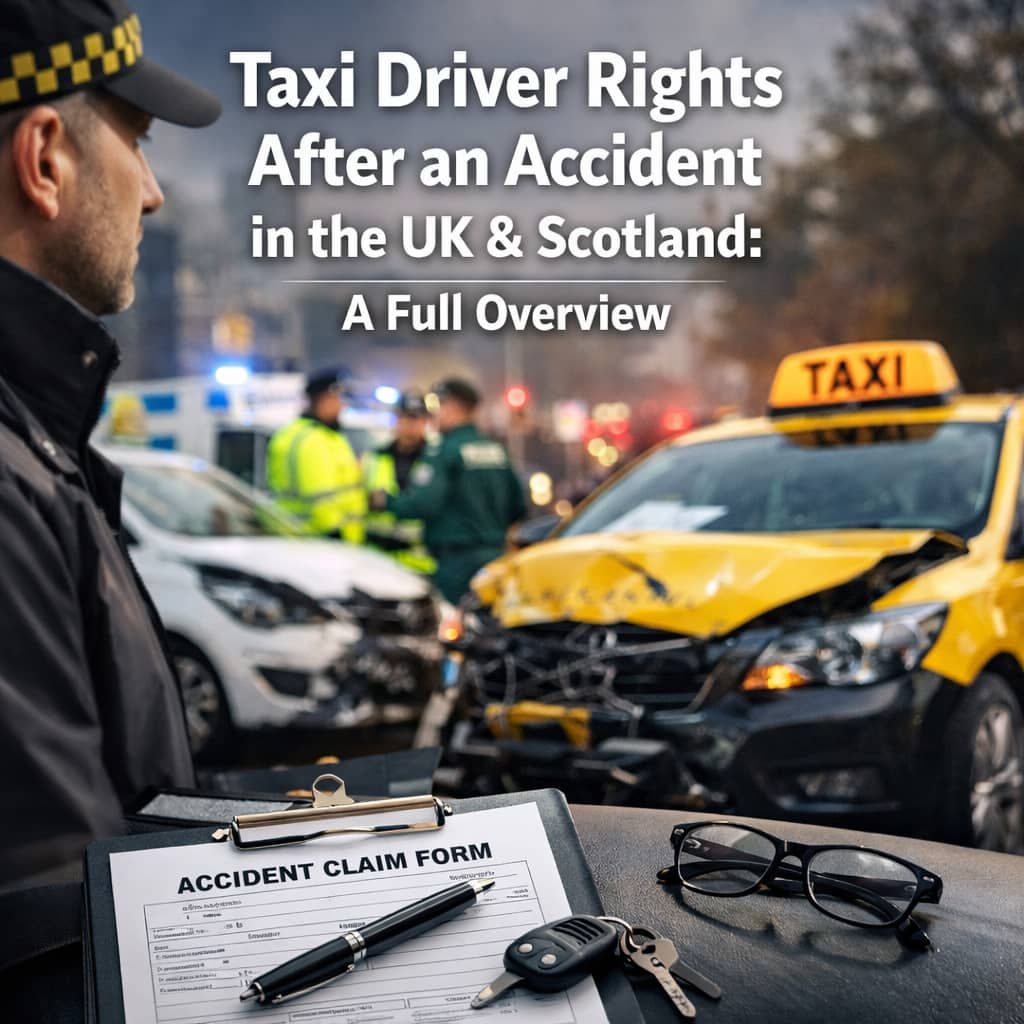
As a taxi or private hire driver, your vehicle isn't just a mode of transport; it's your workplace and your primary source of income. When an accident occurs, whether it's a minor bump or a more serious collision, the immediate aftermath can be stressful and confusing. Knowing your taxi driver rights after an accident in the UK is not just about protecting yourself legally, but also about safeguarding your livelihood. This comprehensive guide will illuminate your legal standing, responsibilities, and the specific nuances of Scottish law, empowering you to navigate the post-accident process with confidence.
Driving professionally on the busy streets of Glasgow and across the UK exposes you to unique risks. Unlike a private motorist, an accident can mean immediate loss of earnings, potential damage to your reputation, and complex licensing implications. This article will break down what you need to know, from your obligations at the scene to dealing with insurance companies and seeking specialist legal support. Our aim is to provide clarity and actionable advice, ensuring that you understand your taxi driver accident rights Scotland has in place, and how to assert them effectively.
Your Legal Standing: Rights and Responsibilities at the Scene
The moments immediately following an accident are critical. Your actions here can significantly impact any subsequent claim or legal proceedings. Understanding your rights and responsibilities will help you remain calm, comply with the law, and gather essential information. It's not just about what others owe you, but also what you are obligated to do.
Immediate Actions & Documentation
First and foremost, ensure the safety of yourself, your passengers, and anyone else involved. Move to a safe location if possible and switch on your hazard lights. Check for injuries. If anyone is injured or if there's significant damage, contact the police and emergency services immediately. Documentation is key: take clear photos or videos of the accident scene, including vehicle positions, damage, road conditions, and any relevant signage. Note the exact time, date, and location. For a detailed guide on immediate steps, you can refer to our article on Taxi Accident in Glasgow: Your Immediate Step-by-Step Guide for Drivers.
Exchange of Information
Under the Road Traffic Act, you are legally obliged to stop at the scene of an accident where damage or injury has occurred. You must provide your name, address, vehicle registration number, and insurance details to anyone with reasonable grounds to request them. If you don't own the vehicle, you must also provide the owner's name and address. Conversely, you have the right to request the same information from all other parties involved. Ensure you record their details accurately, including contact numbers. Do not admit fault at the scene, regardless of how clear-cut it may seem.
Police Involvement & Reporting
In the UK, you must report an accident to the police within 24 hours if you didn't exchange details at the scene, or if anyone was injured, or if you suspect a crime has occurred (e.g., hit and run). The police will assess the situation, potentially take statements, and may issue a Police Incident Number – this is crucial for your insurance claim. For taxi drivers, being involved in an accident often requires reporting to your local licensing authority (e.g., Glasgow City Council Licensing) in addition to the police and your insurer. Non-compliance with these reporting duties can lead to fines, penalty points, or even the loss of your taxi licence.
Understanding UK and Scottish Road Traffic Act Implications
The legal framework governing road accidents in the UK is primarily enshrined in the Road Traffic Act 1988, with specific interpretations and procedural differences that apply in Scotland. As a professional driver, familiarity with these laws is paramount to assert your taxi driver rights after an accident in the UK and specifically in Scotland.
Key Legal Provisions for Drivers
The Road Traffic Act covers various aspects, including duties at the scene of an accident, requirements for insurance, and offences such as dangerous driving or driving without due care and attention. Section 170 outlines the duty to stop and provide particulars, while sections relating to insurance (e.g., driving without valid insurance) carry severe penalties. For taxi drivers, any road traffic offence can also have implications for your licensing, making it even more critical to understand and adhere to the law. Knowledge of these provisions is your first line of defence.
Differentiating UK & Scottish Law
While much of the Road Traffic Act applies uniformly across Great Britain, Scotland operates under a distinct legal system (Scots Law). This means that while the core legislation is similar, the court procedures, sentencing guidelines, and certain legal interpretations can differ. For instance, the process for civil claims, including compensation for injuries or damages, follows Scottish civil procedure rules. When dealing with a non-fault accident, the process for recovery of costs and damages in Scotland might involve slightly different pre-action protocols than in England and Wales. It's vital to work with specialists who understand the specifics of Scots Law. Our article, Hackney Carriage vs. Private Hire: Accident Claim Differences in Glasgow, further highlights how local distinctions can impact your claim.
Consequences of Non-Compliance
Failing to comply with your legal obligations after an accident can lead to serious repercussions. This includes criminal charges for failing to stop or report an accident, driving offences, and insurance complications. Beyond legal penalties, non-compliance can jeopardise your taxi or private hire licence, which is your livelihood. Local councils, like Glasgow City Council, have strict rules for licensed drivers, and any legal infraction or failure to report an incident can lead to disciplinary action, including suspension or revocation of your licence. Ensuring you act responsibly and legally protects your future as a professional driver.
Rights Regarding Insurance Companies and Settlements
Navigating insurance claims can be a labyrinth, especially when you're also dealing with vehicle damage, potential injuries, and lost income. As a taxi driver, you have specific rights when dealing with insurance companies and pursuing a settlement, particularly in non-fault accidents.
Engaging with Your Insurer
You are legally obligated to inform your own insurance company about an accident, even if you don't intend to make a claim or if it was a non-fault incident. Failure to do so can invalidate your policy. However, you are not obligated to accept the first offer from your insurer or the at-fault party's insurer. Your rights include seeking independent advice and ensuring all aspects of your claim are considered, not just vehicle damage. Remember, insurance companies, while providing a service, also operate as businesses and will aim to settle for the lowest reasonable amount.
Understanding Policy Terms & Conditions
Taxi insurance policies are often more complex than standard private vehicle insurance, with specific clauses relating to business use, replacement vehicles, and coverage for passengers. It is your right and responsibility to understand your policy's terms and conditions. Pay close attention to what's covered regarding replacement vehicles, loss of earnings, and legal expenses. If you're in a non-fault accident, your policy might cover the costs initially, which are then recovered from the at-fault party's insurer. For a deeper dive into making a claim when you're not at fault, read our Non-Fault Taxi Accident Claims in Scotland: A Driver's Comprehensive Guide.
Navigating Non-Fault Claims & Compensation
When you're involved in a non-fault accident, your rights extend to being put back in the position you were in before the incident, as far as possible. This includes compensation for:
Vehicle damage and repair costs: Or the pre-accident value if written off.
Replacement vehicle costs: Especially critical for taxi drivers to continue earning.
Loss of earnings: Compensation for the income you've lost while unable to work.
Personal injury: For any physical or psychological harm sustained.
Other out-of-pocket expenses: Such as medical treatment, taxi fares, or policy excess.
It's your right to pursue these elements fully. Specialist accident management services, like Taxi Claims, can handle the entire process, including liaising with insurers, arranging repairs, and securing a like-for-like replacement vehicle, ensuring all your entitlements are recovered.
Protecting Your Livelihood: Legal Advice & Representation
For a taxi driver, an accident isn't just an inconvenience; it's a direct threat to your ability to earn. Protecting your livelihood after an accident means ensuring you receive full and fair compensation for all losses, including lost income and the costs associated with getting back on the road.
Why Specialist Legal Support Matters
Navigating accident claims, especially those involving professional vehicles, requires specific expertise. An accident management service specialising in taxi claims understands the unique challenges faced by drivers, such as the need for a PCO-licensed replacement vehicle, the complexities of calculating lost earnings, and the specific licensing requirements in places like Glasgow. They act on your behalf, reducing your stress and ensuring your rights are robustly defended. This specialist knowledge ensures you're not disadvantaged by the system.
Recovering Lost Earnings and Vehicle Damage
One of the most critical taxi driver rights after accident UK law provides is the right to recover lost earnings. If your vehicle is off the road due to an accident, you are losing money every day. A specialist service will meticulously calculate your lost income, taking into account your typical work patterns, previous earnings, and any pre-booked fares. They will then pursue this claim with the at-fault insurer. Similarly, they will manage vehicle repairs through approved bodyshops, ensuring quality workmanship and that the costs are covered without you being out of pocket. For specific guidance on claiming lost income, refer to Lost Earnings After a Taxi Accident: How to Claim Your Income in Glasgow. Furthermore, securing a Replacement Taxi Vehicle Glasgow: Staying on the Road After an Accident is paramount, and a good service will provide this without upfront cost.
Your Rights to Independent Advice
You have the right to seek independent legal advice and choose your own repairer, rather than being steered by an insurance company's preferred partners. This ensures that your interests are prioritised. Many insurers might pressure you to use their approved network, but you are not obliged to do so. An independent service can arrange repairs at a bodyshop that understands taxi-specific requirements and provides a like-for-like replacement vehicle that is licensed and compliant, allowing you to continue earning immediately. These services often operate on a "no win, no fee" basis, or recover their costs directly from the at-fault insurer, meaning there's zero cost to you for a non-fault accident.
FAQs: Top Questions About Taxi Driver Rights After an Accident in Glasgow
Dealing with the aftermath of an accident can raise many questions. Here are some of the most common queries taxi drivers have about their rights. For more in-depth answers, you can also consult our comprehensive FAQs: Top 10 Questions About Taxi Accident Claims in Glasgow.
Q1: Do I have to report a minor bump to the police if no one is injured?
A1: Not necessarily. If details are exchanged and no one is injured, and damage is minor, you might not need police involvement. However, you must* report it to your insurance company. For taxi drivers, reporting to your local licensing authority is also usually a requirement, even for minor incidents.
Q2: Can my insurance company force me to use their chosen repair garage?
A2: No, you have the right to choose your own repairer. While your insurer might recommend one, you are not obliged to use them. Opting for a specialist taxi bodyshop ensures your vehicle is repaired to the correct standards for professional use.
Q3: What if the other driver doesn't have insurance or drives away?
A3: If the other driver is uninsured or untraced, you still have rights. The Motor Insurers' Bureau (MIB) can provide compensation in such cases. This is a complex area, and specialist assistance is highly recommended.
Q4: How long do I have to make a claim after an accident?
A4: Generally, you have three years from the date of the accident to claim for personal injuries in Scotland (and the UK). For vehicle damage only, it can be longer, but it's always best to start the claims process as soon as possible to ensure evidence is fresh and available.
Q5: Will making a non-fault claim affect my insurance premium?
A5: In theory, a genuine non-fault claim should not directly impact your premium, as the costs are recovered from the at-fault party. However, some insurers may still slightly adjust premiums due to an increased risk profile, though this is less common with non-fault incidents handled by specialists.
Conclusion
Understanding your taxi driver rights after an accident in the UK and Scotland is absolutely essential for every professional driver. From the immediate steps at the scene to navigating complex insurance claims and recovering lost earnings, being informed empowers you to protect your livelihood. Remember, you have the right to a fair process, comprehensive compensation, and specialist support.
Don't let the stress and uncertainty of an accident put your career on hold. With specialist assistance, you can ensure your taxi is repaired quickly, you receive a like-for-like replacement vehicle, and all your lost earnings and expenses are recovered – all at zero cost to you for a non-fault accident. If you've been in an accident, don't delay. Protect your rights and your income.
If you're a taxi or private hire driver in Glasgow involved in a non-fault accident, speak to the experts who understand your unique needs. Get back on the road and earning quickly. Contact Taxi Claims today for immediate assistance.