Winter Driving Safety for Glasgow Taxis: Prepare for Challenging Scottish Weather
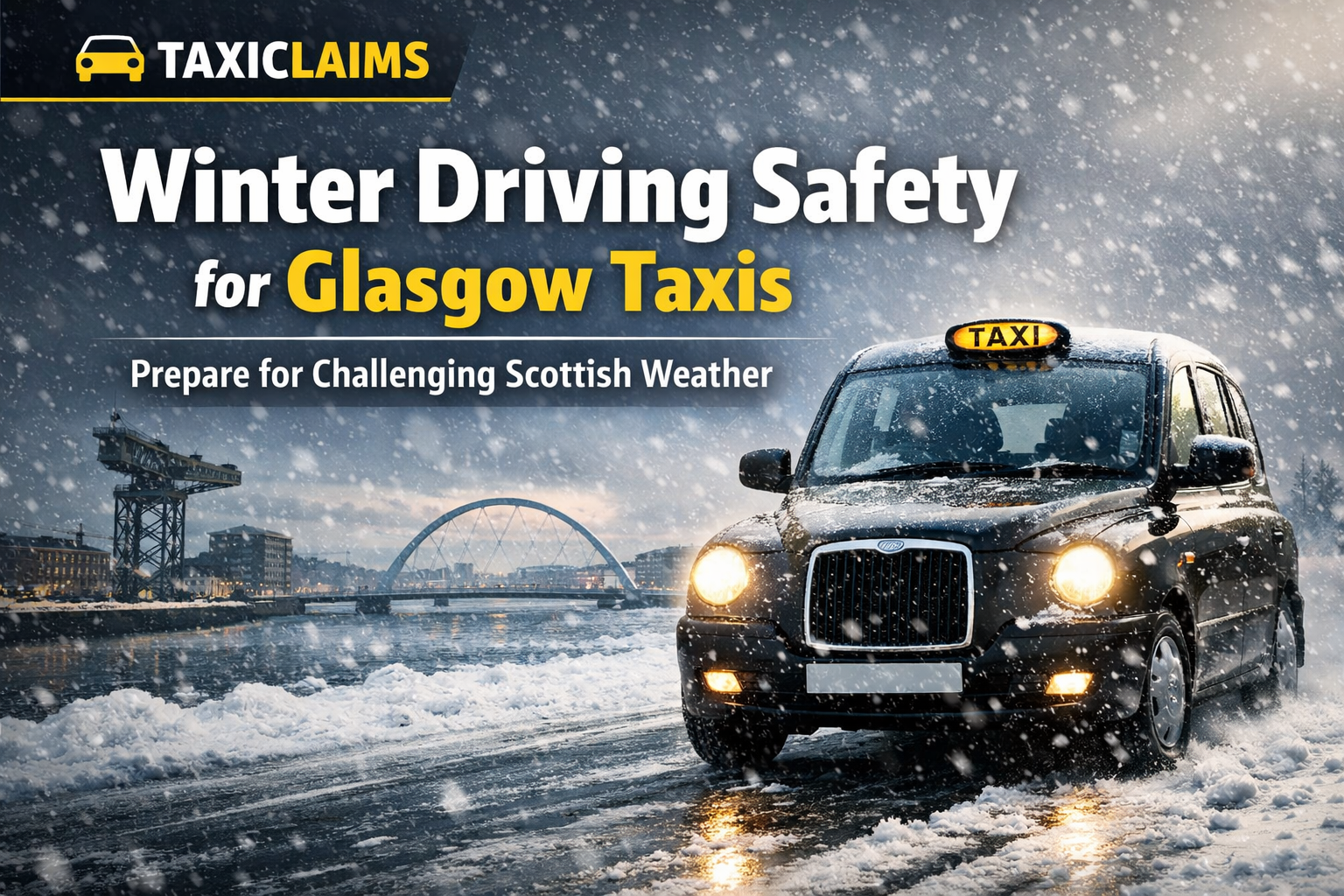
Winter driving conditions in Glasgow and across Scotland can transform routine journeys into treacherous challenges for taxi drivers. From sleet and snow to black ice and reduced visibility, the colder months demand heightened vigilance and thorough preparation to ensure the safety of both drivers and passengers. For professional drivers, an accident doesn't just mean vehicle damage; it can lead to lost earnings, costly repairs, and significant stress. Prioritising winter driving taxi safety is paramount, not only for personal well-being but also for the continuity of your business.
This comprehensive guide will equip Glasgow taxi drivers, private hire operators, and fleet managers with the essential knowledge and practical advice needed to navigate the challenging Scottish winter roads. We'll delve into critical vehicle checks, advanced defensive driving techniques, and crucial steps to take if you find yourself involved in a winter road accident. Our aim is to help you minimise risks, protect your livelihood, and keep your taxi business running smoothly, even when the weather turns against you.
Essential Vehicle Checks & Maintenance for Winter Conditions
Before the first snowflake falls or the temperature plummets, your taxi needs to be in peak condition to safely tackle winter roads. Proactive maintenance is your first line of defence against breakdowns and accidents, ensuring optimal taxi driver safety. Neglecting these vital checks can lead to serious incidents and could even impact your insurance claims.
Tyres: Your Grip on the Road
Your tyres are the only contact point between your taxi and the road, making them critical in winter.
- Tread Depth: Legally, tyres must have at least 1.6mm of tread depth across the central three-quarters of the tyre. However, for winter conditions, experts recommend a minimum of 3mm for better grip and water dispersion.
- Winter or All-Season Tyres: Consider fitting dedicated winter tyres or high-quality all-season tyres. They offer significantly better grip and braking performance in temperatures below 7°C, snow, and ice, compared to standard summer tyres. This is especially important for the demanding stop-start nature of city driving in Glasgow.
- Pressure Checks: Cold weather causes tyre pressure to drop. Check your tyre pressures regularly (at least weekly when cold) and adjust them to the manufacturer's recommendations. Correct pressure ensures optimal handling and fuel efficiency.
Battery: Power Through the Cold
Car batteries struggle in cold weather. A failing battery is a common cause of winter breakdowns.
- Test: Get your battery tested by a professional before winter sets in. They can assess its charge and overall health.
- Charge: Ensure your battery is fully charged. Frequent short journeys common for taxi drivers can prevent the battery from recharging sufficiently.
Lights & Wipers: Visibility is Key
With shorter daylight hours and often poor weather, clear visibility is non-negotiable.
- All Lights: Check all headlights, tail lights, brake lights, fog lights, and indicators. Ensure they are clean and fully operational. Replace any dim or broken bulbs immediately.
- Windscreen Wipers: Worn wiper blades smear water and snow, drastically reducing visibility. Replace them if they leave streaks or miss sections of the windscreen. Keep your washer fluid reservoir topped up with a winter-specific screenwash that won't freeze.
Fluid Levels: Protection Against the Elements
- Antifreeze: Ensure your coolant system has the correct concentration of antifreeze to prevent the engine from freezing and causing severe damage.
- Engine Oil: Use the correct grade of engine oil recommended by your vehicle manufacturer, particularly for cold starting.
- Screenwash: As mentioned, use a quality screenwash with anti-freeze properties to prevent your jets from freezing.
Emergency Kit: Be Prepared for the Unexpected
Always carry a winter emergency kit in your taxi. This should include:
- High-visibility vest
- First-aid kit
- Warning triangle
- Fully charged mobile phone and charger/power bank
- Jump leads
- Tow rope
- Shovel (collapsible)
- Torch
- Warm blanket, hat, and gloves
- Snacks and water
- De-icer and a scraper
- Grit/sand for tyre traction if stuck
For more detailed maintenance tips to keep your vehicle roadworthy, refer to our Essential Taxi Repair Guide: Keeping Your Commercial Vehicle Roadworthy & Profitable.
Safe Driving Techniques on Ice, Snow & Reduced Visibility
Once your taxi is winter-ready, the next crucial step is adapting your driving style to the conditions. Even the best-maintained vehicle is only as safe as the driver behind the wheel. Mastering defensive driving taxi techniques during winter will significantly reduce your risk of an accident.
Smooth Driving: Gentle Inputs Are Key
- Acceleration: Accelerate gently and smoothly. Harsh acceleration can easily cause wheels to spin on slippery surfaces, leading to a loss of control. If your vehicle has a "winter" or "snow" mode, engage it.
- Braking: Brake earlier and more gently than usual. Avoid sudden, hard braking. If your vehicle has ABS, it will help prevent skidding, but it's still crucial to apply steady pressure rather than slamming the pedal.
- Steering: Make steering inputs slowly and smoothly. Rapid movements can cause the vehicle to skid. Look further ahead than usual to anticipate hazards and make gradual adjustments.
Increased Following Distances: Give Yourself Space
In ideal dry conditions, a two-second rule is recommended for following distance. In icy or snowy conditions, this should be increased to at least ten seconds. This provides crucial extra time and distance to react to sudden braking or unexpected hazards from other road users. Remember, stopping distances can increase tenfold on ice.
Anticipation & Observation: Read the Road Ahead
- Look Far Ahead: Continuously scan the road ahead for potential hazards like icy patches, slush, or other vehicles struggling for grip.
- Recognise Black Ice: Black ice is nearly invisible and extremely dangerous. It often forms on shaded areas, bridges, and underpasses. If the steering feels light or you hear less road noise, you might be on black ice. Do not brake or steer sharply; gently ease off the accelerator and try to keep the steering wheel straight until you regain traction.
Using Lights Correctly: Be Seen and See Clearly
- Dipped Headlights: Use dipped headlights during the day if visibility is poor due to rain, snow, or fog, not just at night. This makes you more visible to other drivers.
- Fog Lights: Only use front and rear fog lights when visibility is severely reduced (generally less than 100 metres). Remember to switch them off as soon as visibility improves, as they can dazzle other drivers.
- Avoid High Beams: Do not use full beam headlights in fog or heavy snow, as the light will reflect off the particles, making visibility worse.
For a deeper dive into expert driving strategies for Glasgow's unique roads, explore our guide on Defensive Driving for Glasgow Taxi Drivers: Master Scottish Roads Safely.
Navigating Specific Glasgow Winter Hazards
Glasgow's varied terrain and dense urban environment present unique challenges for taxi drivers during winter. From the bustling city centre streets to the elevated routes and residential areas, understanding localised hazards is crucial for winter driving taxi safety.
City Centre Challenges: Where Caution is Paramount
Glasgow city centre, with its constant flow of pedestrians, cyclists, and other vehicles, becomes particularly hazardous in winter.
- Limited Grip on Cobbles and Tarmac: Many city streets, especially older sections, are paved with cobbles or older tarmac which can become incredibly slick when wet, frozen, or covered in a thin layer of snow. Reduce your speed significantly and increase observation.
- Pedestrian Awareness: Pedestrians may be less visible in poor weather, or less observant as they rush through the cold. Be extra cautious around crossings, bus stops, and popular areas like Sauchiehall Street or Argyle Street.
- Parking & Drop-offs: Finding safe spots for pickups and drop-offs can be harder. Be mindful of accumulated snow or ice at curbsides that could cause passengers to slip.
Rural Roads & Motorways: The Speed vs. Safety Dilemma
While Glasgow's immediate surroundings might be urban, taxi drivers frequently venture onto faster roads like the M8 Motorway or rural routes.
- M8 Motorway: High speeds combined with potentially exposed stretches mean the M8 can quickly become dangerous. Watch out for sudden changes in road surface temperature, especially on bridges and overpasses where ice forms first. Strong crosswinds can also be a factor during winter storms. Navigating complex accident claims on such major routes requires specific expertise; read about Taxi Accident Claims M8 Motorway Scotland: Navigating Complex Cases for more information.
- Rural Routes: Country roads can be less frequently gritted, meaning snow and ice persist for longer. Hidden bends, shaded areas, and unexpected wildlife can add to the risks. Maintain a slower speed and be prepared for less-than-ideal road conditions.
Hill Starts & Descents: Conquering Glasgow's Topography
Glasgow is famously built on hills, and these can become extremely challenging during icy conditions.
- Hill Starts: On an icy incline, apply minimal throttle and allow the clutch (in manual vehicles) to engage slowly. Avoid revving the engine, as this will only cause wheel spin. If your vehicle has a "hill start assist" or traction control, it will help.
- Hill Descents: Use a lower gear to allow engine braking to help control your speed. Avoid heavy braking, which can lead to skidding. Maintain a significant distance from any vehicle ahead.
What to Do If You're Involved in a Winter Road Accident
Despite all precautions, accidents can happen, especially in challenging winter conditions. Knowing the correct steps to take immediately after a collision is crucial for taxi driver safety and for ensuring any subsequent claim proceeds smoothly.
Immediate Steps: Safety First
Your safety and the safety of your passengers and other road users are paramount.
- Stop Safely: Pull over to the side of the road if possible. If the vehicle is undriveable or stopping on the road is unavoidable, turn on your hazard lights.
- Assess Injuries: Check yourself and your passengers for injuries. If anyone is injured, call 999 immediately for emergency services.
- Secure the Scene: If it's safe to do so, place a warning triangle behind your vehicle (at least 45 metres/147 feet) to alert oncoming traffic. Consider leaving passengers in the car if it's cold, unless there's an immediate danger.
- Exchange Information: Exchange names, addresses, phone numbers, vehicle registration numbers, and insurance details with all parties involved. Note down the make, model, and colour of their vehicle.
- Gather Evidence: Take photographs of the accident scene from various angles, including vehicle damage, road conditions (ice, snow), road markings, traffic signs, and any debris. Note the time, date, and weather conditions. Crucially, if you have a dashcam, ensure the footage is saved. Our guide on Maximise Your Claim: Using Taxi Dash Cam Evidence in Scotland provides essential tips.
Reporting to Authorities & Insurers
- Police: You must report an accident to the police within 24 hours if anyone is injured, if you suspect the other driver is under the influence, or if the other driver leaves the scene without exchanging details.
- Your Insurer: Contact your insurance company as soon as possible after the accident, even if you don't intend to make a claim initially. Most policies require prompt notification.
- Specialist Claims Service: For taxi drivers, a specialist claims management service like Taxi Claims can significantly simplify the process. They understand the nuances of commercial vehicle claims and can manage everything on your behalf.
For a comprehensive checklist of actions, consult our guide: Taxi Accident in Glasgow: Your Immediate Step-by-Step Guide for Drivers.
Protecting Your Livelihood: Claims & Support After a Winter Accident
For taxi drivers, an accident isn't just an inconvenience; it's a direct threat to your income. Even a minor incident can mean significant downtime, impacting your ability to earn. When an accident isn't your fault, it's vital to ensure you receive full and fair compensation for all your losses.
Non-Fault Claims: Protecting Your No Claims Bonus
If the accident was not your fault, you should not be out of pocket. A specialist claims service can help you pursue a non-fault claim, ensuring your no-claims bonus remains intact. This covers not just vehicle damage but also other losses you incur. For a detailed understanding, read our guide on Non-Fault Taxi Accident Claims Glasgow: Your Expert Guide to Recovery.
Lost Earnings: Recovering Your Income
One of the most significant impacts of a taxi accident is the loss of earnings while your vehicle is off the road. Taxi Claims specialises in helping drivers recover this lost income. We assess your typical earnings and ensure this crucial aspect of your compensation is accurately calculated and pursued. Don't let an accident compromise your financial stability; understand how to claim your income by visiting Lost Earnings After a Taxi Accident: How to Claim Your Income in Glasgow.
Vehicle Replacement: Staying on the Road
Downtime means lost money. A key service for non-fault taxi accident claims is providing a like-for-like replacement vehicle. This ensures you can continue earning while your own taxi is being repaired. We arrange for a suitable hackney carriage or private hire vehicle to be delivered to you promptly, minimising disruption to your work. Learn more about getting back on the road quickly with a Replacement Taxi Vehicle Glasgow: Staying on the Road After an Accident.
Personal Injury Support
If you or your passengers sustained injuries in the accident, even whiplash or soft tissue injuries, you may be entitled to personal injury compensation. Our team can guide you through the process, connecting you with legal support to ensure you receive the compensation you deserve for your pain, suffering, and any medical expenses or rehabilitation costs.
Accidents can be complex, especially with commercial vehicles. Having an expert manage your claim ensures all aspects are covered, from vehicle repair to lost earnings and personal injury.
Frequently Asked Questions About Winter Driving Safety & Taxi Accidents in Glasgow
Q1: What are the most common winter driving hazards for Glasgow taxi drivers?
The most common hazards include black ice, compacted snow, slush, reduced visibility due to fog or heavy precipitation, and increased stopping distances. Glasgow's hills and narrow city streets can exacerbate these issues.
Q2: Do I need special insurance for winter driving in my taxi?
Standard taxi insurance usually covers winter driving, but it's essential to check your policy for any specific clauses or exclusions, especially regarding vehicle maintenance or driving in extreme conditions. Always inform your insurer of any changes to your vehicle, such as fitting winter tyres.
Q3: How often should I check my tyres during winter?
You should check your tyre pressure and tread depth at least once a week during colder months. Cold temperatures can cause tyre pressure to drop, and adequate tread is crucial for grip on wet, icy, or snowy roads.
Q4: If I have a non-fault accident in winter, will it affect my no-claims bonus?
No, a non-fault accident should not affect your no-claims bonus. However, you must prove that the accident was not your fault. A specialist claims management service like Taxi Claims can help gather evidence and manage the claim to protect your bonus.
Q5: What should I do if my taxi breaks down in severe winter weather?
If your taxi breaks down, pull over safely, switch on your hazard lights, and wear a high-visibility vest. Contact your breakdown service immediately. Stay inside your vehicle for warmth and safety unless there's an immediate danger. Ensure you have your winter emergency kit to hand.
Conclusion
Winter driving in Glasgow is an unavoidable reality for taxi drivers, but it doesn't have to be a source of constant anxiety. By meticulously preparing your vehicle, adopting cautious and defensive driving taxi techniques, and understanding the unique hazards of Glasgow's winter roads, you can significantly reduce your risk of an accident. Prioritising winter driving taxi safety not only protects your life and the lives of your passengers but also safeguards your livelihood.
Should the unforeseen happen, knowing the correct steps to take after an accident is paramount. From immediate safety measures to gathering crucial evidence like dashcam footage, every action counts towards a successful claim. With Taxi Claims, you have a specialist partner ready to handle every aspect of your non-fault accident, ensuring you receive a replacement vehicle, compensation for lost earnings, vehicle repairs, and personal injury support.
Don't let challenging Scottish weather compromise your safety or your business. Stay prepared, drive responsibly, and remember that expert support is just a call away if an accident occurs. Protect your earnings and get back on the road fast with the help of Taxi Claims.
If you find yourself in a non-fault taxi accident this winter, don't hesitate. Call Taxi Claims 24/7 on 0333 577 7736 or reach out via WhatsApp for immediate assistance and expert claims management.