Lost Earnings After a Taxi Accident: How to Claim Your Income in Glasgow
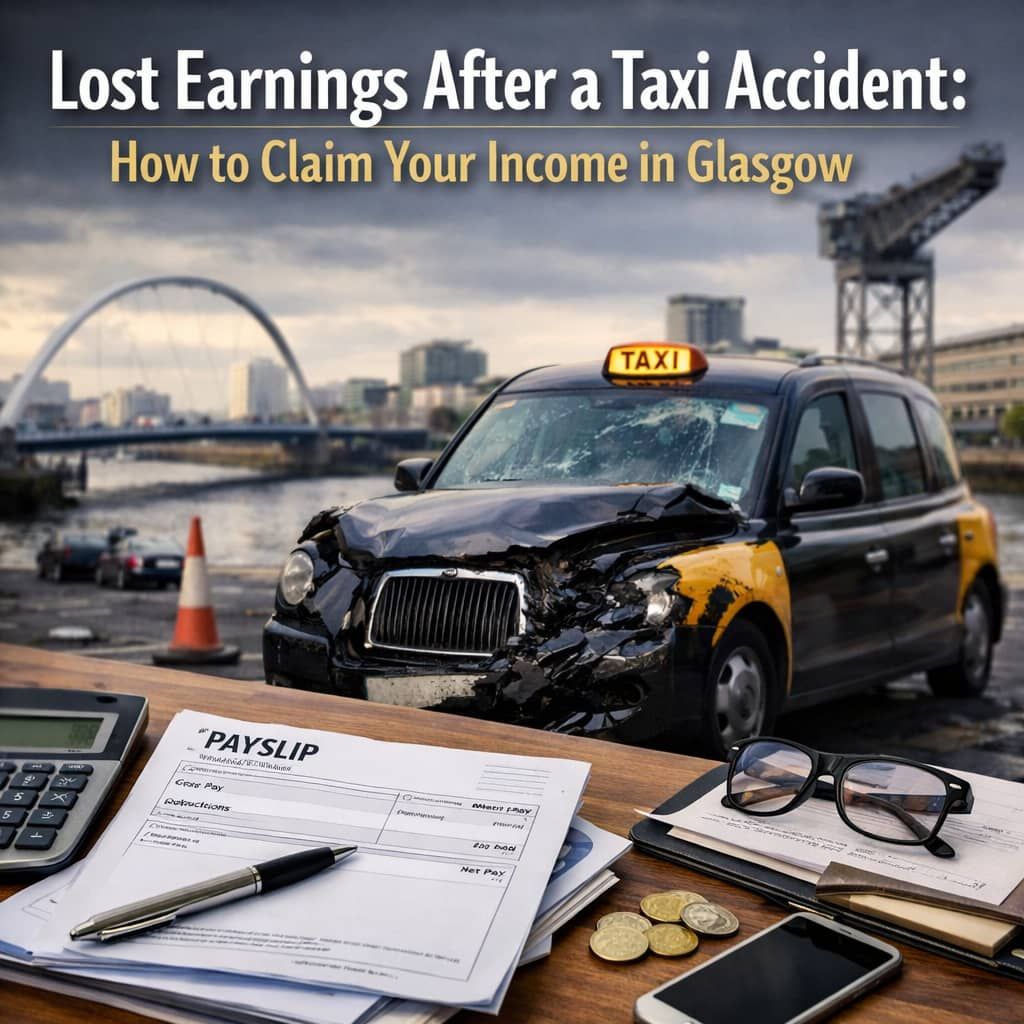
Being a taxi or private hire driver in Glasgow means your vehicle isn't just a mode of transport; it's your livelihood. An unexpected accident, especially one that wasn't your fault, can bring your income to a sudden halt, leaving you worried about how to pay your bills and support your family. The stress of managing vehicle repairs, dealing with insurance companies, and facing a loss of earnings can be overwhelming.
This is where understanding your rights and the claims process becomes crucial. In Glasgow, taxi drivers involved in non-fault accidents are entitled to claim for their lost income and other damages. This comprehensive guide will walk you through everything you need to know about making a successful lost earnings taxi driver claim, from identifying what you can claim for to gathering the necessary documentation and navigating the legal process. Our aim is to empower you with the knowledge to recover your income swiftly and efficiently, ensuring you can get back on the road and earning with minimal financial disruption.
Understanding Lost Earnings: What You Can Claim For
When a non-fault accident takes your taxi or private hire vehicle off the road, your ability to earn an income is immediately impacted. "Lost earnings" isn't just about the fares you would have collected; it encompasses a broader range of financial losses directly resulting from your inability to work. Understanding these categories is the first step in building a robust claim for taxi accident compensation in Scotland.
Direct Income Loss: Fares, Tips, and Bonuses
The most obvious component of your lost earnings claim is the direct income you miss out on. For Glasgow taxi and private hire drivers, this primarily includes:
Fare Revenue: The money you would have earned from picking up passengers, whether through street hails, pre-booked jobs, or app-based services. This can often be proven using detailed journey logs from your meter, booking app history, or operator statements.
Cash and Digital Tips: Tips form a significant portion of many drivers' income. While cash tips can be harder to quantify, consistent records or declarations to HMRC can help establish an average. Digital tips through apps are usually easier to verify.
Operator Bonuses/Incentives: Some operators offer performance-based bonuses, peak-time incentives, or guaranteed earnings. If your accident prevented you from achieving these, they should be included in your claim.
It's vital to calculate an accurate average of your daily or weekly income before the accident to establish a baseline for your lost earnings claim.
Associated Costs and Future Income Impact
Beyond direct fares and tips, an accident can lead to other financial implications that you can potentially claim for:
Loss of Future Contracts or Opportunities: If your vehicle downtime causes you to miss out on specific lucrative contracts, airport runs, or regular client work, this can be factored into your claim.
Impact on Licensing and Renewals: Extended downtime might affect your ability to meet licensing requirements or renew your Glasgow City Council license, potentially leading to further income loss.
Increased Insurance Premiums: While not directly lost earnings, a non-fault accident might still lead to an increase in your insurance premiums upon renewal, which can sometimes be recovered as part of the overall compensation package.
A specialist accident management service understands these nuanced elements and can help ensure all potential losses are accounted for, maximising your taxi claims in Glasgow.
Documentation Required to Prove Loss of Income
Proving your lost earnings effectively requires comprehensive and accurate documentation. The more evidence you can provide, the stronger your claim will be, making it easier to secure the full compensation you deserve. Gathering these documents promptly after a non-fault accident is critical for any taxi accident compensation Scotland claim.
Essential Financial Records
These documents serve as the backbone of your lost earnings claim, demonstrating your income history:
Bank Statements: Provide a clear overview of your regular deposits from fares, operator payments, and digital tips. It's advisable to gather statements covering several months prior to the accident.
Tax Returns (SA302s): Your self-assessment tax returns offer official proof of your declared income over previous tax years. This helps establish a consistent earning pattern.
Booking App Histories/Driver Statements: If you work with ride-sharing apps (e.g., Uber, Bolt, FreeNow), download your detailed driver statements, which show gross earnings, individual trip details, and tips for the period before the accident.
Operator Payment Records: For drivers working with traditional taxi operators, copies of your weekly or monthly payment summaries will verify earnings.
Invoices/Receipts for Pre-booked Work: If you undertake corporate or executive hires, retain copies of invoices for work you would have completed but missed due to the accident.
Operational Records and Supporting Evidence
Beyond pure financial figures, operational documents help illustrate your working patterns and potential earning capacity:
Shift Logs/Driver Diaries: Personal records of your shifts, hours worked, and even estimated earnings can supplement formal records. Consistency is key here.
Vehicle Usage Data: GPS logs or telematics data from your vehicle (if available) can show your typical working hours and mileage, corroborating your earning patterns.
Repair Estimates/Invoices: Documentation detailing the damage to your vehicle and the estimated repair time is crucial for establishing the duration of your lost earnings period. This helps prove how long you were genuinely unable to work.
Medical Reports (if applicable): If you suffered injuries that prevented you from working, medical reports from your GP or hospital will support the claim for the period you were medically unfit to drive.
Remember, the goal is to paint a clear, consistent picture of your earnings before the accident. Missing or incomplete documentation can delay your claim or reduce the amount of compensation you receive. For detailed advice on what to do after an accident, consult our guide on Taxi Accident in Glasgow: Your Immediate Step-by-Step Guide for Drivers.
Calculating Your Lost Earnings: Tips and Tools
Accurately calculating your lost earnings is a pivotal step in securing fair compensation. It's not always a straightforward process, as taxi driver incomes can fluctuate. However, with the right approach and supporting documentation, you can build a compelling case.
Establishing Your Average Weekly/Monthly Income
The most common method for calculating lost earnings is to determine your average income over a representative period prior to the accident.
Choose a Representative Period: Look at your earnings for the 3-6 months leading up to the accident. Avoid periods that were unusually high or low (e.g., major holidays, prolonged illness) unless you can justify them as typical for your work cycle.
Total Your Gross Income: Sum all fare revenue, tips (both cash and digital), and any regular bonuses or incentives during your chosen period.
Calculate the Average: Divide the total gross income by the number of weeks or months in your chosen period to get a reliable average. This average will be used as the basis for your daily or weekly lost earnings.
Account for Expenses: While your claim is primarily for gross lost earnings, it's worth noting that if you cease work, certain variable expenses (fuel, daily vehicle cleaning, etc.) also cease. However, fixed costs (vehicle payments, insurance, licensing fees) typically continue and are considered separate damages, not deductions from lost earnings.
Considering the Duration of Income Loss
The period for which you can claim lost earnings typically covers:
- Vehicle Repair Period: From the date of the accident until your vehicle is fully repaired and returned to you.
- Replacement Vehicle Period: If a like-for-like replacement taxi is provided, your lost earnings claim might be reduced or cease once you're back on the road. However, if there's a delay in getting a suitable replacement, you can claim for that gap. Finding a Replacement Taxi Vehicle Glasgow: Staying on the Road After an Accident is crucial to minimising this period.
- Recovery Period (if injured): If you sustained injuries that prevent you from driving, you can claim lost earnings for the duration of your recovery, as certified by medical professionals.
It's essential to clearly document the start and end dates of your inability to work due to the accident.
When to Seek Expert Assistance
While you can attempt to calculate lost earnings yourself, specialist accident management services like Taxi Claims, or even forensic accountants, possess the expertise to:
Review all your documentation: Ensuring no potential income streams are overlooked.
Present a robust calculation: That stands up to scrutiny from insurance companies.
Factor in complex scenarios: Such as fluctuating income, seasonal variations, or the impact on future earning potential.
Engaging experts can significantly strengthen your non-fault taxi accident claim, especially in Scotland where specific legal nuances may apply.
The Legal Process for Recovering Lost Wages
Navigating the legal intricacies of recovering lost wages after a taxi accident in Glasgow can be daunting, especially when you're already dealing with vehicle damage and personal stress. Fortunately, the process for non-fault accidents is designed to ensure you're not financially disadvantaged.
Initiating Your Claim and Specialist Support
The first crucial step after ensuring your safety and reporting the accident is to contact a specialist accident management service. For non-fault accidents, services like Taxi Claims operate on a "zero cost to drivers" basis, meaning they recover all costs, including your lost earnings, from the at-fault driver's insurer.
- Initial Contact: Call the 24/7 helpline (0333 577 7736). Provide details of the accident, including date, time, location, and details of the other party involved.
- Assessment: A dedicated case handler will assess your situation, gather preliminary information, and confirm if your claim is non-fault.
- Vehicle Recovery and Replacement: If your vehicle is unroadworthy, arrangements will be made for recovery and, crucially, for a like-for-like replacement taxi within 24 hours. This minimizes your lost earning period significantly.
For a deeper understanding of your entitlements, you might find our guide on Taxi Driver Rights After an Accident in the UK & Scotland: A Full Overview particularly useful.
Evidence Gathering and Negotiation
Once the initial steps are in motion, the focus shifts to compiling evidence for your lost earnings:
Documentation Submission: You will provide all the financial and operational records discussed earlier (bank statements, app histories, tax returns) to your case handler.
Calculation of Losses: The specialist team will use this documentation to meticulously calculate your total lost earnings, ensuring all potential income streams are accounted for.
Submission to Insurer: The comprehensive claim package, including vehicle repair costs, replacement vehicle hire costs, and your lost earnings, is then submitted to the at-fault driver's insurance company.
Negotiation: The case handler will negotiate directly with the insurer on your behalf. This stage can involve back-and-forth communication, where the insurer may challenge aspects of the claim. Having experienced professionals handle this ensures your interests are protected and you don't accept an undervalued offer.
Settlement and Payment
Once an agreement is reached, the compensation will be processed:
Settlement: A settlement figure, covering all aspects of your claim, including your lost earnings, will be agreed upon.
Payment: The funds are then disbursed. With a non-fault claim handled by specialists, your lost earnings compensation will be paid directly to you.
This structured approach ensures that you, the driver, can focus on your recovery and getting back to work, while the experts handle the complexities of the claim. For more detailed information on all aspects of financial recovery, refer to our Comprehensive Guide to Taxi Accident Compensation in Scotland: What You're Owed.
FAQs: Top Questions About Lost Earnings After a Taxi Accident in Glasgow
Here are some common questions Glasgow taxi drivers have about claiming lost earnings after an accident:
Q1: How quickly can I get a replacement taxi to minimise lost earnings?
A1: Specialist services like Taxi Claims aim to provide a like-for-like replacement taxi vehicle, compliant with Glasgow City Council licensing, typically within 24 hours of your non-fault accident being reported and assessed. This significantly reduces your downtime and helps you get back to earning quickly.
Q2: What if I don't have detailed records of my cash tips?
A2: While detailed records are best, if you regularly declare cash tips for tax purposes, your tax returns can provide an average. If not, consistent bank deposits that include cash earnings, combined with your driving patterns and local industry averages, can help your specialist case handler build a reasonable estimate for your taxi claims in Glasgow.
Q3: Can I claim for lost earnings if I also sustained personal injuries?
A3: Yes, absolutely. Your claim can include both the financial loss from your vehicle being off the road and compensation for personal injuries, including any additional lost income due to being medically unfit to drive. These are often separate components within the overall taxi accident compensation Scotland claim.
Q4: Do I have to pay anything upfront to claim for lost earnings?
A4: For non-fault accidents, specialist accident management services like Taxi Claims operate on a "no upfront cost" basis. All costs, including the replacement vehicle and your lost earnings, are recovered directly from the at-fault driver's insurance company, meaning you don't pay anything out of your pocket.
Q5: How long does it take to receive lost earnings compensation?
A5: The timeline can vary depending on the complexity of the accident and the cooperation of the at-fault insurer. However, with a dedicated case handler and robust documentation, the process is streamlined to ensure you receive your compensation as efficiently as possible. Your specialist will keep you informed throughout.
Get Back on the Road and Reclaim Your Income Today
An accident should not derail your livelihood. As a dedicated taxi or private hire driver in Glasgow, your income is paramount, and you deserve to be fully compensated for any earnings lost due to someone else's negligence. Understanding your rights and the clear path to claiming lost earnings is your strongest defense against financial hardship.
Don't let the complexities of insurance claims and legal processes add to your stress. By partnering with a specialist accident management service, you gain an experienced advocate who will handle every aspect of your claim, from providing a replacement vehicle to meticulously calculating and recovering every penny of your lost income. We are here to ensure you stay on the road, earning, without any upfront costs.
If you've been involved in a non-fault taxi accident in Glasgow and are facing lost earnings, don't hesitate. Contact our 24/7 helpline today at 0333 577 7736 or visit our website to learn more about how we can help you reclaim your income and get your life back on track. Your journey to recovery starts here.