Medical Negligence After Taxi Accidents: Seeking Justice for Misdiagnosis
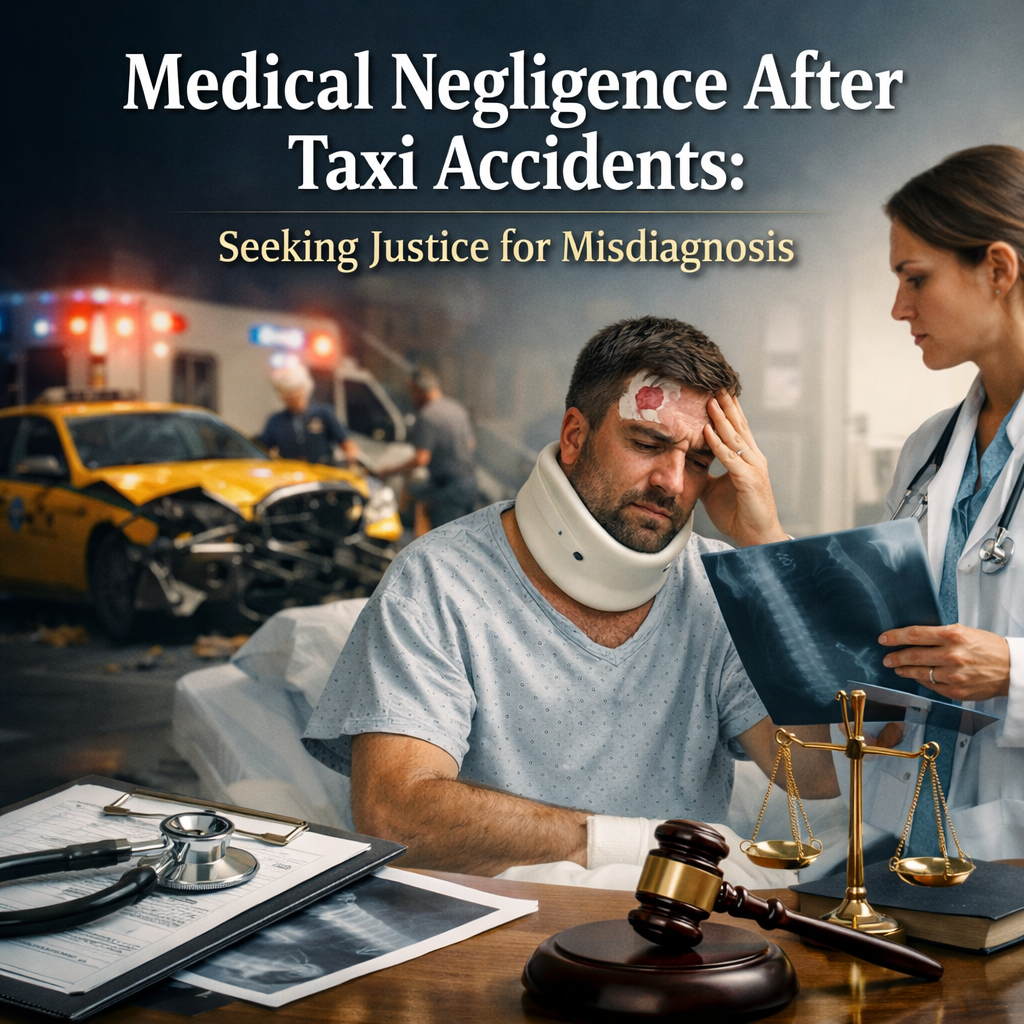
When you've been involved in a taxi accident, your immediate focus is naturally on recovery from the initial injuries. However, what happens if the medical care you receive afterwards falls below acceptable standards, leading to further harm or delayed healing? This unfortunate scenario, known as medical negligence taxi accident, can add a devastating layer of complexity to an already traumatic event. It's a harsh reality that some taxi drivers, private hire drivers, and even passengers in Scotland find themselves facing. A misdiagnosis after a taxi crash, or delayed treatment, can significantly worsen your condition, extend your recovery time, and have profound impacts on your livelihood and quality of life.
At Taxi Claims, we understand the double burden of recovering from an accident while also dealing with the consequences of medical malpractice. Our specialist team in Glasgow and across Scotland is dedicated to helping individuals like you navigate these intricate claims. This comprehensive guide will explore when medical negligence can occur post-accident, how to identify it, the process for making a claim, and why expert legal support is crucial for securing the justice and compensation you deserve for a secondary injury claim taxi. Don't let medical error compound your suffering – know your rights and take action.
When Medical Negligence Occurs Post-Accident
A taxi accident often results in immediate physical injuries, but the journey to recovery should be one of careful medical attention. Unfortunately, not all medical care meets the expected professional standards. Medical negligence, in the context of a taxi accident, arises when a healthcare professional's actions or inactions fall below the reasonable standard of care, causing further injury, worsening an existing condition, or leading to an entirely new medical issue for the patient. This can transform an already challenging situation into a profoundly distressing ordeal.
It's vital to differentiate between an honest mistake and negligence. Negligence implies a breach of duty of care that directly led to avoidable harm. This isn't about second-guessing every medical decision but identifying instances where a competent professional, acting reasonably, would have performed differently. The consequences of such negligence can be severe, impacting not only your physical health but also your ability to return to work as a taxi driver or private hire operator, leading to significant financial strain and emotional distress.
What Constitutes Medical Negligence?
Medical negligence can manifest in various ways following a taxi accident. It often involves a healthcare provider failing to provide treatment that aligns with the accepted medical standards for a similar professional in similar circumstances. This failure to act competently can lead to a preventable injury or the worsening of an existing one. For example, if you presented to a hospital after a road traffic incident, and despite clear symptoms, a serious internal injury was overlooked, that could potentially be deemed negligent if a reasonably competent doctor would have identified it.
Common Forms of Post-Accident Medical Errors
Following a taxi accident, several forms of medical errors can lead to negligence claims. One of the most common is a misdiagnosis after a taxi crash, where an injury is either incorrectly identified or completely missed. For instance, a complex fracture might be mistaken for a sprain, or a head injury's subtle symptoms might be attributed solely to shock. This misdiagnosis often leads to delayed treatment taxi accident, as the real issue goes unaddressed, allowing the condition to deteriorate. Other forms include incorrect surgical procedures, prescribing the wrong medication or dosage, or even negligent post-operative care, which can cause infections or other complications. These errors can turn a treatable injury into a long-term disability, impacting your ability to drive and earn a living.
The Critical Link: Accident to Negligence
Establishing the link between your initial taxi accident, the subsequent medical negligence, and the resulting harm is paramount. It’s not enough that an error occurred; it must be proven that this error directly caused you further injury or worsened your recovery beyond what would have been expected from the original accident alone. For example, if a spinal injury from the taxi crash was initially overlooked by medical staff, leading to permanent neurological damage that could have been prevented with timely intervention, this could form the basis of a strong medical negligence claim. Documenting your initial accident thoroughly is crucial, as detailed in our guide on Taxi Accident in Glasgow: Your Immediate Step-by-Step Guide for Drivers, because it forms the baseline against which subsequent medical care is judged.
Identifying Medical Malpractice in Your Case
Recognising that you might be a victim of medical malpractice after a taxi accident can be challenging. Often, the focus is on recovery from the initial trauma, and trust is placed wholeheartedly in medical professionals. However, persistent symptoms, a worsening condition, or new problems arising after treatment can be red flags indicating that something went wrong. Understanding these signs and knowing what information is critical to gather can empower you to explore your options. It's about protecting your health and your future when medical care fails to meet its fundamental obligations.
For taxi drivers and private hire operators, a medical error that prolongs recovery or creates new health challenges can have devastating financial implications, impacting your ability to work and provide for your family. Knowing your general rights as a driver, as outlined in Taxi Driver Rights After an Accident in the UK & Scotland: A Full Overview, can provide a foundational understanding for navigating subsequent legal complexities, including those related to medical negligence.
Recognising the Red Flags
Several indicators might suggest you've experienced medical negligence. These include:
- Worsening Symptoms: Your original injuries are not improving as expected, or they are getting worse despite treatment.
- New Symptoms: You develop entirely new health issues that weren't present after the initial accident but appeared following medical intervention.
- Contradictory Diagnoses: A second opinion reveals a completely different diagnosis or treatment plan that significantly differs from the first.
- Lack of Communication: Healthcare providers are evasive, unable to explain why your condition is deteriorating, or fail to inform you about treatment risks.
- Unexplained Complications: Unexpected complications arise during or after a procedure that weren't adequately explained or are unusually severe.
If you notice any of these signs, seeking a second medical opinion is highly advisable.
The Role of Medical Records
Your medical records are the cornerstone of any medical negligence claim. They provide a detailed timeline of your injuries, diagnoses, treatments, medications, and prognoses. Obtaining copies of all relevant medical records – from the ambulance service, A&E, GP, specialists, and any subsequent hospitals or clinics – is absolutely crucial. These records will be meticulously reviewed by legal and medical experts to identify any deviations from accepted medical practice. Gaps in care, incomplete notes, or discrepancies can all point towards potential negligence. Keeping a personal diary of your symptoms, appointments, and discussions with medical staff can also supplement these official records and provide valuable context.
Establishing the Standard of Care
A medical negligence claim hinges on proving that the care you received fell below the "acceptable standard of care." This isn't about proving an "ideal" standard, but rather what a reasonably competent and skilled medical professional, with similar training and experience, would have done in the same circumstances. To establish this, independent medical experts are engaged. These experts will review your case, compare the care you received against established clinical guidelines and professional practices, and provide an opinion on whether negligence occurred. They will also assess the direct impact of that negligence on your health, distinguishing it from the initial accident injuries. This expert testimony is fundamental to demonstrating causation and liability in a secondary injury claim taxi.
The Process of Making a Medical Negligence Claim
Dealing with the aftermath of a taxi accident is stressful enough, but discovering that medical negligence has further complicated your recovery can feel overwhelming. However, understanding the process of making a medical negligence claim can demystify it and empower you to seek justice. This type of claim is distinct from a standard personal injury claim related to the accident itself, requiring specialised legal knowledge and careful navigation. The primary goal is to secure compensation for the additional pain, suffering, financial losses, and altered quality of life caused by the medical error.
It’s important to act promptly, as there are strict time limits for bringing such claims. Seeking expert legal guidance from the outset is the most effective way to ensure your rights are protected and your case is handled with the precision it requires. For drivers especially, the impact of prolonged injury due to negligence directly affects their ability to earn, making timely and robust legal support essential.
Your First Steps: Contacting a Solicitor
The moment you suspect medical negligence after a taxi accident, your immediate step should be to contact a specialist solicitor. Do not attempt to tackle this complex area alone. A solicitor experienced in both personal injury and medical negligence claims in Scotland will provide an initial consultation, often free of charge. During this consultation, you will discuss the details of your taxi accident, your injuries, the medical treatment you received, and your concerns about potential negligence. They will assess the viability of your case, advise you on the legal process, and explain the crucial difference between suing the driver responsible for the accident and suing a medical professional or institution for subsequent negligence. Our team offers dedicated Legal Support for Taxi Drivers After Accidents in Scotland, ensuring you have the right experts on your side.
Evidence Collection and Expert Reports
Once your solicitor agrees to take on your case, the extensive process of evidence collection begins. This involves:
- Gathering Medical Records: Your solicitor will obtain all your relevant medical notes, scans, test results, and correspondence from every healthcare provider involved.
- Witness Statements: If there were any witnesses to the medical treatment, or if family members observed a decline in your condition or heard specific medical advice, their statements may be useful.
- Expert Medical Opinions: This is a critical stage. Your solicitor will instruct independent medical experts in the relevant field (e.g., orthopaedics, neurology) to review your entire medical history. These experts will provide a written report detailing whether they believe medical negligence occurred, what the standard of care should have been, how the negligent act caused you harm, and what the long-term prognosis is for your secondary injury claim taxi.
Navigating the Legal Journey
With the evidence and expert reports in hand, your solicitor will formally notify the healthcare provider or institution of your intention to claim. This usually takes the form of a "Letter of Claim." The defendant then has a period to investigate and respond.
- Negotiation: Many medical negligence claims are settled out of court through negotiation between legal teams.
- Mediation: Sometimes, mediation is used, where an independent third party helps both sides reach a mutually agreeable settlement.
- Court Proceedings: If a settlement cannot be reached, court proceedings may be initiated. However, going to court is a last resort, as it can be lengthy and expensive. Your solicitor will guide you through each stage, explaining the legal jargon and ensuring you understand your options. Throughout this journey, the focus remains on securing fair compensation for your misdiagnosis after a taxi crash or other forms of medical negligence.
Expert Legal Support for Complex Injury Claims
When facing the dual burden of a taxi accident injury and subsequent medical negligence, the legal landscape becomes incredibly complex. These aren't straightforward personal injury cases; they involve intricate medical evidence, challenging legal precedents, and often multiple defendants. Attempting to pursue such a claim without specialised legal representation is a significant disadvantage. Expert solicitors bring not only legal acumen but also a deep understanding of medical terminology, access to a network of medical experts, and the strategic foresight required to build a compelling case. They act as your advocate, allowing you to focus on your recovery while they fight for your rights and secure the compensation you desperately need.
Understanding your full entitlements is crucial, as detailed in our Comprehensive Guide to Taxi Accident Compensation in Scotland: What You're Owed. This includes not only the physical and emotional impact but also the significant financial implications of being unable to work due to medical error.
Why Specialised Expertise Matters
Specialist solicitors in medical negligence, particularly those familiar with road traffic accidents, possess a unique skill set:
- Deep Medical Knowledge: They understand medical procedures, diagnoses, and standards of care, enabling them to effectively communicate with medical experts and dissect complex medical records.
- Proven Track Record: They have experience handling similar complex cases, knowing what evidence is required and how to present it effectively.
- Access to Experts: They have established relationships with leading independent medical experts who can provide unbiased and authoritative opinions crucial for your claim.
- Negotiation Skills: They are adept at negotiating with powerful insurance companies and NHS legal teams, ensuring you receive a fair settlement.
- Legal Strategy: They can navigate the nuanced legal requirements specific to Scottish law for medical negligence claims, which differ from those in England and Wales.
Understanding Your Compensation
Compensation in medical negligence claims aims to put you back in the position you would have been in had the negligence not occurred, as far as money can allow. This typically includes:
- General Damages: Compensation for your pain, suffering, and loss of amenity (e.g., inability to enjoy hobbies, impact on daily life) directly caused by the medical negligence.
- Special Damages: Reimbursement for all financial losses incurred due to the medical error. This can include:
- Lost Earnings: Past and future income lost due to extended recovery or inability to work as a taxi driver.
- Medical Expenses: Costs for corrective treatment, therapies, medication, and rehabilitation.
- Care Costs: Expenses for any additional care or assistance you require at home.
- Adaptations: Costs for adapting your home or vehicle if the negligence resulted in long-term disability.
- Travel Expenses: Costs incurred for attending medical appointments related to the negligence.
Your solicitor will work tirelessly to ensure every aspect of your suffering and financial loss is accounted for in your secondary injury claim taxi.
The "No Win, No Fee" Advantage
At Taxi Claims, we understand that pursuing a medical negligence claim can be financially daunting, especially when you're already facing lost income and mounting expenses. That's why we operate on a "No Win, No Fee" basis for non-fault claims. This means you won't pay any upfront legal fees, and if your claim is unsuccessful, you won't owe us anything for our legal services. Our fees are only payable if we successfully secure compensation for you, typically as a pre-agreed percentage of the settlement. This arrangement removes the financial risk, making expert legal representation accessible to everyone who has suffered due to delayed treatment taxi accident or other medical errors. It allows you to focus on your health and recovery with the peace of mind that your legal costs are covered.
FAQs: Top Questions About Medical Negligence After Taxi Accidents
Q1: Can I claim for medical negligence if my taxi accident was my fault?
A: Yes, potentially. Your eligibility for a medical negligence claim is separate from who was at fault for the initial taxi accident. If a medical professional’s negligence caused you further harm, regardless of the accident's cause, you may still have a valid medical negligence claim against that medical professional or institution.
Q2: What is the time limit for making a medical negligence claim in Scotland?
A: In Scotland, you generally have three years from the "date of knowledge" to make a medical negligence claim. The "date of knowledge" is when you knew, or ought reasonably to have known, that you had suffered an injury, that the injury was significant, and that it was caused by the actions of a medical professional. This can be a complex area, so it's vital to seek legal advice as soon as possible.
Q3: What kind of compensation can I expect from a medical negligence claim?
A: Compensation can cover general damages for your pain, suffering, and loss of amenity, as well as special damages for financial losses. This includes lost earnings (both past and future), medical treatment costs, care costs, and expenses for any necessary adaptations to your home or vehicle due to the negligence. The aim is to put you back in the position you would have been in had the negligence not occurred.
Q4: How long does a medical negligence claim usually take?
A: Medical negligence claims are often complex and can take longer than standard personal injury claims. The duration varies greatly depending on the complexity of the case, the willingness of the defendant to admit liability, and the extent of the investigations required. Some cases may settle within a year or two, while more intricate ones, especially those involving significant long-term injuries, can take several years to resolve.
Q5: What if I'm an Uber passenger who suffered medical negligence after an accident?
A: Whether you were an Uber passenger, a private hire driver, or a hackney carriage driver, your right to claim for medical negligence remains the same. If the medical care you received after an accident involving an Uber vehicle (or any taxi) fell below the acceptable standard and caused you further harm, you could have a valid claim.
Conclusion
Experiencing a taxi accident is traumatic enough, but discovering that your recovery has been hindered or worsened by medical negligence can feel like an unbearable injustice. A misdiagnosis after a taxi crash or delayed treatment taxi accident can lead to prolonged suffering, increased medical costs, and significant lost earnings, impacting your entire life and livelihood. You don't have to face this complex challenge alone.
At Taxi Claims, we specialise in protecting the rights of taxi drivers, private hire drivers, and passengers across Scotland who have been caught in these unfortunate circumstances. Our expert team possesses the unique blend of personal injury and medical negligence expertise necessary to meticulously investigate your case, gather crucial evidence, and build a powerful claim on your behalf. We understand the profound impact a secondary injury claim taxi can have, and we are committed to securing the maximum compensation you deserve. Remember, our service is free for non-fault claims, operating on a "No Win, No Fee" basis. Don't let medical error compound your pain; take the first step towards justice and recovery today.
Contact Taxi Claims now for a free, no-obligation consultation. Call us on 0333 577 7736 or use the claim form on our website to discuss your case. Let us help you navigate the complexities and secure the future you deserve.