Lost Earnings After a Taxi Accident: How to Recover Your Income in Scotland
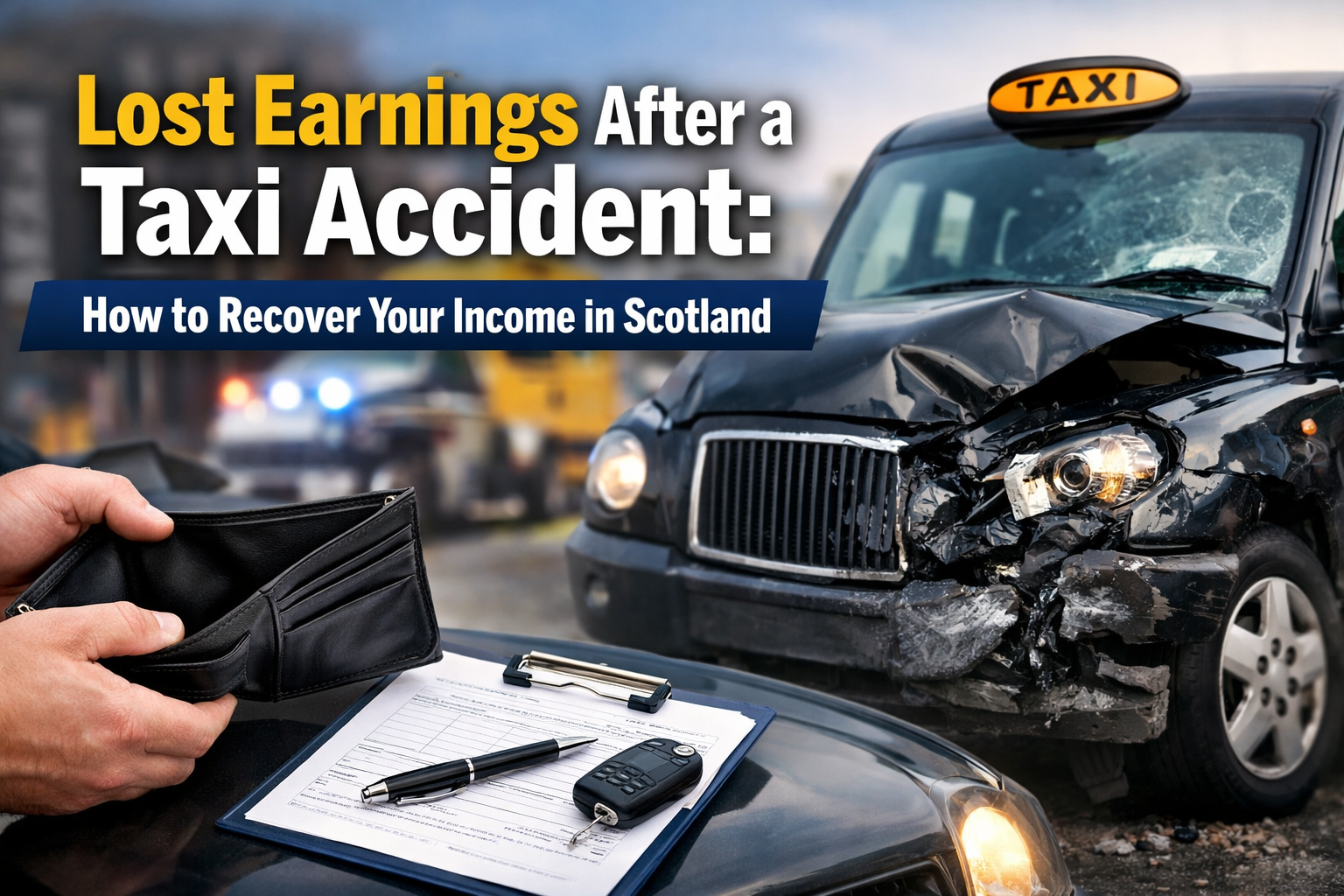
For taxi drivers across Scotland, your vehicle isn't just a mode of transport; it's your livelihood. An unexpected accident, particularly one that wasn't your fault, can bring your ability to earn to a grinding halt. The immediate aftermath can be stressful, not only dealing with vehicle damage and potential injuries but also facing the daunting prospect of lost earnings. This financial impact can be devastating, making it difficult to cover daily expenses and support your family.
At Taxi Claims, we understand the unique challenges faced by hackney carriage, private hire, and Uber drivers in Glasgow and beyond. When you're involved in a non-fault accident, protecting your income is paramount. This comprehensive guide will walk you through everything you need to know about claiming lost earnings after a taxi accident in Scotland, ensuring you receive the compensation you're rightfully owed to keep your business moving forward.
Understanding your rights and the steps to take is crucial for a successful claim. From documenting your income to navigating complex insurance procedures, we're here to provide the expert support you need. Don't let an accident jeopardise your financial stability; take control and recover your lost income efficiently and effectively.
Understanding Lost Earnings: What You Can Claim For
When your taxi is off the road due to an accident that wasn't your fault, the financial implications extend far beyond the cost of repairs. You're losing out on the income you would have generated, and these "lost earnings" are a fundamental part of your compensation claim. Knowing precisely what you can claim for is the first step towards a robust recovery.
Direct Loss of Income
This is the most straightforward component of lost earnings. It refers to the gross income you would have earned if your taxi had been operational. This includes:
- Fares: The money you would have collected from passengers.
- Tips: A realistic average of the tips you typically receive.
- Contract work: Any pre-booked or regular contract work you were unable to fulfil.
To calculate this, you'll need accurate records of your past earnings. It's not just about the days your vehicle is being repaired; it also accounts for the time it takes to arrange a replacement vehicle or the period between the accident and getting your vehicle back on the road. Remember, the goal is to put you back in the financial position you would have been in had the accident not occurred.
Missed Opportunities and Future Earnings
Beyond the immediate loss of daily income, a taxi accident can impact future earning potential. If, for example, the accident caused significant delays in your ability to return to work, or if it led to a permanent reduction in your capacity to drive due to injury, this can also be factored into your claim. This might include:
- Loss of a specific lucrative contract: If the downtime caused you to lose a long-term contract.
- Reduced capacity to work: If personal injuries from the accident limit your driving hours or ability.
- Impact on business reputation: Though harder to quantify, if severe, this could be considered.
This aspect often requires expert assessment and projection, especially if personal injury is involved. For a broader understanding of your entitlements, refer to our Comprehensive Guide to Taxi Accident Compensation in Scotland: What You're Owed.
Associated Costs
While not direct lost earnings, other costs are inextricably linked to your inability to work and are recoverable. These include:
- Ongoing vehicle running costs: Even if your taxi isn't on the road, you might still incur costs like road tax, insurance payments, and licensing fees. These are legitimate expenses that you continue to pay while your income has stopped.
- Public transport costs: If you need to use public transport to get to and from medical appointments or to manage your claim, these costs can be included.
- Loss of no-claims bonus: If the other party is at fault, your no-claims bonus should be protected. If not, the loss value can form part of your claim. This is especially relevant in Non-Fault Taxi Accident Claims in Scotland: A Driver's Comprehensive Guide.
By understanding these categories, you can ensure that your claim for lost earnings is as comprehensive and accurate as possible, covering all angles of the financial impact you've suffered.
Calculating Your Compensation: A Practical Guide for Drivers & Operators
Accurately calculating your lost earnings is perhaps the most critical step in securing fair compensation. Insurers will meticulously scrutinise your claim, so precise and well-supported figures are essential. This section provides a practical guide for taxi drivers and operators in Scotland to meticulously calculate their losses.
Gathering Financial Records
The cornerstone of any lost earnings claim is robust financial documentation. Without clear evidence of your income before the accident, it's challenging to prove what you've lost. You should compile:
- Bank statements: Demonstrating regular income deposits from fares.
- Accounting records: Profit and loss statements, invoices, and receipts if you operate as a limited company or sole trader.
- Tax returns: HMRC self-assessment forms or company tax returns for the previous 1-3 years will provide a solid baseline for your average earnings.
- Booking records: Digital or physical logs of your completed fares, especially from apps like Uber or your dispatch system.
- Vehicle mileage and fuel consumption records: To help establish your typical operational activity.
The more detailed your financial records, the stronger your position will be when negotiating with insurers. Consistency in your record-keeping is key, as sporadic data can weaken your claim.
Projection of Earnings
Once you have your historical data, the next step is to project what you would have earned during the period your taxi was off the road. This projection should take into account:
- Average daily/weekly/monthly earnings: Based on your historical data.
- Seasonal variations: If your earnings fluctuate seasonally (e.g., higher demand during festive periods or major events), these should be factored in.
- Confirmed future bookings/contracts: Any work you had pre-booked but couldn't fulfil due to the accident.
For fleet operators, this might involve assessing the average income generated by a specific vehicle or driver in a similar period. It's about demonstrating a reasonable expectation of income that was directly interrupted by the non-fault accident.
Involving Experts
In more complex cases, or where personal injury has a long-term impact on your ability to work, it may be necessary to involve financial experts or forensic accountants. These professionals can:
- Provide an independent assessment: Their objective analysis can lend significant weight to your claim.
- Project future losses: Especially relevant for long-term injuries or business disruption.
- Counter arguments from the at-fault insurer: Who may try to minimise your projected losses.
Specialist accident claims services like Taxi Claims work with such experts to ensure your lost earnings are calculated accurately and robustly defended. Remember, recovering all aspects of your financial loss is crucial, including support to get a Replacement Taxi Vehicle Glasgow: Staying on the Road After an Accident.
Documenting Your Losses: Essential Evidence for a Strong Claim
Beyond the raw financial figures, a compelling claim for lost earnings hinges on meticulously documenting all aspects of your accident and its impact. Solid evidence reinforces your credibility and leaves less room for dispute from the at-fault insurer.
Record-Keeping Best Practices
As a taxi driver, diligent record-keeping is a powerful tool, not just for tax purposes but also for unforeseen events like accidents. Implement these best practices:
- Daily income logs: Maintain a consistent record of your daily takings, including cash and card payments. Many taxi apps provide detailed summaries, which are invaluable.
- Expense tracking: Keep receipts and records for all operational expenses such as fuel, maintenance, licensing fees, and insurance. This helps establish your net income.
- Driver shift logs: Documenting your working hours and days can support your average earning patterns.
- Communication records: Keep copies of all correspondence related to your claim, including emails, letters, and notes from phone calls with insurers or repair garages.
These records provide a clear, undeniable picture of your financial activity before and after the accident, forming the backbone of your claim for lost income.
Corroborating Evidence
While your own records are vital, external corroborating evidence significantly strengthens your claim. This can include:
- Police reports/incident numbers: Official documentation of the accident itself.
- Witness statements: Accounts from passengers, other drivers, or passers-by can confirm the circumstances of the accident.
- Photographs/videos: Capture damage to both vehicles, the accident scene, and any relevant road conditions.
- Medical reports: If you sustained personal injuries that prevented you from working, medical assessments will be crucial. These reports will link your inability to work directly to the accident.
- Repair estimates/invoices: Documentation from approved garages detailing the damage and the time required for repairs.
For more detailed guidance on immediate actions and evidence collection, our article on Taxi Accident in Glasgow: Your Immediate Step-by-Step Guide for Drivers provides essential information.
The Role of Dash Cam Footage
In 2026, dash cam footage is an indispensable piece of evidence for any road traffic accident, especially for taxi drivers. A dash cam can:
- Prove fault: Clearly showing the actions of the other party, leaving no room for argument regarding liability.
- Corroborate details: Verifying speed, road conditions, and the sequence of events.
- Reduce claim processing time: Clear evidence often leads to quicker admissions of fault and faster settlements.
Having a dash cam installed and properly functioning is one of the smartest investments a taxi driver can make. It protects your livelihood by providing irrefutable evidence that can accelerate your lost earnings claim and ensure you receive maximum compensation without unnecessary delays.
The Claims Process in Scotland: Your Path to Recovery
Navigating the aftermath of a taxi accident can be complex, but a clear understanding of the claims process in Scotland will empower you to recover your lost earnings and other damages. With the right support, this process can be streamlined, allowing you to focus on getting back on the road.
Initial Steps After the Accident
Your actions immediately following a taxi accident are critical. If it's safe to do so:
- Ensure Safety: Check for injuries to yourself, passengers, and others. Call emergency services if needed.
- Exchange Details: Obtain contact and insurance information from all parties involved, including witnesses.
- Document the Scene: Take photos and videos of vehicle damage, the accident scene, and any relevant road conditions.
- Report to Police: Even if not severe, reporting the accident can provide an official record.
- Inform Your Insurer: Notify your own insurance company as soon as possible.
Remember, even in the stress of the moment, every piece of information you gather will be valuable for your future claim.
Engaging a Specialist Service
This is where a specialist claims management service like Taxi Claims becomes invaluable. While you could attempt to manage the claim yourself, the complexities of quantifying lost earnings, arranging replacement vehicles, and negotiating with insurers can be overwhelming. A specialist service will:
- Assess your case: Determine the strength of your non-fault claim and outline your entitlements.
- Handle all communication: Liaise directly with your insurer, the at-fault party's insurer, and repair garages on your behalf.
- Calculate lost earnings: Expertly compile and present your financial evidence to ensure accurate compensation.
- Arrange a replacement taxi: Crucially, they can swiftly provide a like-for-like replacement vehicle, often at no upfront cost to you, minimising the impact on your income.
- Manage vehicle repairs: Coordinate with approved garages to ensure high-quality repairs are completed efficiently.
Understanding your Taxi Driver Rights After an Accident in the UK & Scotland: A Full Overview is important, and a specialist can help you exercise these rights effectively.
Negotiation and Settlement
Once all evidence is compiled and damages (including lost earnings, repair costs, and personal injury claims) are assessed, the negotiation phase begins. Your claims specialist will:
- Present your full claim: Submitting all documentation to the at-fault insurer.
- Negotiate on your behalf: Countering any attempts by the other insurer to reduce your compensation.
- Advise on settlement offers: Ensuring any offer is fair and reflects your total losses.
- Escalate if necessary: If a fair settlement cannot be reached, they may advise on legal action or mediation.
The goal is to achieve a swift and fair settlement that fully compensates you for your lost earnings, vehicle damage, and any personal injuries, allowing you to return to your livelihood with minimal financial burden. For a deeper dive into the overall process, consider reading our Taxi Accident Claims Scotland: Your Comprehensive Legal Guide.
FAQs: Recovering Lost Taxi Driver Income
Q: How long does it take to claim lost earnings after a taxi accident in Scotland?
A: The timeframe can vary depending on the complexity of the accident, the severity of damage, and whether personal injuries are involved. With expert assistance and clear evidence, some claims can be settled within weeks, while others might take several months, especially if negotiations are protracted.
Q: Can I claim lost earnings if I was partly at fault for the accident?
A: If you were partly at fault, your claim for lost earnings might be reduced proportionally to your degree of fault. However, if the accident was not your fault, you should be able to recover 100% of your losses.
Q: What if I don't have detailed records of my income?
A: While detailed records are ideal, specialists can often help reconstruct your income using bank statements, tax returns, and average earnings data for drivers in your area. However, the less evidence you have, the more challenging it can be to prove your losses.
Q: Will claiming lost earnings affect my taxi insurance premiums?
A: If the accident was not your fault, claiming lost earnings and other damages from the at-fault driver's insurer should not directly impact your own insurance premiums or no-claims bonus.
Q: Can fleet operators claim lost earnings for multiple vehicles?
A: Yes, fleet operators can claim for lost earnings for each vehicle that is off the road due to a non-fault accident. The calculation would apply per vehicle, often with considerations for fleet utilisation rates.
Conclusion
A non-fault taxi accident in Scotland can be more than just an inconvenience; it can be a significant threat to your income and your ability to earn a living. Navigating the complexities of claiming lost earnings requires careful documentation, accurate calculations, and often, expert guidance. From direct income loss and missed opportunities to associated costs, ensuring every aspect of your financial setback is covered is crucial for a complete recovery.
By understanding what you can claim, meticulously documenting your financial history, and following the correct claims process, you empower yourself to protect your livelihood. Don't face the insurance companies alone. Specialist services like Taxi Claims are here to champion your rights, providing replacement vehicles, managing repairs, and aggressively pursuing your lost earnings compensation.
Ready to get back on the road and recover what you're owed? Contact Taxi Claims today for a free, no-obligation consultation. Our 24/7 emergency helpline is always available, or you can reach us via WhatsApp for immediate support. Let us handle the claim so you can focus on your business. Call us on 0333 577 7736 or visit our office at 171 Maxwell Road, Glasgow, G41 1TG.