Wrist Fracture Compensation After Taxi Accident in Scotland (2026)
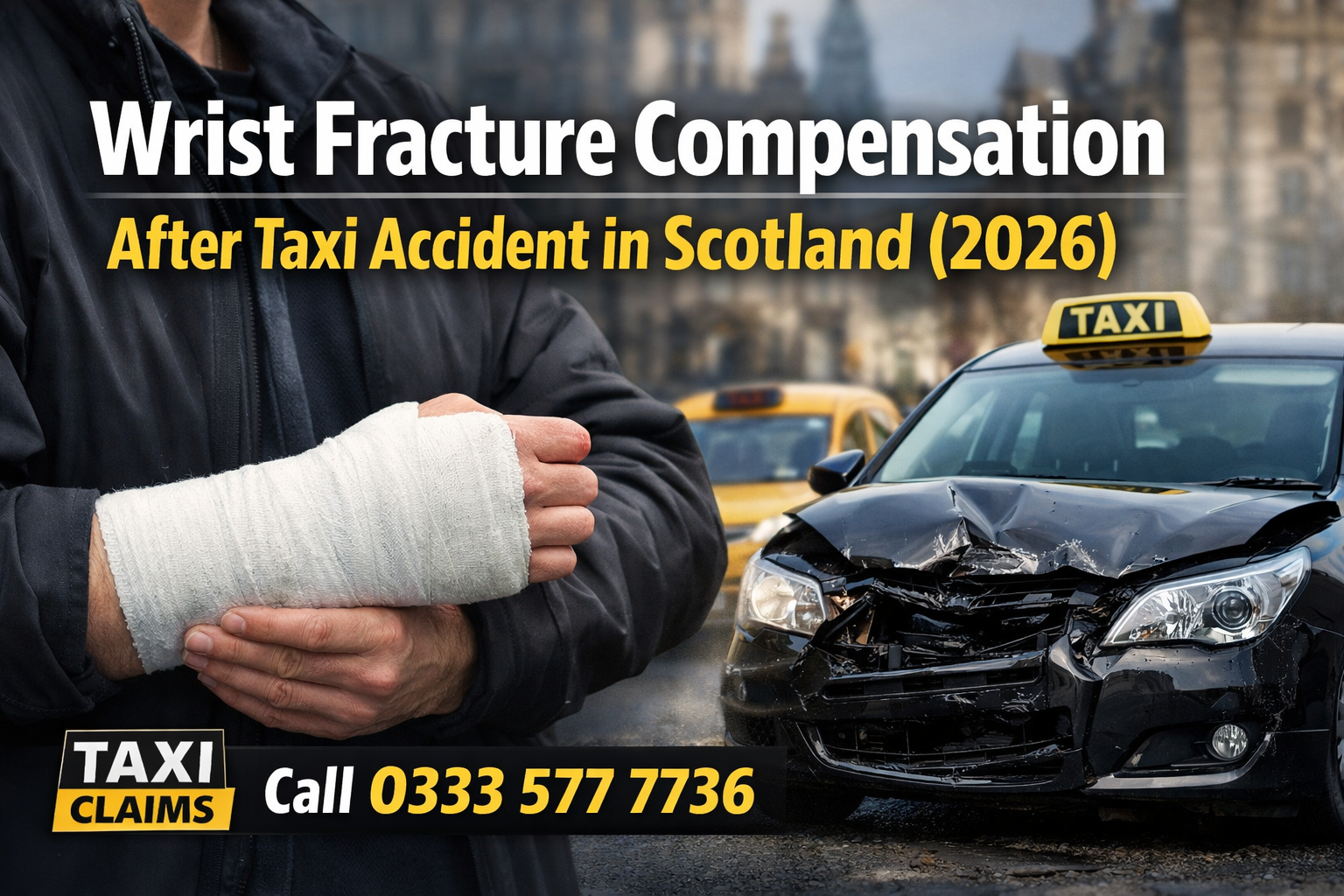
Being involved in a taxi accident is a distressing experience, but sustaining a wrist fracture can significantly complicate your life, especially if you're a taxi driver. A wrist fracture, whether it's a minor crack or a severe break requiring surgery, can instantly impact your ability to work, your daily routine, and your overall quality of life. If you've suffered a wrist fracture after a taxi accident in Scotland, you are likely entitled to compensation. Understanding your rights and the claims process is crucial to securing the financial support you need for recovery and to mitigate any financial losses.
At Taxi Claims, we specialise in helping taxi drivers (hackney carriage, private hire, and Uber) and passengers across Scotland navigate the complexities of accident claims. Our mission is to ensure you receive free, no-win, no-fee support to recover not only your physical health but also your lost earnings, vehicle damage costs, and personal injury compensation. This comprehensive guide for 2026 will walk you through everything you need to know about pursuing a wrist fracture accident claim in Glasgow and throughout Scotland, offering clear, expert advice to get you back on your feet and back on the road.
Recognising & Diagnosing Wrist Fractures Post-Taxi Accident
The immediate aftermath of a taxi accident can be chaotic and overwhelming. However, recognising the signs of a potential wrist fracture and seeking prompt medical attention are vital steps. A broken wrist from a taxi accident can range from a hairline crack to a complete break of one or more of the eight small bones in the wrist (carpals) or the two forearm bones (radius and ulna) near the wrist joint.
Immediate Steps at the Scene
If you suspect a hand injury after a taxi crash, or any injury for that matter, your first priority is safety and then collecting information. Even if pain isn't immediate, adrenaline can mask serious injuries. Check for visible deformities, swelling, severe pain, bruising, or an inability to move your wrist or hand. Document the scene thoroughly with photos and gather witness details, as this will be invaluable for any subsequent taxi accident fracture claim. For a detailed checklist of what to do, refer to our guide on Taxi Accident in Glasgow: Your Immediate Step-by-Step Guide for Drivers.
Medical Assessment & Diagnosis
Once immediate safety is secured, seek urgent medical assessment. A doctor will typically perform a physical examination and may order X-rays to confirm a wrist fracture. In some cases, MRI or CT scans may be necessary to identify less obvious fractures, ligament damage, or other soft tissue injuries. A precise diagnosis is critical for effective treatment and forms the foundation of your broken wrist taxi accident scotland compensation claim. Ensure all medical records accurately reflect the date of the injury, how it occurred, and the diagnosed severity.
Common Types of Wrist Fractures
Wrist fractures sustained in road traffic accidents often result from high-impact forces, leading to various types of breaks:
- Colles' fracture: A break in the radius bone, common when falling onto an outstretched hand.
- Smith's fracture: A less common fracture of the radius, often caused by falling onto the back of the hand.
- Scaphoid fracture: A break in one of the small carpal bones, sometimes difficult to diagnose immediately and can lead to long-term issues if untreated.
- Barton's fracture: A fracture of the distal radius that extends into the wrist joint.
Each type of fracture, along with its severity and the treatment required, will influence the course of your recovery and the potential value of your hand injury taxi crash compensation.
The Impact of a Wrist Injury on Work and Daily Activities
A wrist fracture can be particularly debilitating for taxi drivers, whose livelihood depends on their ability to grip the steering wheel, operate vehicle controls, and assist passengers. Beyond the physical pain, a broken wrist can trigger a cascade of financial and personal challenges.
Loss of Earning Capacity for Taxi Drivers
For taxi drivers, a wrist injury often means an immediate cessation of work. Even a seemingly minor fracture can prevent you from driving for weeks or months, leading to significant lost earnings taxi driver. You might be self-employed or work for a company, but either way, your income stream stops or is severely reduced. This loss isn't just about your basic wage; it includes tips, potential bonuses, and any other income directly tied to your driving duties. Our specialists understand the unique financial impact on taxi drivers and are adept at calculating comprehensive claims for Lost Earnings After a Taxi Accident: Compensation for Drivers. This ensures all aspects of your financial loss are covered, helping you protect your livelihood.
Daily Life Challenges
Beyond work, a wrist fracture impacts almost every aspect of daily life. Simple tasks like dressing, cooking, cleaning, and personal hygiene can become difficult or impossible without assistance. The dominant hand being affected makes these challenges even more pronounced. You might require help at home, which can incur additional costs, or experience a significant loss of enjoyment in hobbies and activities that require wrist movement. These non-financial impacts are crucial components of taxi accident compensation Scotland.
Psychological Effects
The stress of an accident, combined with the pain, immobility, and financial strain of a wrist fracture, can take a toll on mental health. Many accident victims experience anxiety, frustration, and even depression as they cope with their injuries and the disruption to their lives. Taxi Claims recognises the importance of addressing these psychological impacts in your claim, ensuring you receive holistic support for your recovery.
Calculating Compensation for Wrist Fractures in Scotland
When pursuing a taxi accident fracture claim in Scotland, the total compensation you receive is typically divided into two main categories: General Damages and Special Damages. Understanding what these cover will help you anticipate the scope of your claim.
General Damages (Pain, Suffering, Loss of Amenity)
General damages are awarded to compensate you for the non-financial aspects of your injury. This includes the physical pain and suffering you've endured, the discomfort of treatment, and the impact on your quality of life (loss of amenity). The Judicial College Guidelines for the Assessment of General Damages in Personal Injury Cases, updated regularly, provide a benchmark for courts in Scotland when assessing these amounts. For wrist fractures, factors influencing the general damages include:
- Severity of the fracture: A comminuted (multiple breaks) or open fracture will generally warrant higher compensation than a simple hairline fracture.
- Need for surgery: Surgical intervention and subsequent scarring or complications increase the award.
- Length of recovery: Longer recovery times and periods of immobilisation contribute to higher compensation.
- Residual symptoms: Ongoing pain, stiffness, reduced grip strength, or chronic regional pain syndrome (CRPS) will significantly impact the claim.
- Impact on pre-accident activities: Inability to participate in sports, hobbies, or daily tasks due to the injury.
These guidelines ensure a fair and consistent approach to broken wrist taxi accident scotland compensation.
Special Damages (Financial Losses)
Special damages cover all quantifiable financial losses you have incurred or will incur as a direct result of your wrist fracture. This is where a specialist like Taxi Claims can make a significant difference for taxi drivers. Components of special damages often include:
- Lost Earnings: Past and future income loss, including regular wages, tips, and any projected earnings you would have made.
- Medical Expenses: Costs for prescriptions, physiotherapy, specialist consultations, and any necessary adaptive equipment.
- Travel Costs: Expenses for attending medical appointments or legal meetings.
- Care and Assistance: If you needed help with personal care or household tasks.
- Vehicle Damage & Replacement: Costs for repairing your taxi or for a replacement vehicle during your recovery, crucial for keeping your business afloat.
- Out-of-Pocket Expenses: Any other reasonable expenses directly linked to the accident and your injury.
For a comprehensive overview of what you could be owed, our Comprehensive Guide to Taxi Accident Compensation in Scotland: What You're Owed provides in-depth information on all types of damages.
Factors Affecting Your Claim Value
Several elements can influence the final compensation figure for your hand injury taxi crash compensation:
- Liability: If the other party is fully at fault, your claim will be straightforward. If there's shared fault, your compensation may be reduced.
- Medical Prognosis: The long-term outlook for your recovery, as assessed by medical experts, plays a significant role.
- Evidence Quality: Strong, well-documented evidence (medical records, wage slips, receipts, witness statements, dashcam footage) is paramount.
- Negotiation Skills: Experienced legal representation can significantly enhance your settlement.
Expert Legal Advice for Your Fracture Claim
Dealing with the aftermath of a taxi accident and a serious injury like a wrist fracture can be daunting. The legal process can be complex, and attempting to manage it alone while recovering can add immense stress. This is where expert legal advice becomes indispensable.
Why Choose a Specialist
Choosing a legal firm that specialises in taxi accident claims Glasgow and personal injury claims, particularly those involving taxi drivers, ensures you have advocates who understand the unique challenges you face. Taxi Claims possesses specific expertise in this area, meaning we're familiar with:
- The licensing requirements and regulations affecting taxi drivers in Scotland.
- The impact of lost earnings on self-employed drivers and the calculation of such losses.
- Arranging replacement taxi vehicles to minimise downtime.
- Navigating insurance companies, who often try to minimise payouts.
Our dedicated team has a proven track record of securing maximum compensation for clients, taking the burden of the claim process off your shoulders. For comprehensive legal support tailor-made for your situation, read more about Legal Support for Taxi Drivers After Accidents in Scotland.
The No-Win, No-Fee Advantage
One of the most significant advantages of working with Taxi Claims is our "no-win, no-fee" policy. This means you won't pay any upfront legal fees, and if your claim is unsuccessful, you won't owe us anything. Our payment is contingent on us winning your case, typically a percentage of the compensation awarded. This arrangement provides peace of mind, allowing you to focus on your recovery without the added worry of legal costs. It also ensures that justice is accessible to everyone, regardless of their financial situation.
Starting Your Claim
Initiating your wrist fracture accident claim Glasgow is a simple process with Taxi Claims. We begin with a free, no-obligation consultation to assess the details of your accident and injury. During this call, we can determine the viability of your claim, explain the steps involved, and outline what you can expect. We will then gather all necessary evidence, arrange for independent medical assessments, and handle all communication with the at-fault party's insurers. Our goal is to make the process as seamless and stress-free as possible, providing clear guidance at every stage.
Don't delay in seeking advice, as there are time limits for making personal injury claims in Scotland. The sooner you act, the stronger your position will be.
FAQs: Wrist Fracture Compensation After Taxi Accidents
Q1: How long do I have to make a wrist fracture compensation claim after a taxi accident in Scotland?
A: Generally, you have three years from the date of the accident or the date you became aware of your injury to make a personal injury claim in Scotland. However, it's always best to contact a solicitor as soon as possible, as gathering evidence becomes more difficult over time.
Q2: What if I was partially at fault for the taxi accident?
A: Even if you were partially at fault, you might still be able to claim compensation. In Scotland, if both parties share some responsibility, the compensation awarded may be reduced proportionally to your degree of fault. This is known as contributory negligence.
Q3: Will claiming compensation affect my taxi driver's license or insurance premiums?
A: Making a legitimate claim for compensation for an injury you sustained due to someone else's negligence should not negatively impact your taxi driver's license. Your insurance premiums might be affected if you were found at fault, but a non-fault claim generally has less impact.
Q4: Can I claim for psychological injuries alongside my physical wrist fracture?
A: Yes, absolutely. If you have suffered psychological distress such as anxiety, PTSD, or depression as a direct result of the taxi accident, you can include this in your claim for compensation. Medical evidence will be required to support such claims.
Conclusion
A wrist fracture sustained in a taxi accident can significantly disrupt your life, impacting your physical health, mental well-being, and financial stability, especially for dedicated taxi drivers across Scotland. Understanding your rights to wrist fracture compensation after a taxi accident in Scotland is the first crucial step towards recovery and justice. From diagnosing your injury to calculating comprehensive compensation for both your physical pain and financial losses, expert legal guidance is invaluable.
At Taxi Claims, we are committed to providing the dedicated, no-win, no-fee support you need to navigate these challenging times. Our team has the experience and expertise to handle every aspect of your taxi accident fracture claim, ensuring you receive the maximum compensation you deserve while you focus on getting better. Don't let the complexities of the legal process prevent you from protecting your livelihood and securing your future.
If you or a passenger have suffered a wrist fracture or any other injury in a taxi accident, particularly in Glasgow or elsewhere in Scotland, contact us today. Call Taxi Claims now at 0333 577 7736 for a free, no-obligation consultation and let us help you get back on the road to recovery.